In this article:
How to Tell the Difference: Milk Residue vs. Oral Thrush
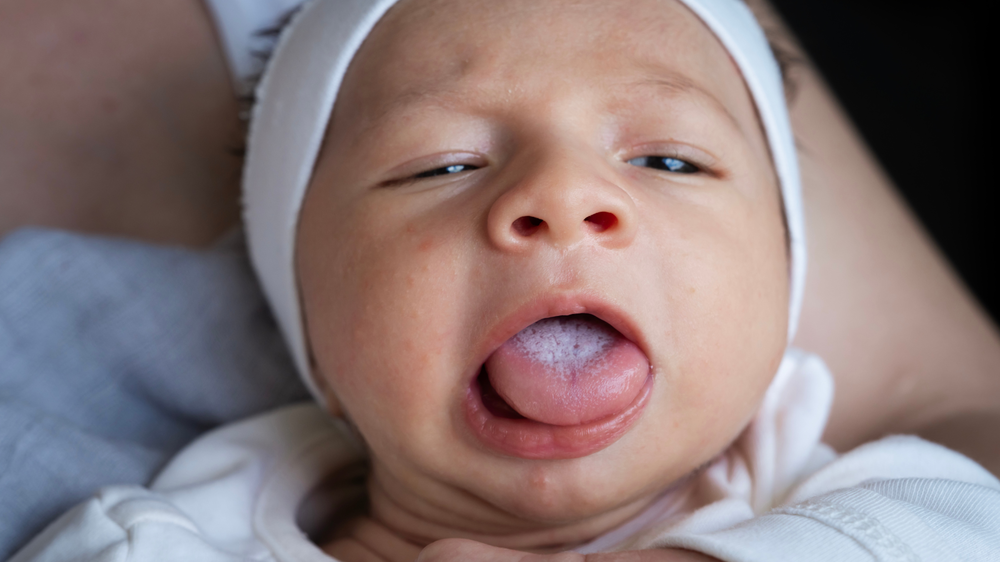
The absolute best way to check is a gentle wipe test. Take a soft, damp cloth or piece of gauze and gently wipe your baby's tongue. If it wipes away, it's just milk, and if not, then it may be oral thrush.
| Feature | Milk Residue | Oral Thrush |
| Appearance | Thin, patchy white film | Thick, white patches like cottage cheese |
| Location | Mainly on the tongue | Found in patches on the tongue, inner cheeks, roof of the mouth, and gums |
| Wipes off? | Yes, easily | No, bleeds or turns red if scraped |
| Timing | Appears right after a feeding and usually fades after an hour or two. | Present all the time, regardless of when the baby was last fed |
| Baby's behaviour | Normal | Fussy during feeding, pulls off breast/bottle |
| Smell | None | Mild sour odour possible |
| Mother's symptoms | None | Nipple pain, redness, or itching if breastfeeding |
Why Do Breastfed Babies Get Oral Thrush More Often?
Breastfed babies are not more prone to thrush than formula-fed babies, but when thrush is present in a breastfed baby, it can pass between the baby's mouth and the mother's nipples. This creates a cycle of re-infection.
Signs in the mother include sharp, shooting breast pain during or after feeds, red or shiny nipples, or cracked nipple skin that doesn't heal.
In India, around 64% of infants are exclusively breastfed for the first six months, according to NFHS-5 data. This makes awareness of this mother-baby thrush cycle important, especially since nipple thrush is often confused with latch issues or mastitis.
Can Home Remedies Treat Oral Thrush in Babies?
Many people use remedies like applying honey or diluted turmeric inside the baby's mouth for a white tongue. Honey should never be given to babies under one year; it carries a risk of infant botulism, a rare but serious illness. Turmeric applied to a newborn's gums or mouth has no proven clinical benefit for thrush and may cause irritation.
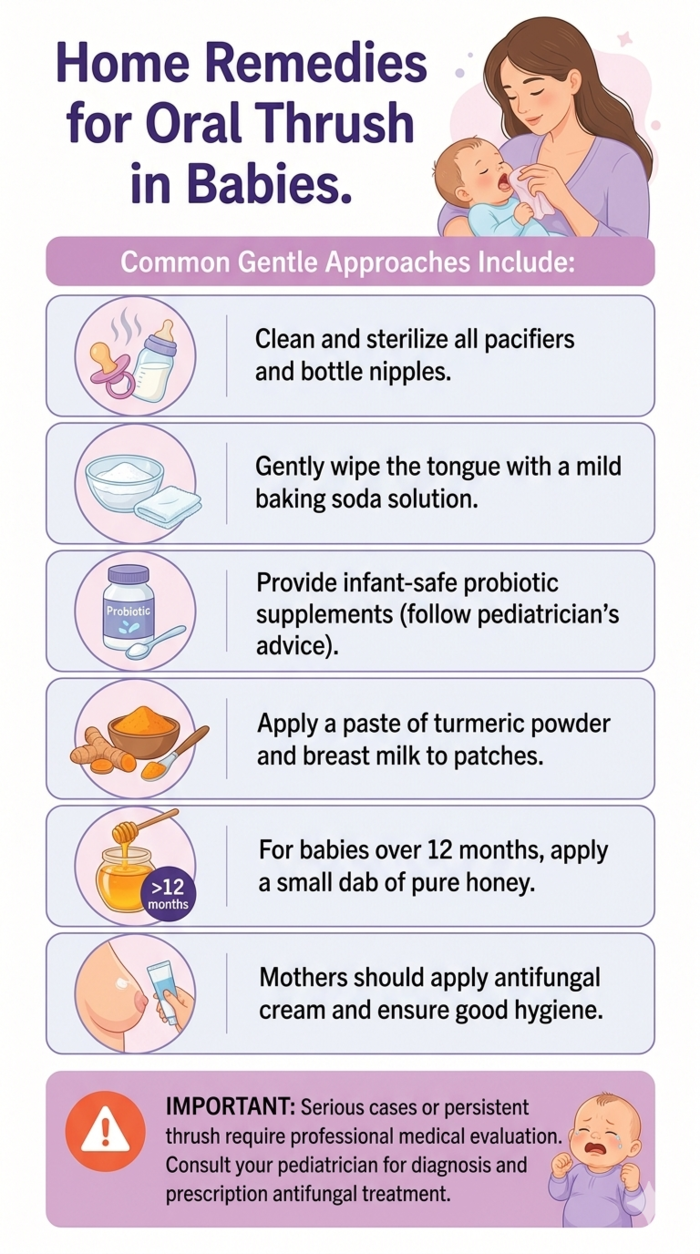
Oral thrush in babies requires antifungal treatment prescribed by a paediatrician. These are safe, effective, and readily available. Treatment usually lasts 7–14 days. If the mother has nipple thrush, both she and the baby need treatment simultaneously to prevent re-infection.
When Should You See a Doctor?
See a paediatrician if:- The white patches do not wipe off
- Your baby is fussy, crying during feeds, or refusing to feed
- The patches spread to the gums, cheeks, or throat
- You notice bleeding when you try to clean the patches
- Symptoms do not improve after 2–3 days of antifungal treatment
- You are breastfeeding and have nipple pain or redness
Whether you’re pregnant, a new mom, or navigating postpartum, you don’t have to do it alone. Join our support group to connect, share, and support one another.
FAQs on Is My Baby's White Tongue Oral Thrush, or Just Milk?
- How do I clean my baby's tongue, and can that prevent thrush?
Gently wipe the tongue with a clean, wet muslin cloth or gauze wrapped around your finger after feeds. This removes milk residue and keeps the mouth clean. It does not prevent thrush, which is caused by a fungal overgrowth, not poor hygiene alone. Do not use commercial tongue cleaners or hard materials on a newborn's mouth. - Is a white tongue in newborns always thrush?
No. In the first few weeks of life, a white tongue coating after feeds is almost always milk residue, especially in babies fed breast milk or standard formula. Thrush becomes more likely if the white patches don't clear between feeds, if they appear on the inner cheeks or palate, or if feeding becomes difficult. - Can formula-fed babies get oral thrush?
Yes. Thrush is not limited to breastfed babies. It can occur in formula-fed babies too, particularly if feeding bottles are not sterilised properly, if the baby has been on antibiotics, or if they were exposed to Candida during birth. Sterilising bottles after every use reduces, but does not eliminate, the risk.