In this article:
What Do Healthy Fallopian Tubes Normally Do?
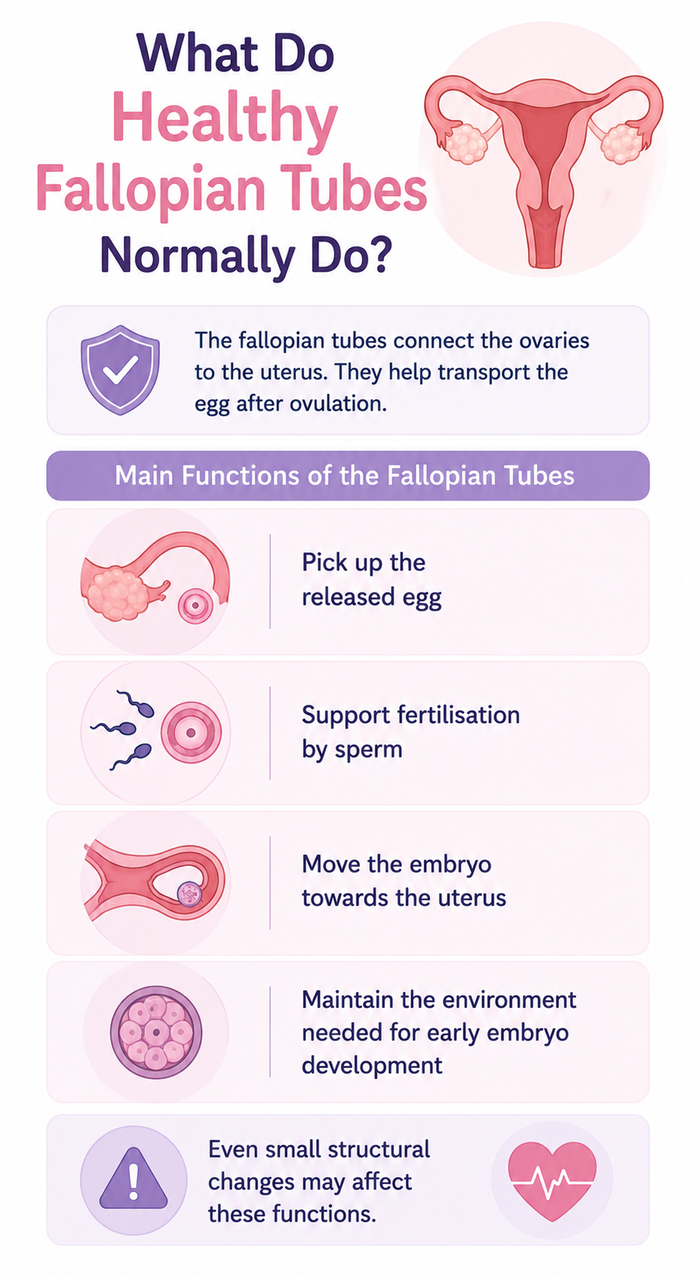
The fallopian tubes connect the ovaries to the uterus. They help transport the egg after ovulation.
Main Functions of the Fallopian Tubes
- Pick up the released egg
- Support fertilisation by sperm
- Move the embryo towards the uterus
- Maintain the environment needed for early embryo development
What Causes Abnormally Shaped Fallopian Tubes?
Some people are born with structural abnormalities. Others may develop them later.
Common Causes
| Cause | Possible Effect on Tubes |
| Pelvic inflammatory disease | Scarring and narrowing |
| Endometriosis | Distortion of tube shape |
| Previous pelvic surgery | Adhesions around tubes |
| Tuberculosis affecting the pelvis | Tubal blockage or damage |
| Congenital abnormalities | Improper tube formation |
In India, genital tuberculosis remains an important cause of tubal damage in some infertility cases.
What Are The Various Types Of Fallopian Tube Shape Abnormalities
Different abnormalities may affect fertility differently.1. Twisted or Curved Tubes
The tube may bend abnormally. This may slow egg movement.
2. Narrowed Tubes
The inner opening of the fallopian tube gets constricted because of inflammation or scarring.
3. Hydrosalpinx
Fluid may collect inside a blocked tube.
Possible Effects
- Reduced fertility
- Implantation failure
- Higher infection risk
Fertilisation may not happen naturally if both tubes are blocked.
How Abnormally Shaped Fallopian Tubes May Affect Your Fertility
Fallopian tube abnormalities are one of the recognised causes of female infertility.
The following are the factors that may contribute to fertility issues:
- Sperm are unable to reach the egg
- Delayed embryo transport
- Damage to the inner lining of the tube
- Reduced implantation success
How Abnormally Shaped Fallopian Tubes May Increase the Risk of Ectopic Pregnancy
In rare cases, the implantation of the embryo doesn’t happen in the uterus. Instead, it may happen inside the fallopian tube.
An ectopic pregnancy may become life-threatening if not diagnosed and treated early.
The risk of ectopic pregnancy increases if you have abnormally shaped or damaged tubes. This is because embryo movement gets slower.
The following are the warning signs that need medical attention:
- Sharp lower abdominal pain
- Vaginal bleeding
- Shoulder pain
- Dizziness or fainting
How Are Fallopian Tube Abnormalities Diagnosed?
Doctors may evaluate the tubes during infertility assessment or pelvic pain investigation.
The following are the common diagnostic tests:
| Test | Purpose |
| HSG (Hysterosalpingography) | Checks tubal blockage and shape |
| Ultrasound | Detects hydrosalpinx or pelvic abnormalities |
| Laparoscopy | Examines pelvic organs directly |
| Sonosalpingography | Assesses tubal patency using fluid |
Your doctor will advise you on the test based on your symptoms, fertility history, and medical findings.
Can Treatment Improve Pregnancy Chances?
Treatment depends on the type and severity of tubal abnormality.Management Options May Include
- Treating pelvic infections
- Surgical correction in selected cases
- Removal of severely damaged tubes before fertility treatment
- Assisted reproductive techniques if natural conception becomes difficult
You’re not alone in your journey when trying to conceive. Join our supportive community to connect with others, share experiences, and find encouragement every step of the way.
FAQs on What Happens If Your Fallopian Tubes Are Abnormally Shaped?
- Can you get pregnant with one abnormal fallopian tube?
Yes. Pregnancy may still occur naturally if the second tube is healthy and ovulation continues normally. - Do abnormally shaped fallopian tubes always cause infertility?
No. Some people conceive naturally despite mild structural abnormalities. Fertility problems usually depend on the severity of the abnormality and the extent of tubal damage. - Can fallopian tube abnormalities be detected on ultrasound?
Certain conditions, such as hydrosalpinx, may appear on ultrasound. However, specialised tests like HSG or laparoscopy are often needed for a detailed assessment.