
The amount of amniotic fluid changes as your pregnancy advances. In the very beginning, most of it comes from your blood, with only a small contribution from your baby. By around 10 to 12 weeks, your baby’s lungs and kidneys also start adding fluid. By 36 weeks, the volume reaches roughly 1000 millilitres, giving your baby plenty of room to grow. And then it slowly decreases to around 500 millilitres by the time you go into labour. But higher levels of amniotic fluid can sometimes cause complications, so including the right foods can help manage these levels and support a healthier pregnancy.
What is Polyhydramnios During Pregnancy?
Sometimes during pregnancy, the amount of amniotic fluid around your baby can become higher than usual. This condition is called polyhydramnios. Doctors usually check for it using an ultrasound, measuring either the amniotic fluid index (AFI) or the maximum vertical pocket of fluid. When the AFI reaches 24 to 25 cm or more, it’s considered elevated.Common symptoms of polyhydramnios include:
- Abdominal tightness with cramping or contractions
- Heartburn
- Acid reflux
- More frequent urination
- Breathlessness
- Constipation
- Swelling in the legs, feet, or vulva.
What Causes Polyhydramnios During Pregnancy?
Doctors aren’t exactly sure why polyhydramnios happens. But when they can pinpoint a reason, some possible causes include:- Maternal diabetes (gestational or pre-existing high blood sugar)
- Multiple pregnancy (twins or more, sometimes with uneven fluid distribution or twin-to-twin transfusion syndrome)
- Foetal anomalies that affect swallowing (such as gastrointestinal blockages or gut atresia)
- Central nervous system disorders
- Rh incompatibility
- Foetal infections
- Anaemia
- Cardiac issues
- Placental problems
What are the Complications of Polyhydramnios During Pregnancy?
Having too much amniotic fluid can sometimes lead to complications for both you and your baby.For the mother
- Premature contractions and preterm delivery
- Premature rupture of membranes
- Prolonged labour
- Excessive uterine relaxation after birth
- Placental abruption
- Respiratory difficulties
- Postpartum haemorrhage
For the baby
- Umbilical cord compression that reduces oxygen supply
- Abnormal positioning or size that complicates delivery
- Congenital abnormalities
- Foetal demise (rare)
Which Foods Reduce Amniotic Fluid During Pregnancy?
Diet can play a supportive role in managing polyhydramnios, mainly by helping control blood sugar levels, reducing fluid retention, and maintaining better electrolyte balance in the body. That said, no single food can suddenly bring amniotic fluid levels down. And diet can never replace medical treatment or monitoring. Every pregnancy is different, so it’s always best to talk to your doctor before making major diet changes.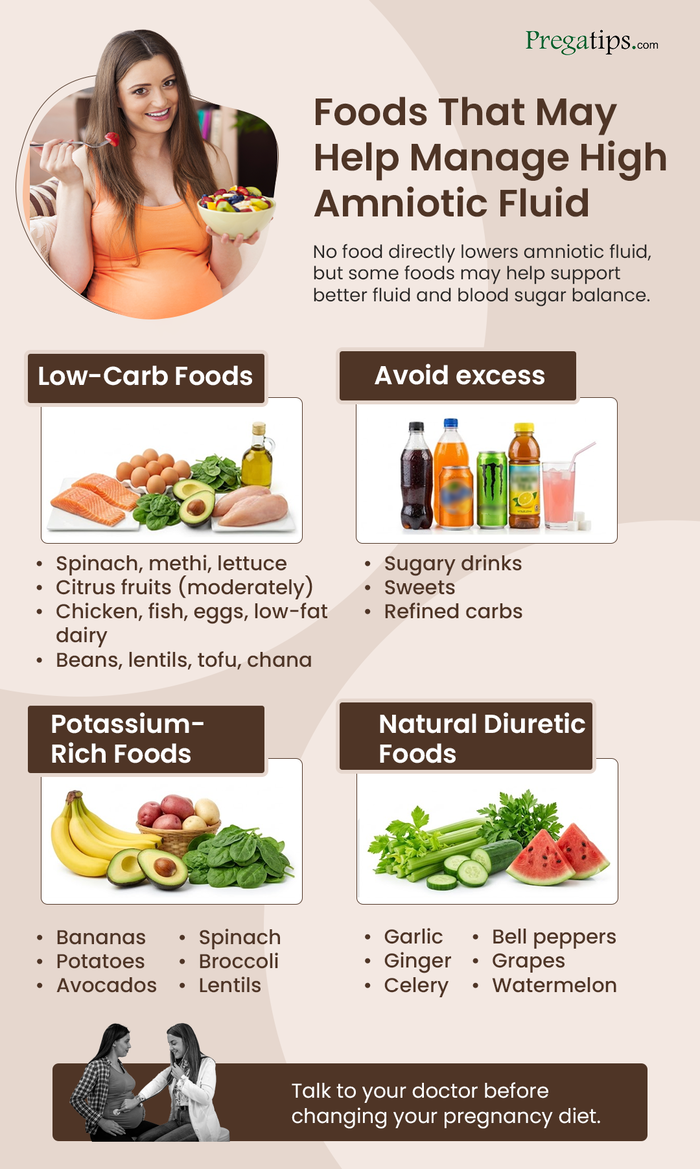
If you’re looking to make smarter food choices, these are some options that may help support healthier amniotic fluid levels during pregnancy:
Foods Low in Carbohydrates
These deserve special attention, especially when high amniotic fluid is linked to blood sugar issues or gestational diabetes. Following a lower-carbohydrate approach can help stabilise glucose levels and reduce the amount of sugar that passes into the amniotic fluid.
Try to focus on:
- Green leafy vegetables like spinach, methi, and lettuce
- Citrus fruits in moderate amounts
- Lean protein sources such as chicken, fish, eggs, and low-fat dairy
- Plant-based proteins like beans, legumes, lentils, tofu, and chana
Potassium-Rich Foods
Potassium helps maintain a healthy electrolyte balance and plays an important role in regulating fluid levels in your body.
You can include foods like:
- Potatoes
- Bananas
- Avocados
- Oranges
- Spinach
- Broccoli
- Lentils
Foods With Natural Diuretic Properties
Some foods naturally encourage your body to produce more urine, which can help flush out excess fluid that may be building up.
Good options include:
- Onions
- Bell peppers
- Garlic
- Ginger
- Celery
- Grapes
- Watermelon
Limit Salt and Processed Foods
Reducing salt and highly processed foods is one of the most important steps when dealing with excess fluid. High sodium intake makes your body hold on to water, which can worsen fluid buildup and may aggravate polyhydramnios.
Try to cut back on:
- Extra table salt
- Packaged snacks
- Instant or ready-to-eat meals
- Restaurant and fast foods that are high in sodium
Manage Caffeine Intake
Keeping your caffeine intake in check is another small but helpful step when you are dealing with excess amniotic fluid.
It’s a good idea to limit:
- Tea and coffee
- Energy drinks
- Soft drinks
- Chocolate and other foods with added caffeine
Never try to drastically restrict food, skip meals, or cut down on fluids on your own in an attempt to reduce amniotic fluid. That can do more harm than good. Always follow your doctor’s advice and use diet only as a supportive measure alongside proper medical care.
Whether you’re pregnant, a new mom, or navigating postpartum, you don’t have to do it alone. Join our support group to connect, share, and support one another.
FAQs on 5 Best Foods to Reduce Amniotic Fluid During Pregnancy
- Can drinking less water reduce amniotic fluid levels?
No, cutting down on water is not a safe or effective way to lower amniotic fluid. - Can supplements help in reducing amniotic fluid?
There is no specific supplement proven to directly lower amniotic fluid levels. Taking unnecessary supplements may even cause harm.