
In this article:
Overview of Amniotic Fluid Levels
Amniotic fluid is the fluid that surrounds your baby inside the uterus during pregnancy. The amount of this fluid naturally changes as pregnancy progresses and may vary from person to person. Doctors monitor these levels because they can provide information about the progress of the pregnancy and the baby's development.
Now, many pregnant women also wonder how everyday habits can help support healthy amniotic fluid levels during pregnancy. Let's look at some daily practices that may help you.
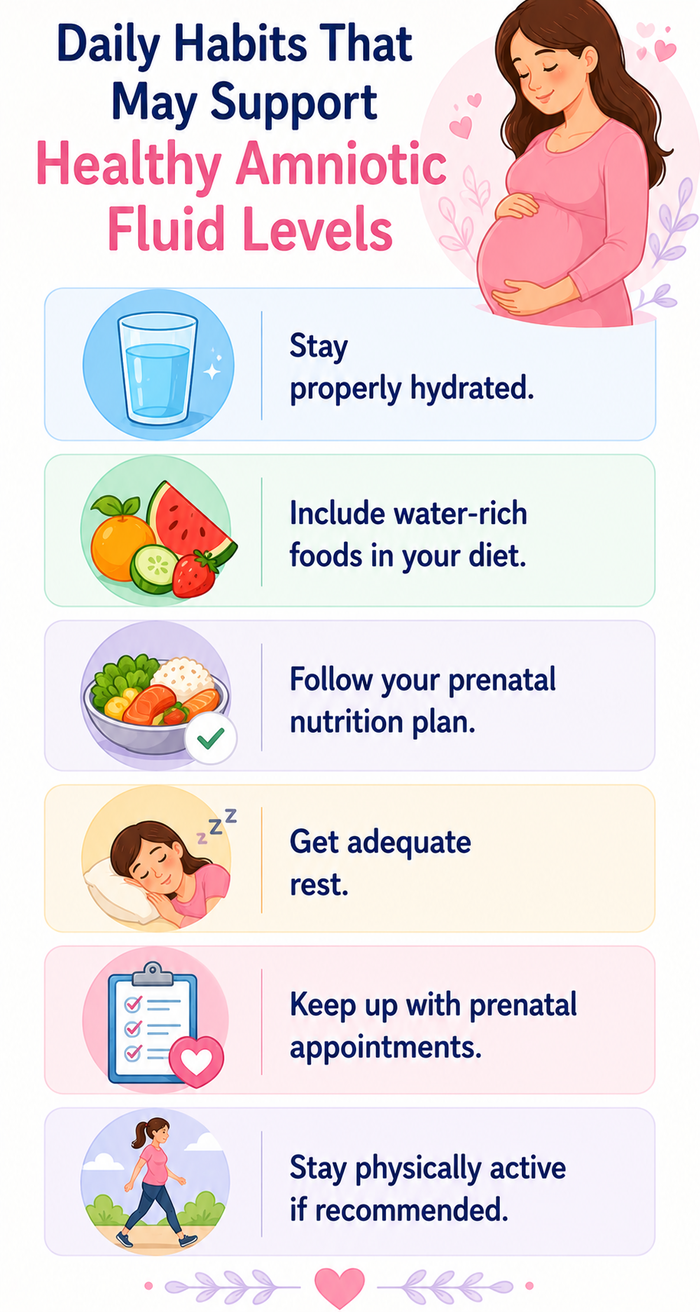
Daily Habits That May Support Healthy Amniotic Fluid Levels
1. Stay Properly Hydrated
Drinking enough water during pregnancy is very important for your body and your baby. Extra fluids help keep your body working well and support healthy amniotic fluid levels.
Try drinking water regularly during the day instead of waiting until you feel very thirsty. You can also enjoy healthy fluids like coconut water, soups, or fresh fruit juices in moderation if recommended by your doctor.
Hydration may reduce tiredness and support your overall wellness during pregnancy.
2. Include Water-Rich Foods in Your Diet
Some fruits and vegetables are high in water and can help keep you hydrated during pregnancy. Watermelon, oranges, cucumber, strawberries, and tomatoes are good examples.
Along with hydration, these foods also give you vitamins and minerals that support pregnancy health. Eating balanced meals regularly helps meet your overall nutrition needs and keeps both you and your baby well.
3. Follow Your Prenatal Nutrition Plan
Good nutrition is very important during pregnancy. A healthy meal plan with enough nutrients supports your body’s changing needs and your baby’s growth.
Your doctor may also suggest prenatal vitamins or supplements based on your health.
It is important to take only what is advised and avoid self‑medication.
4. Get Adequate Rest
Your body works constantly to support your growing baby, so rest and sleep are very important. Getting enough sleep supports your overall well-being and helps maintain your energy.
Taking short breaks during the day, avoiding overexertion, and maintaining a comfortable sleep routine can help you feel better and more relaxed during pregnancy.
5. Keep Up With Prenatal Appointments
Regular prenatal checkups help your doctor track both your health and your baby’s growth. Ultrasounds and routine examinations show how your pregnancy is progressing, including amniotic fluid levels.
Attending your scheduled visits also gives you the chance to discuss any symptoms or concerns early, so you get timely support.
6. Stay Physically Active if Recommended
Light physical activity can help your circulation and overall health during pregnancy. Simple movements like walking or prenatal exercises may be good, depending on your condition.
Always follow your doctor's advice before starting or continuing any exercise to ensure you know what is safe for you and your baby.
Habits That May Affect Pregnancy Health
Certain everyday habits may affect your overall pregnancy health. Such as:
- Skipping meals can impact your body's ability to absorb important nutrients
- If you do not drink enough, you may feel weak or get dehydrated
- Do not ignore signs like pain, fluid leakage, or less baby movement
- You take medicines or supplements without asking your doctor
Can Home Remedies Increase Amniotic Fluid Levels?
Many people may tell you about home remedies to increase amniotic fluid. But not all advice is proven by doctors. If you try self‑treatment without guidance, it may not be safe.Every pregnancy is different, and the reasons for low fluid can vary. Talking to your doctor helps you get the right advice and care.
Healthy amniotic fluid levels are an important part of pregnancy care. They can change naturally at different stages. Some factors may be beyond your control, but keeping healthy routines and staying informed can support your well‑being. Regular checkups and awareness of changes help you feel more confident throughout your pregnancy journey.
Whether you’re pregnant, a new mom, or navigating postpartum, you don’t have to do it alone. Join our support group to connect, share, and support one another.
FAQs on How to Maintain Healthy Amniotic Fluid Levels During Pregnancy
- Can drinking more water increase amniotic fluid levels?
Drinking enough water may help support amniotic fluid levels in some cases. Follow your doctor’s advice for proper guidance. - How do doctors check amniotic fluid?
Doctors usually check it through an ultrasound scan during pregnancy. - What are common symptoms of low amniotic fluid?
Common signs may include fluid leakage, reduced baby movement, or unusual changes during pregnancy.