Even before they are born, babies start sucking their fingers in the womb. This helps them settle and grow. However, most mothers may misuse pacifiers or allow their child to become overly dependent on the pacifier. Over-reliance on pacifiers may lead to problems like:
- Delay in self-soothing: If a baby is being given a pacifier every time he fusses, the baby may depend on it instead of learning self-soothing skills like sucking on hands/ fingers, settling with gentle rocking, and adjusting on their own.
- Frequent night waking, which can happen if a pacifier falls out of the baby’s mouth or if he wakes up crying for it, which can lead to disturbed sleep.
- Challenges in breastfeeding: If a pacifier is used heavily before breastfeeding is established, it can lead to reduced feeding cues, latching difficulties, decreased milk transfer, and consequently, a low milk supply.
- Increased ear infections: Long-term pacifier use, especially after 6 months, can also lead to middle ear infections if they are used for all day instead of just naps or bedtime.
- Dental issues: If a pacifier is used for a prolonged period and frequently after the age of 2-3, it can affect tooth development, which may also lead to misalignment.
- Weaning difficulties: When pacifiers are the only soothing tool for the baby, prolonged crying and sleep disruptions become common during the weaning process.
How Pacifiers Soothe Infants
At week 32 of gestation, the foetus's sucking reflex begins to form and by week 36, it is fully developed. This reflex helps newborns to feed by breast or bottle. Pacifiers, which fall under the category of non-nutritive sucking (sucking without nutritional intake), help regulate breathing, maintain heart rate, and offer comfort during stressful times.Pacifiers are a self-soothing tool that imitates the familiar sucking that the baby is already used to in the womb. Allowing babies to soothe themselves promotes better sleep, self-regulation, independence, reduces crying, and builds confidence. However, over-reliance on or using it as a substitute to satiate hunger is not recommended.
Benefits of Pacifier Use:
- Satisfied Sucking Reflex: Pacifiers satisfy the baby’s natural sucking reflex, providing comfort and security.
- Helps with Relaxation: Sucking stimulates the release of endorphins (feel-good hormones), which promote relaxation, stabilise heart rate and breathing pattern, and reduce stress.
- Pain Relief: During stressful times such as a hospital visit, vaccination, or blood test, pacifiers help distract the baby and help reduce the perception of pain.
- Enhanced Sleeping: Babies fall asleep faster, sleep longer, and get restful sleep with the help of a pacifier, as it helps reduce movement during sleeping, keeps airways open, and regulates breathing.
- Reduced Risk of SIDS: Reduced movement during sleep helps reduce the risk of Sudden Infant Death Syndrome
- May Reduce Developmental Delay: Using pacifiers after establishing breastfeeding for premature and low birth weight infants helps mature sucking reflex and oral motor skills.
- Decreased Parental Stress: Fussy babies can make postpartum mothers anxious and distressed. With the help of pacifiers, mothers can facilitate better feeding and sleeping patterns, which in turn result in positive parent-infant bonding.
When to Introduce Pacifiers
Start giving pacifiers once breastfeeding is fully established. It's better to wait for nearly one month for breastfeeding babies to help avoid the risk of nipple confusion. Don't introduce pacifiers right from birth.Breastfeeding and pacifiers are completely different, and pacifiers don't satiate hunger. For breastfed babies, it's recommended to wait at least 3 to 4 weeks. For bottle-fed babies, you can start right from birth.
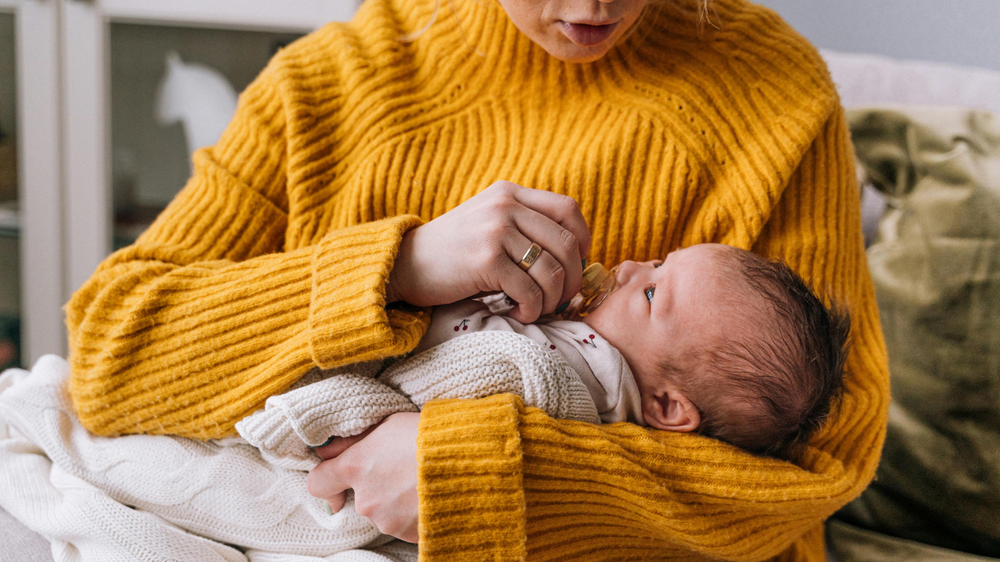
Don't let the baby suck it directly. Before using, clean and sterilise the nipple and tease your baby by gently touching around the lips and cheeks to trigger the rooting reflex.
How to Use Pacifiers Right
Using pacifiers correctly is important to maximise the benefits of self-settling and sleeping while minimising the risk of infection and nursing interference.- Start pacifiers after a month of establishing breastfeeding.
- Choose BPA-free, natural rubber, and non-toxic biodegradable silicone material.
- Use it primarily for comforting during bedtime.
- Pick a one-piece pacifier with air holes to avoid choking.
- Pick the right size according to the age to promote oral comfort.
- Replace every 4 to 6 weeks.
- Sterilise by boiling or steaming before the first use.
- Clean with soap and water regularly.
- Don't tie the pacifier around the neck.
- Don't use cracked or damaged ones.
- Avoid dipping into honey or sweeteners, as it can lead to botulism and tooth decay.
- Don't push or force into the mouth.
- Avoid using during awake time.
Age-wise Pacifier Use Guidelines
| Age | Usage | Tips |
| Newborn to 4 weeks | Focus on breastfeeding and avoid the pacifier | Early use of a pacifier can cause nipple confusion |
| 1 to 6 months | Use during the baby gets cranky for soothing and sleeping | Pick a small, suitable for newborn pacifier and sterilise and resterilise regularly |
| 6 to 12 months | Avoid prolonged or daytime use | Introduce other toys and music |
| 12 to 24 months | Only use during bedtime | Prepare for weaning |
| Over 2 years | Completely discontinue pacifiers and start weaning | Monitor teeth alignment and speech issues |
Weaning - Cutting Pacifier
- Gradually start weaning around 12 months to prevent dental and speech problems.
- Limit pacifier during the daytime and use it only to nap and bedtime.
- Gradually reduce the frequency and time.
- Replace with soft toys or other comfort items.
- Avoid prolonging for more than 2 years.
Pacifiers can be a great help for new parents who are dealing with home, baby, work, and healing all at the same time. However, use it only at recommended times. When a baby cries, instead of relying on a pacifier, try to be affectionate. More than artificial soothers, a baby needs a parent's attention, warmth, and comfort.
Whether you’re pregnant, a new mom, or navigating postpartum, you don’t have to do it alone. Join our support group to connect, share, and support one another.
FAQs on When To Introduce a Pacifier: Safe And Healthy Pacifier Use For New Moms
- Can I use a pacifier to burp a baby?
Using a pacifier does not help a baby burp. In fact, it can make burping harder. Follow different burp positions after a feed to burp the baby, as using a pacifier will involve more sucking of the air, which can cause difficulties in burping. It is best to use a pacifier once the baby has been burped. - Does a pacifier cause gas in newborns?
Pacifiers can cause gas if the baby is swallowing extra air while sucking, which can happen if the pacifier is the wrong size or shape, the baby is starving, the pacifier is old or damaged, or when the baby is lying flat and sucking, which can trap air more easily.