In this article:
Current research does not offer absolute answers.
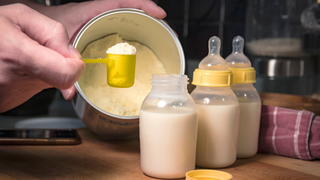
Normally, we consider dairy products, such as milk, cheese, butter, and yoghurt, rich sources of nutrients, such as
- Saturated fatty acids (SFAs)
- Potassium
- Calcium
- Vitamin D
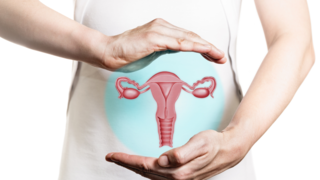
What Is the Ovarian Clock?
Normally, you are born with your lifetime supply of eggs. These eggs are enclosed within follicular cells. Together, they form ovarian follicles.
These follicles quietly shape your reproductive life. For instance, they influence the following:
- Your menstrual cycles
- The length of your fertility window
- Your overall healthspan
Besides that, this decline is not steady. It happens unevenly. It continues through childhood, adolescence, and into adulthood.
Over time, this natural reduction affects your fertility. Eventually, it leads to menopause. At this stage, very few follicles remain. As a result, monthly cycles stop.
Despite this decline, ovarian follicles play a protective role. They surround and support your eggs. In doing so, they help preserve egg quality.
Moreover, these follicles produce important hormones. For example, they release oestradiol. This hormone supports:
- Heart health
- Bone strength
- Brain function
Therefore, your ovarian clock is not just about reproduction. It is also linked to your overall well-being.
Yet, many of the underlying biological processes are still not fully understood. Because of this, more research is needed. A better understanding may help improve future diagnosis and care for reproductive health.
What is the Nutritional Role of Dairy in Reproductive Health?
Dairy, especially cow’s milk, contributes several nutrients relevant to fertility:
- Protein: Supports tissue repair and hormone synthesis
- Calcium: Essential for cellular signalling
- Vitamin B12: Important for ovulation and early embryonic development
- Iodine (in some cases): Supports thyroid function
What Are The Possible Negative Effects Of Dairy Components On Ovarian Health?
The cow’s milk is also the source of many components that may affect ovarian function in many women. This may include:
| Component in Cow’s Milk | Possible Negative Effect on Ovarian Reserve / Function |
| Saturated fats (excess intake) | May worsen insulin resistance and metabolic health. However, poor metabolic health can indirectly disrupt ovulation. No direct effect on ovarian reserve markers is established. |
| Oestradiol (naturally occurring steroid hormone, in small amounts) | May mildly influence your hormonal balance. However, dietary exposure is low, and there is no clear evidence of a direct negative effect on ovarian reserve. |
| Insulin-like Growth Factor 1 (IGF-1) | May increase circulating IGF-1 levels. Besides that, higher IGF-1 activity may affect insulin signalling and ovarian function, particularly in those with PCOS. |
| Lactose (in lactose intolerance) | May cause gut inflammation and discomfort, only in case your body doesn’t tolerate it well. However, this may indirectly affect hormonal balance. No direct link with ovarian reserve has been established. |
| Endocrine-disrupting chemicals (trace contaminants, e.g., pesticides or environmental residues) | Studies indicate that these components may interrupt hormone signals. But, generally, exposure through milk is low and regulated. |
Does Dairy Intake Accelerate Ovarian Ageing?
Newer research looks beyond simple right or wrong labels. In fact, it tries to understand how dairy may influence your ovarian clock metabolically.
New research raises significant concerns about the link between dairy consumption and fertility.
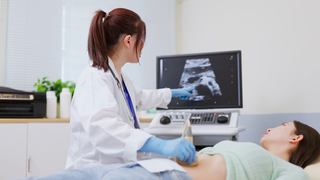
There is growing evidence that some women who consume larger amounts of dairy may experience advanced ovarian ageing as measured by their antral follicle counts (AFC), which reflect the number of eggs a woman has available to conceive at a point in time.
Researchers noticed a trend among women based on their level of dairy consumption; women who regularly consume higher levels of dairy protein had lower AFC values, while those who consumed less dairy had higher AFC values.
In crux
- Lower AFC may indicate reduced ovarian reserve
- It may also reflect faster reproductive ageing
- However, it does not directly predict your ability to conceive
How Dairy May Affect Ovulation
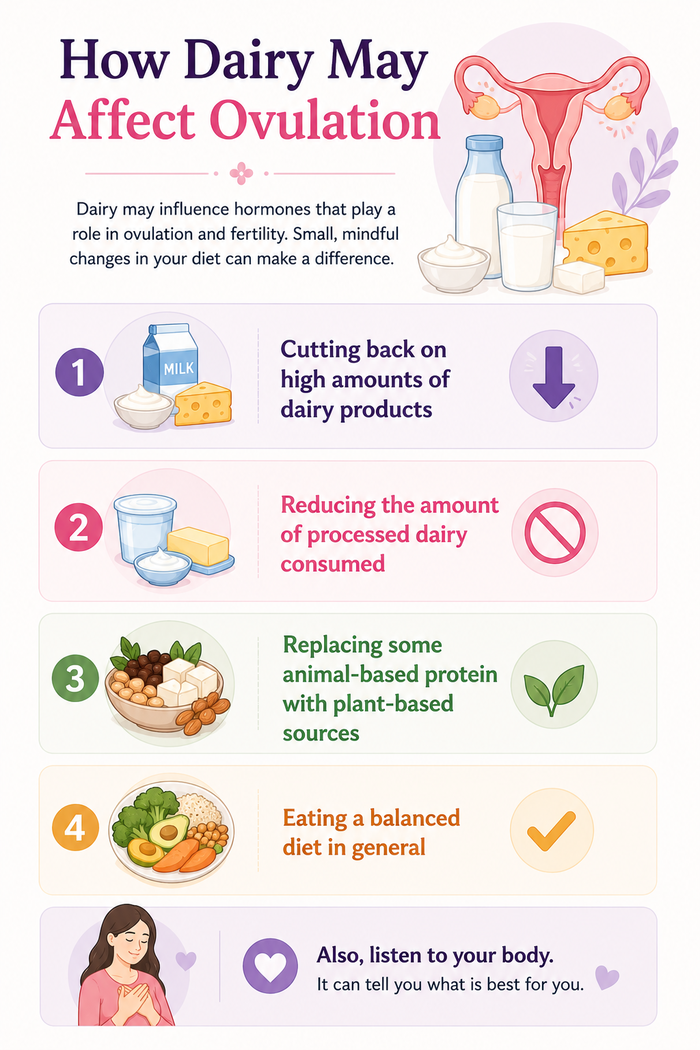
As such, do not jump to extreme conclusions, but you can make well-considered changes to your dietary habits, which could include:
- Cutting back on high amounts of dairy products
- Reducing the amount of processed dairy consumed
- Replacing some animal-based protein with plant-based sources
- Eating a balanced diet in general
Your daily diet, including dairy, may influence your fertility in subtle ways. However, the evidence is not definitive, and dairy alone does not determine your ovarian health. Besides that, factors like age and overall lifestyle remain more significant. Therefore, a balanced, mindful approach—rather than complete restriction—can better support your reproductive wellbeing.
You’re not alone in your journey when trying to conceive. Join our supportive community to connect with others, share experiences, and find encouragement every step of the way.
FAQs on Dairy and Your Ovarian Clock: How Dairy Affects Your Reproductive Health
- Can your ovarian reserve be reduced by consuming dairy products?
It is unclear if there is any direct causation; however, some studies have indicated correlations between having dairy in one's diet and reduced ovarian function. - When trying to find ways to enhance your chances of conceiving, should you stop eating dairy completely?
Not necessarily; most people can eat dairy products or drink milk moderately without problems unless they are specifically allergic, lactose intolerant, or diagnosed with any other medical disease or disorder that requires them to avoid eating dairy products. - Does consuming dairy products affect ovulation on a month-to-month basis?
Not every month; there is limited evidence of occasional anovulation due to consuming certain types of dairy products, but not everyone experiences this same result from consuming dairy.