In this article:
What is an Estimated Due Date?
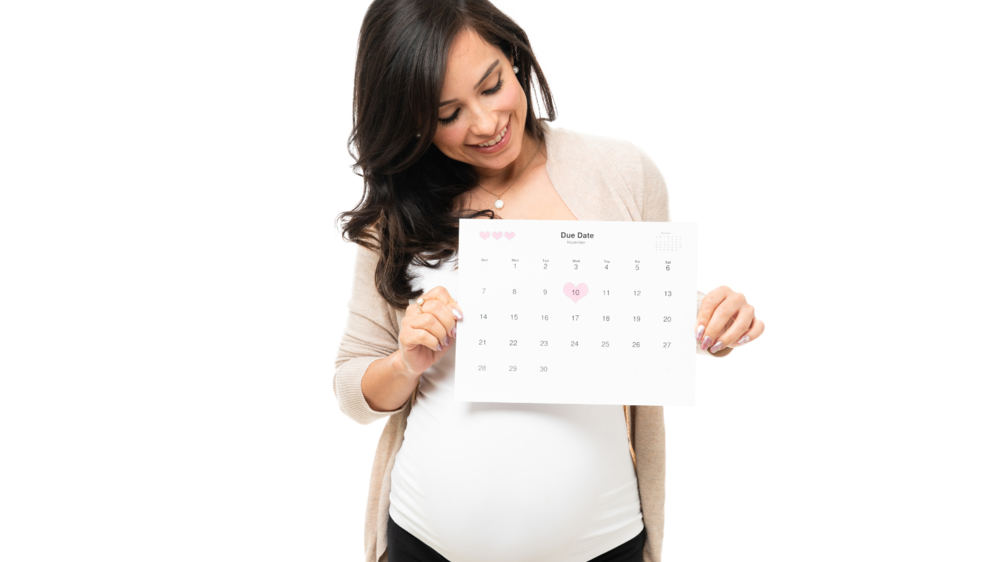
Your estimated due date (EDD) is the date when your baby is expected to be born. It's calculated based on a standard pregnancy length of about 40 weeks or 280 days.This date is super helpful for planning your prenatal care and getting ready for your baby.
However, babies often arrive a few days or even weeks before or after the EDD. So don’t think of it as an exact deadline, just more like a guide to track how your pregnancy is progressing.
How to Use a Pregnancy Due Date Calculator
There are a few ways to estimate your due date, depending on the information you have:Using Your Last Menstrual Period (LMP)
Are you wondering, “How to calculate my due date?” Most pregnancies are calculated from the first day of your last period. That's usually the easiest way to go by if your cycles are regular. To get your EDD, add 40 weeks to the first day of your LMP.There's another simple trick, called Naegele’s rule. You add 7 days to the first day of your LMP, and then subtract 3 months. This method works best if you have a regular 28-day cycle.
Using Your Conception Date
If you’ve been tracking ovulation, you can use the date you likely conceived. Conception usually happens around ovulation, which is about 14 days after the first day of your period in a 28-day cycle.To calculate, add 38 weeks to your conception date. This gives you a pretty accurate EDD if you’re sure about when you ovulated.
Using IVF Transfer Date
If you conceived through in vitro fertilisation (IVF), your due date can be calculated from the embryo transfer date. The timing depends on whether it was a day-3 or day-5 transfer.Since the exact fertilisation date is known with IVF, this method gives a really accurate idea of when your baby might arrive.
Using an Ultrasound Scan
An early first trimester ultrasound can help if you’re unsure about your LMP or conception date.In the first trimester, doctors do a dating scan where they measure the baby from head to bottom (crown-rump length). This can be used to calculate your EDD.
Factors That Help Confirm Your Pregnancy Due Date
Your doctor might also look at a few other signs during your check-ups to confirm if your due date is accurate:- Baby’s first heartbeat, which is usually detected around 9 to 10 weeks. It can give a rough idea of gestational age.
- You’ll likely feel your baby’s first kicks between 18 and 22 weeks.
- Fundal height is the measurement from your pubic bone to the top of your uterus. It shows if your baby’s growth matches the estimated timeline.
Challenges in Using a Pregnancy Due Date Calculator
Many parents-to-be search online for tips on how to calculate the due date of delivery. But figuring out an exact due date isn’t always easy.These are some situations that can make it difficult:
- Unknown LMP or conception date: If you don’t remember your last period or when you conceived, it’s harder to estimate your due date without an ultrasound.
- Irregular periods: Cycles longer or shorter than 28 days can make LMP-based calculations less reliable.
- Baby’s size: If your baby is unusually large or small for their gestational age, it can complicate due date estimates.
Why Should You Use a Pregnancy Due Date Calculator
Your due date isn’t just a day to mark on your calendar; it’s a key part of your pregnancy journey.This is why it’s important:
- Your doctor uses your due date to plan check-ups, scans, and tests to keep track of your baby’s growth and health.
- Knowing the gestational age helps make sure your baby is growing as expected.
- Your due date helps you and your doctor tell the difference between false contractions and real labour.
- It gives you a rough timeline to prepare for your baby’s arrival.
Understanding Pregnancy Length and Flexibility
A typical pregnancy lasts about 40 weeks from the first day of your LMP, or 38 weeks from conception. This is because conception usually happens about 2 weeks after your period starts.Babies are considered full-term between 37 and 42 weeks, so most arrive within this window. First-time parents might go a bit longer, while those over 30 might deliver slightly earlier.
Stay flexible, as your baby might decide to arrive on their own schedule!
Tips for Using a Pregnancy Due Date Calculator
An accurate due date calculator is a useful tool to get a quick estimate of your EDD.Here’s how to make the most of it:
- Input accurate dates: Enter the first day of your LMP, conception date, or IVF transfer date as precisely as you can.
- Know your cycle length: If your periods are irregular, note your average cycle length to adjust calculations.
- Confirm with your doctor: Share the results with your gynaecologist, who can double-check your due date using scans or exams.
Whether you’re pregnant, a new mom, or navigating postpartum, you don’t have to do it alone. Join our support group to connect, share, and support one another.
FAQs on Your Complete Pregnancy Due Date Calculator Guide
- Can a pregnancy due date calculator predict premature or late birth?
No, calculators estimate the expected date but cannot predict early or late delivery. - Do multiple pregnancies affect the due date calculation?
Yes, twins or more often arrive earlier than a single baby, which can shift the expected delivery timeline.