Squats help prepare the body for childbirth, ease discomfort, and improve mobility. However, not all squats are suitable for every stage or person. Let’s explore how to perform them safely, when to avoid them, and what benefits they can bring to your pregnancy experience.
In this article:
Why Squats Matter During Pregnancy
Squats are a simple but powerful full-body exercise. They strengthen the muscles you use every day and even resemble the birthing position. During pregnancy, squats offer special benefits when done with the right guidance.Key Benefits:
- Strengthens pelvic floor muscles: Squats engage the pelvic region, which supports the uterus, bladder, and bowel. This helps reduce incontinence and supports smoother labour.
- Improves posture: As the belly grows, posture tends to change. Squats strengthen the lower back, glutes, and thighs, reducing back pain.
- Enhances flexibility: Regular squatting opens up the hips, improving joint mobility and reducing stiffness.
- Promotes better circulation: The movement increases blood flow, which helps prevent swelling in the legs and feet.
- Prepares the body for labour: The natural squatting position aligns the pelvis and encourages optimal baby positioning closer to delivery.
- Eases bowel movements: By relaxing the pelvic and abdominal muscles, squats can help reduce constipation, a common concern during pregnancy.
Are Squats Safe for Everyone?
Squats are usually safe, but every pregnancy is different. Medical conditions, past pregnancy complications, or physical discomfort can affect whether squats are right for you.Avoid squats if you:
- Have placenta previa (especially after 26 weeks).
- Experience vaginal bleeding or pain while squatting.
- Have been advised to rest by a healthcare provider.
- Have pelvic joint instability or severe lower back pain.
- Experience dizziness or light-headedness during the movement.
The Right Way to Do Squats During Pregnancy
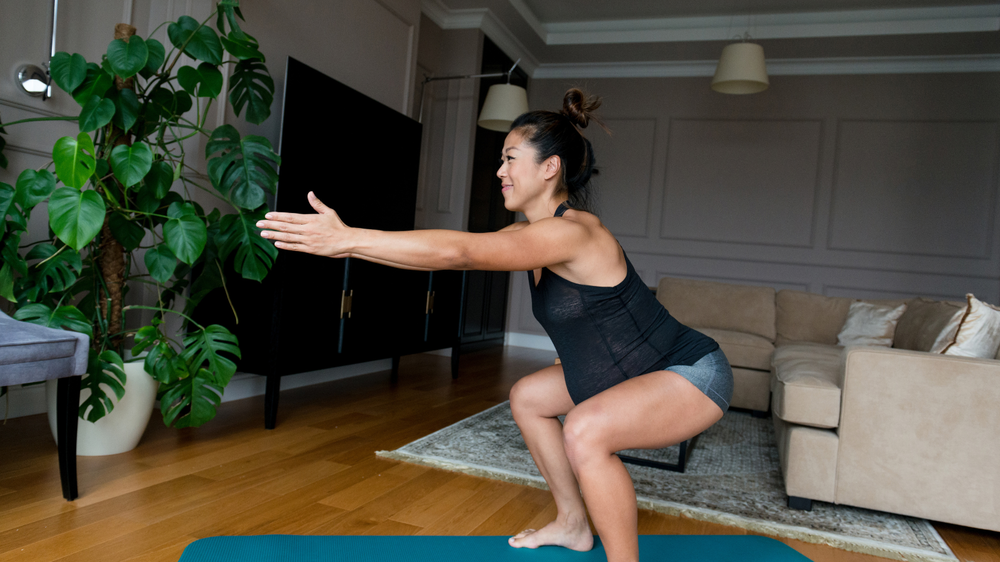
Good form and control are essential. Poor posture can put strain on your lower back and knees. Here’s how to do squats safely and effectively:Basic Pregnancy Squat (Bodyweight):
- Stand straight with feet shoulder-width apart and toes slightly outward.
- Keep your chest lifted and shoulders relaxed.
- Engage your core gently to support your lower back.
- Lower your body slowly, as if sitting on an invisible chair.
- Go only as low as you can while keeping your heels on the floor.
- Hold for 2–3 seconds, then rise slowly, exhaling.
- Keep your knees behind your toes at all times.
- Use a wall or sturdy chair for balance if needed.
- Avoid holding your breath; steady breathing supports blood flow.
- Avoid bouncing or jerky motions to prevent strain.
- Do not overextend your lower back. Keep your spine in a neutral position.
Even simple movements can cause discomfort if done incorrectly. Avoid these mistakes to keep squats safe:
- Rounding the back or leaning forward.
- Allowing knees to collapse inward.
- Lifting heels off the ground.
- Going too fast or doing too many repetitions.
- Ignoring pain or discomfort.
Precautions to Keep in Mind
While gentle squats are beneficial, certain conditions require caution. Avoid squats if there are:
- Signs of preterm labour.
- Low-lying placenta (placenta previa).
- Severe pelvic or back pain.
- Any restriction advised by a healthcare professional.
Post-Squat Care
After squatting, gentle stretching helps relax the muscles.Try these simple stretches:
- Hamstring stretch: Sit with legs stretched out and reach forward gently.
- Hip opener: Sit cross-legged, keeping your back straight.
- Cat-cow stretch: On all fours, move between arching and rounding your back.
When done carefully, squats are one of the best exercises during pregnancy. They build strength, improve posture, and help prepare your body for labour in a natural way. The key is to practice moderation, stay aware, and seek professional guidance.
Pregnancy is a time for balance, not extremes. Make each movement intentional and gentle. Squats can support you during this important time by grounding you, building strength, and helping you adapt to change with confidence.
Whether you’re pregnant, a new mom, or navigating postpartum, you don’t have to do it alone. Join our support group to connect, share, and support one another.
FAQs on Pregnancy and Squats: How to Stay Fit Safely with the Right Techniques
- Can I continue doing squats if I did them regularly before pregnancy?
If you were already doing squats as part of your regular fitness routine before pregnancy, you can usually keep going with some changes. Avoid heavy weights and focus on control, breathing, and stability. As your body changes and your centre of gravity shifts, it’s important to slow down and keep your balance. Using a wall or holding onto a chair for support can help. Always talk to your doctor about your workout habits before continuing them during pregnancy - Are squats helpful for an easier delivery?
Yes, they can help. Squats open the pelvic area, strengthen lower body muscles, and improve endurance, all of which support natural labour. They also help position the baby by aligning the pelvis. However, it’s important not to overdo squats or push through discomfort. Doing squats regularly with good posture and guidance may make delivery smoother, but every birth is different.