Despite the best hygiene and medical care, infants remain vulnerable because their gut and immune defences are still developing. Breast milk plays a critical role in addressing this early-life challenge.
It does more than provide calories and nutrients. Furthermore, it delivers beneficial bacteria and immune-supporting components that help establish a healthy gut microbiome from birth. Such an early microbial foundation supports digestion and trains the immune system to respond effectively to harmful germs.
But how does a simple daily act like breastfeeding help shape a baby’s long-term immune health?
Let’s discuss why breast milk matters beyond nutrition and how it supports a baby’s health during one of the most sensitive stages of life.
What Is the Gut Microbiome?
The gut microbiome refers to the community of trillions of microorganisms, mainly bacteria, that live in the digestive system. These microbes begin to colonise the gut from birth and play an essential role in keeping the body healthy. They help break down food, produce specific vitamins, and protect the gut from harmful bacteria. In babies, the gut microbiome is still developing, which makes the early months of life especially important for shaping long-term health.
A healthy gut microbiome also plays a significant role in building the immune system. Around 70% of immune cells live in and around the gut. When beneficial bacteria grow and balance the gut environment, they help the immune system learn how to recognise harmful germs and tolerate harmless substances.
How Breast Milk Builds a Healthy Gut and Strengthens Immunity?
Breast milk plays a unique role in supporting both gut development and immune health during early life. It delivers beneficial bacteria and immune-supporting components that work together to protect and strengthen a baby’s developing system.
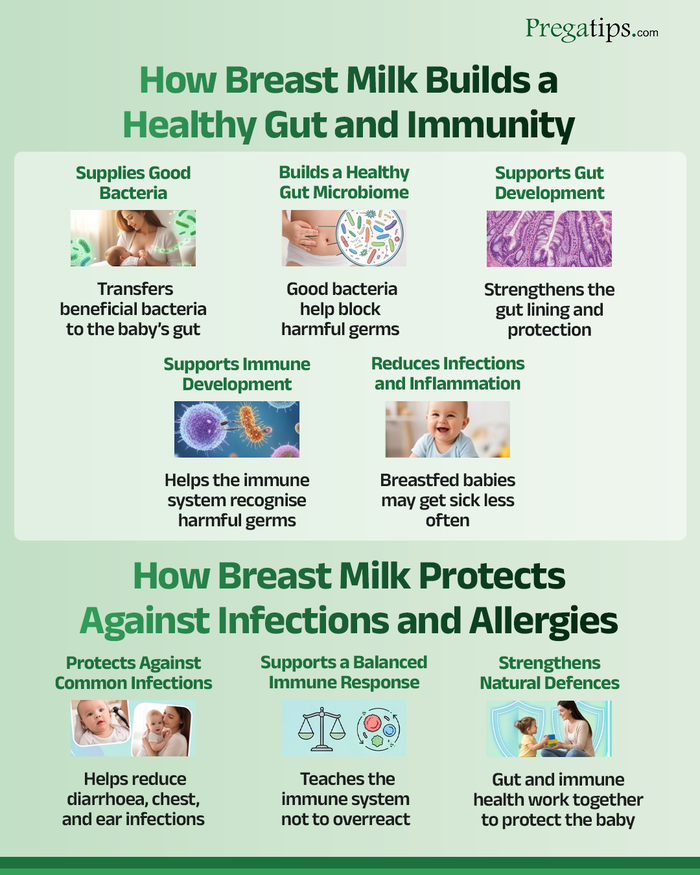
Supplies Beneficial Live Bacteria
Breast milk contains helpful bacteria such as Lactobacillus and Bifidobacterium, which naturally come from the mother’s gut and skin. During breastfeeding, these bacteria are safely transferred to the baby and become among the first microbes to settle in the gut.
Helps Establish a Balanced Gut Microbiome
Once inside the baby’s digestive system, these beneficial bacteria colonise the intestines and begin multiplying. They compete with harmful microbes for space and nutrients, which helps prevent unwanted bacteria from taking over.
Supports Gut Maturation and Protection
Breast milk bacteria help the gut lining mature and function properly. A stronger gut lining acts as a protective barrier, reducing the chance of harmful substances entering the bloodstream.
Trains the Immune System Early in Life
Because a large portion of the immune system resides in the gut, a healthy microbiome plays a key role in immune development. Breast milk bacteria help immune cells learn how to recognise harmful germs while tolerating harmless substances.
Reduces Infections and Inflammation
Breast milk helps lower unnecessary inflammation and supports the body’s natural defence mechanisms. Consequently, breastfed babies often experience fewer infections and tend to recover more easily when they fall ill.
How Breast Milk Helps Protect Your Baby from Infections and Allergies?
A baby’s immune system is still developing after birth, which makes early protection essential. Breast milk supports this process by helping the gut microbiome grow in a healthy and balanced way.
Helps Protect Against Common Infections
A healthy gut microbiome stops harmful germs from growing and spreading. Beneficial bacteria in the gut help protect babies from diarrhoea, chest infections, and ear infections. Breastfed babies often fall sick less often because their gut and immune defences work together more effectively.
Guides the Immune System to Respond Correctly
Breast milk teaches the immune system how to react to germs without overreacting. Such a balanced response helps the body fight infections while avoiding unnecessary inflammation that can cause discomfort and illness.
Reduces the Risk of Allergies and Skin Conditions
Early gut balance plays a vital role in how the immune system handles allergens. Breast milk helps the body develop tolerance, which may lower the risk of allergies, asthma, and eczema as the child grows.
What to Do Next?
- Breastfeed when possible and comfortable
- Start breastfeeding early after birth
- Seek lactation support if challenges arise
- Maintain maternal health and nutrition
- Discuss feeding choices openly with healthcare providers
Breast milk acts as a natural guide for a baby’s gut and immune system. Through beneficial bacteria, special sugars, and immune factors, it helps build a strong microbiome and a strong defence system. These early microbial interactions support not only immediate protection but also long-term health. Knowing how breast milk shapes immunity may help parents make confident feeding decisions for their baby’s well-being.
Whether you’re pregnant, a new mom, or navigating postpartum, you don’t have to do it alone. Join our support group to connect, share, and support one another.
FAQs on How Does Breastfeeding Help Your Baby Fight Illness Early in Life
- Does breast milk really contain bacteria?
Yes. Breast milk naturally contains beneficial live bacteria that support gut health. - Can formula-fed babies develop a healthy microbiome?
Yes, but breast milk provides unique bacteria and immune components that formula cannot fully replace. - Does the mother’s diet affect breast milk bacteria?
Yes. A balanced diet supports healthier milk composition.