In this article:
The following factors may make pregnancy feel overwhelming:
- Hormonal fluctuations
- Physical discomfort
- Negative previous pregnancy experiences
- Family expectations
- Negative information from the internet
- Hearing about difficult birth experiences from others
Why Pregnancy Can Feel Emotionally Overwhelming
Pregnancy affects both your body and mind. Even when everything is medically normal, instability and chaos in your mind still feel intense.
You may notice:
- Sudden fluctuations in mood
- Oversensitivity in emotions
- Fear of labour or miscarriage
- Worry about finances or parenting
- Anxiety about body changes
- Sleeplessness associated with overthinking
If your pregnancy is considered high-risk, you might feel more emotional pressure. This pressure intensifies if you frequently go for check-ups, undergo medical tests now and then, and worry excessively about your baby’s health. Studies on high-risk pregnancies have shown that fear is one of the most common emotions experienced during pregnancy.
Common Pregnancy Fears You May Experience
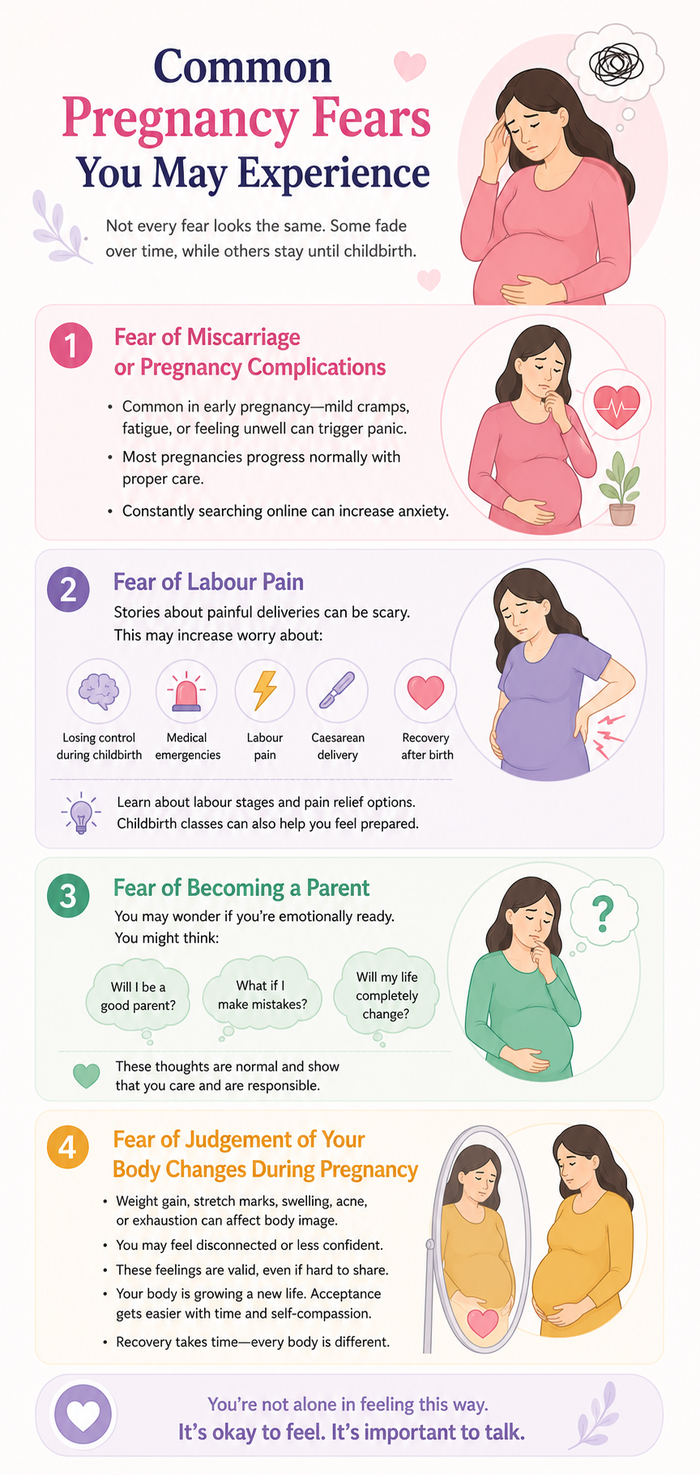
Not every fear looks the same. You may get rid of some fears in some time, and others keep bothering you throughout your journey until childbirth.
1. Fear of Miscarriage or Pregnancy Complications
This is one of the most common fears, especially during early pregnancy. Mild cramps, fatigue, or a sense of being unwell may make you panic.
Although pregnancy loss can happen, most pregnancies progress normally with proper prenatal monitoring and care.
Constantly searching for symptoms online, however, may worsen anxiety rather than reassure you.
2. Fear of Labour Pain
Stories about painful deliveries can make labour seem terrifying. This may increase your stress regarding the following:
- Losing control during childbirth
- Medical emergencies
- Labour pain
- Caesarean delivery
- Recovery after birth
3. Fear of Becoming a Parent
You may question whether you are emotionally ready to care for a baby. This fear is especially common during a first pregnancy.
You might think:
“Will I be a good parent?”
“What if I make mistakes?”
“Will my life completely change?”
These thoughts do not mean you are unprepared. In fact, concern often reflects responsibility and care.
4. Fear of Judgement of Your Body Changes During Pregnancy
Pregnancy changes your body in many ways. Weight gain, stretch marks, swelling, acne, or exhaustion may change your appearance.
You may feel a kind of disconnection from your body during pregnancy. Others struggle because they no longer feel physically attractive or energetic.
However, many people do not open up about these feelings, keeping them personal, but they are valid.
If you start living with the fact that your body is supporting and growing a new life, accepting your body transformation gets easier. Recovery also takes time after delivery, and every person heals differently.
Understanding Tokophobia: Extreme Fear of Pregnancy and Childbirth
When these pregnancy-related fears become much more intense, you develop a condition known as tokophobia.
Tokophobia is a severe fear of pregnancy or childbirth. It is more than normal nervousness. It may affect your sleep, eating habits, ability to carry out everyday chores, or decisions about pregnancy itself.
Signs of Tokophobia
You may experience:- Panic when thinking about childbirth
- Extreme anxiety during pregnancy
- Repeated fear of dying during labour
- Strong reluctance to carry pregnancy
- Disturbing thoughts about delivery
- Emotional distress after hearing birth stories
Causes of Tokophobia
Tokophobia may develop due to:- Previous traumatic birth experiences
- Miscarriage or pregnancy loss
- Anxiety or depression
- Sexual trauma or domestic violence
- Fear created by negative childbirth stories
How Tokophobia Can Be Managed
Treatment usually focuses mainly on anxiety management but also provides essential emotional support. The following approaches may help:
- Counselling or psychotherapy
- Cognitive behavioural therapy (CBT)
- Prenatal education classes
- Relaxation and breathing exercises
- Emotional support from your family and obstetrician
Emotional Support Makes a Major Difference
You do not have to silently carry every fear alone. Someone listening without judgment can become your strongest support while you are emotionally vulnerable during pregnancy. Feeling informed can also reduce fear.
The emotional support can further include:
- Help with household work
- Emotional reassurance
- Accompanying you to appointments
- Guiding you right with facts and the right medical information
Pregnancy is not scary for everyone, but it is also not magical every single day. For many people, both these emotions can come up together.
You may feel joy, fear, excitement, exhaustion, gratitude, and anxiety all within the same week. That emotional mix does not mean that you are ungrateful at all. It's just a part of your life-transforming journey, and it's completely okay.
With the right support and information, you can navigate this challenging time.
Whether you’re pregnant, a new mom, or navigating postpartum, you don’t have to do it alone. Join our support group to connect, share, and support one another.
FAQs on Is Pregnancy as Scary as It Seems? Decoding Fears
- Is having fears during pregnancy normal?
Yes. Pregnancy-related fears and concerns are common during pregnancy, especially during the first pregnancy or a high-risk pregnancy. Many people worry about labour, complications, or parenting. - What is tokophobia?
Tokophobia is an extreme fear of pregnancy or childbirth. This condition affects your mental health to such an extent that you may become unable to carry out your everyday chores. In some cases, people need the help of a professional counsellor. - Are pregnancy-related anxieties more common in the first pregnancy?
First-time pregnancy often brings more doubts than subsequent ones, especially in the early weeks. These concerns are part of the process. It is not something abnormal; they just arise from your deep worries about you and your baby.