
In this article:
While the hospital environment of a Neonatal Intensive Care Unit (NICU) might seem intimidating at first, it is designed to act as a "second womb," providing the specialised warmth and care your baby needs to catch up on their growth. With advances in medical technology, this phase is often uneventful, and in no time, you can take your baby home.
Modern neonatal care has advanced significantly, and even the tiniest babies now have a wonderful chance to thrive. The good news is that your role as a parent is more vital now. By focusing on small, consistent ways to bond with your newborn and staying informed about their progress, you can gain the confidence to navigate this phase with ease. Understanding your baby's needs can help you adjust to new routines and environments.
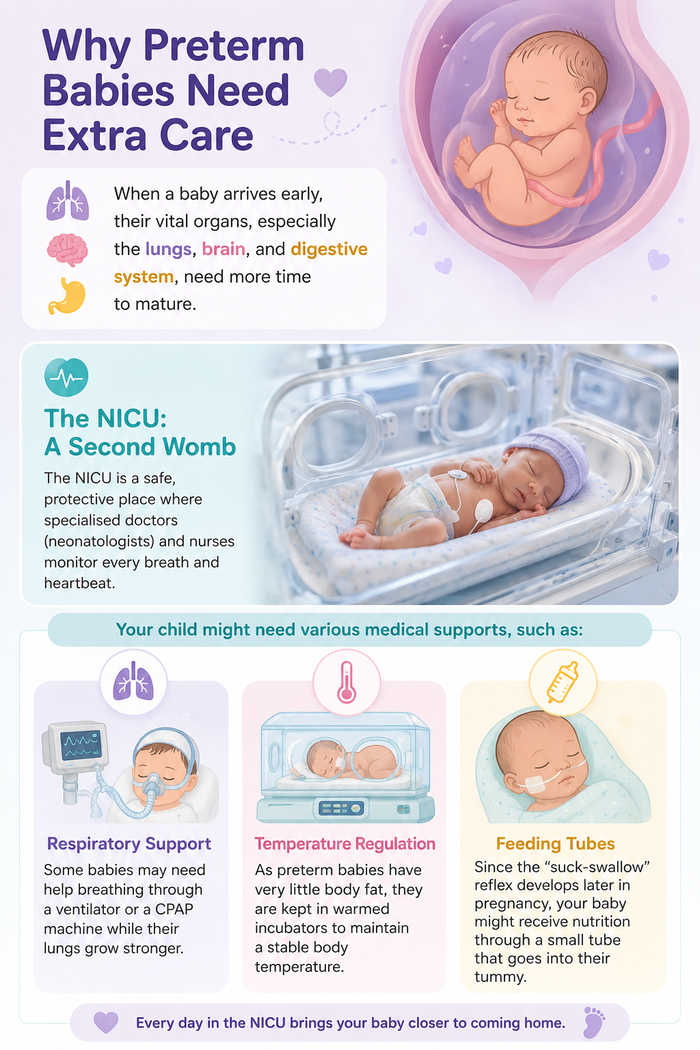
What Does "Preterm Birth" Mean for Your Baby's Early Days?
When a baby arrives early, their vital organs, especially the lungs, brain, and digestive system, need a bit more time to mature. The NICU serves as a protective "second womb" where specialised doctors (neonatologists) and nurses monitor every breath and heartbeat. Your child might need various medical supports, such as:
- Respiratory Support: Some babies may need help breathing through a ventilator or a CPAP machine while their lungs grow stronger.
- Temperature Regulation: As preterm babies have very little body fat, they are kept in warmed incubators that help maintain a stable body temperature.
- Feeding Tubes: Since the "suck-swallow" reflex develops later in pregnancy, your baby might receive nutrition through a small tube that goes into their tummy.
5 Practical Ways to Cope and Connect with Your Preterm Baby
It is natural to feel concerned when you cannot hold your baby immediately, but there are many ways you can assist their growth and your own healing.
1. Embrace the Power of Kangaroo Mother Care (KMC)
You are your baby's best medicine. Kangaroo Mother Care – holding your baby skin-to-skin against your chest, is a practice widely encouraged by doctors. It helps stabilise the baby’s heart rate, improves their sleep, and encourages breastfeeding. Even if your baby is very small, ask the nursing staff when you can begin these "skin-to-skin" sessions.
2. Provide "Liquid Gold" through Expressing Milk
For neonates, breast milk acts as a shield against infections. Even if your baby cannot nurse directly yet, expressing milk (colostrum) is a purposeful way to contribute to their recovery. This milk contains specific antibodies that help protect their sensitive gut.
3. Participate in Daily "Cares"
Assist the nurses with routine tasks such as changing a nappy or cleaning your baby’s skin. These small interactions help you get to know your baby’s personality and cues. Over time, these moments will help the NICU feel less like a hospital and more like a space where you are receiving a crash course in parenting your child.
4. Create a "Calm Zone" for Yourself
The NICU journey can be an emotional rollercoaster. To support your baby, you must also look after your own mental health. Do not ignore self-care; remember, your body needs to heal, too. Practise deep breathing and ensure you are eating nutritious meals to keep your energy levels up.
It is prudent to take an hour away from the hospital to rest or shower while your baby is asleep. This will help you refuel so you can be present when they need you.
5. Build a Support Circle
Staying strong as a parent is a virtue, but don't hesitate to communicate your fears to your partner or a close family member. Sharing your concerns and feelings reduces the burden of stress.
Many hospitals also have support groups where you can talk to parents who are navigating the same path.
When Should You Seek Extra Support?
While the NICU team looks after your baby, you must monitor your own health, recovery and well-being. Please consult a healthcare professional or counsellor if:
- You feel a persistent sense of detachment or difficulty bonding with the baby.
- You experience intrusive thoughts or "flashbacks" of the delivery.
- You feel so anxious that you are unable to sleep even at home.
- You experience extreme physical exhaustion that does not improve with rest.
How Can You Support This Phase?
Focus on Small Wins: Celebrate every time your baby breathes on their own for an hour or digests a small feed. These milestones are the building blocks of their journey home.
Be an Active Member of the Team: Don’t be afraid to ask questions during the doctor’s rounds. You may also discuss your concerns with your paediatrician. Understanding the "why" behind a treatment can significantly lower your anxiety and help you feel more in control of the situation.
Whether you’re pregnant, a new mom, or navigating postpartum, you don’t have to do it alone. Join our support group to connect, share, and support one another.
FAQs on How to Care for a Preterm Baby and What to Expect
- When can my baby finally come home?
Most babies are ready to go home once they can maintain their body temperature in a cot, feed entirely by mouth (breast or bottle) and are gaining weight steadily. - Will my baby have long-term health issues?
Although preterm birth heightens the risk for certain challenges, it is not a medical condition. Early intervention, adequate care and regular follow-ups with a paediatrician can help most children catch up to their peers by the age of two. - Can the father also do Kangaroo Mother Care?
Yes. While the mother’s contact is vital for milk production, fathers can also provide skin-to-skin contact to help stabilise the baby’s heart rate and give the mother time to rest.