How Your Baby Moves When You Move
Picture your baby floating in warm water, surrounded by softness. When you walk slowly or stretch calmly, they feel a soft rocking motion. Many babies even fall asleep during gentle movement because it becomes hypnotic for them. When you choose something a little more active like swimming or a faster routine, the environment inside becomes more lively. Your baby may wiggle or shift because the movement reaches them naturally.
Does the Baby’s Heart Rate Change Too?
A little. Usually by only a few beats per minute. This is safe. It is similar to the way a newborn responds when you rock them. They are stimulated for a moment and then settle very quickly afterwards.
How Oxygen Is Shared During Exercise
You might wonder if your baby receives less oxygen when you breathe harder. Your body actually gives the uterus and placenta priority. Blood vessels open up more easily, and oxygen travels more efficiently. The placenta continues to receive what it needs before your muscles do. Nature has already decided the order, and the baby is always placed first.
Does the Baby Feel Pressure or Stretching?
- When you move, stretch or bend, the uterus shifts slightly along with you
- The amniotic fluid acts like the softest cushion, absorbing most of the movement
- Very little reaches the baby directly
- What your baby feels is similar to floating in warm water with gentle pressure now and then
- Around twenty-five to twenty-eight weeks, their inner ear matures enough to sense movement patterns more clearly
How Does Exercise Support the Baby’s Brain?
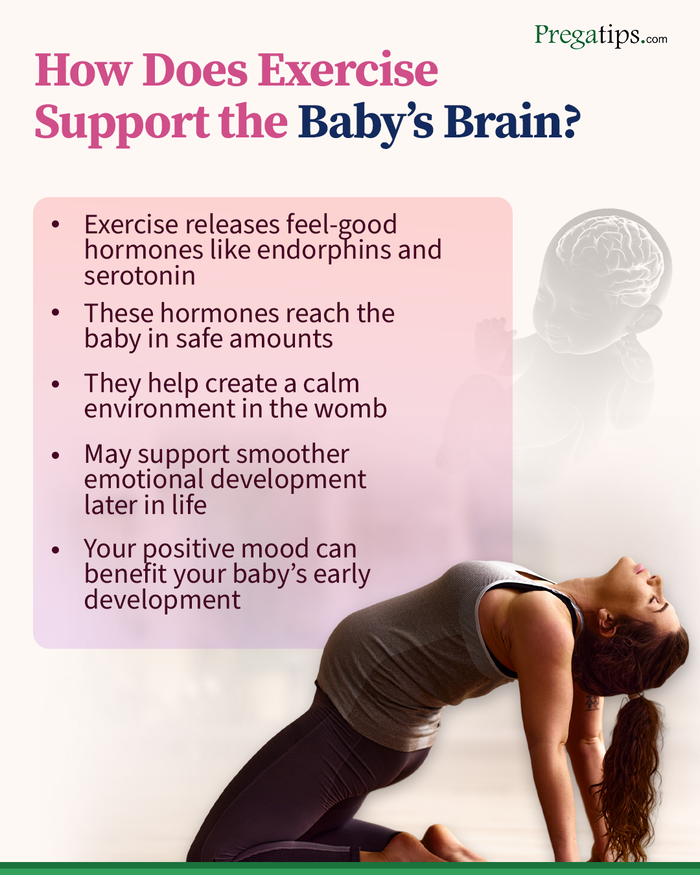
- Your movement releases endorphins, serotonin and dopamine
- These positive hormones reach your baby in small and safe amounts
- They help create a calm and balanced environment inside the womb
- Some studies suggest that babies exposed to these hormonal patterns may develop smoother emotional responses later on
- Your improved mood becomes a gentle part of your baby’s early world
Healthy Foetal Weight and Your Activity Levels
- Moderate activity helps your body manage blood sugar more steadily
- This balance supports healthier fetal weight gain
- It also lowers the chances of certain complications
- Babies of mothers who stay active often fall within a healthy, balanced weight range at birth
- It is one of the simplest and most natural gifts a movement offers both you and your baby
The Placenta and Your Movement
Think of the placenta as a small garden that feeds and protects your baby. Better blood flow strengthens this garden. Nutrient transfer becomes smoother, and long-term development receives gentle support.
How to Stay Safe While Exercising
- Choose gentle activities such as walking or swimming
- Drink enough water before, during and after exercise
- Wear clothing that lets you move comfortably
- Avoid lying flat on your back after the first trimester
- Stop immediately if you feel unusual breathlessness, dizziness or pressure
When Should You Check with Your Doctor?
- Speak to a doctor if you notice any vaginal bleeding
- Check with a doctor if you feel strong or persistent abdominal discomfort
- Seek help if you experience regular or rhythmic contractions
- Contact your doctor if you observe fewer movements from your baby
- Get medical advice if you faint or feel close to fainting
- Always speak to a doctor if you have heart or breathing concerns
Your Quick Checklist
- Choose gentle exercise
- Drink water
- Listen to your body
- Rest often
- Involve your partner for motivation or support
- Stay consistent but never force anything
Whether you’re pregnant, a new mom, or navigating postpartum, you don’t have to do it alone. Join our support group to connect, share, and support one another.
FAQs on What Happens Inside the Womb When You Exercise
- Does exercise make my baby move more?
Sometimes yes. Babies respond to the movement around them, and it is usually harmless. - Can I start exercising later if I was not active before?
Yes. Start slowly and choose gentle routines. Speak to your doctor first if you are unsure. - Can too much exercise affect growth?
Very intense exercise may not be ideal, but normal moderate movement is considered safe.