In this article:
For decades, the conversation around mental health after childbirth has centred almost entirely on mothers. Fathers have been cast as supporters, the steady hand, the calm presence, the one who holds things together while the mother recovers.
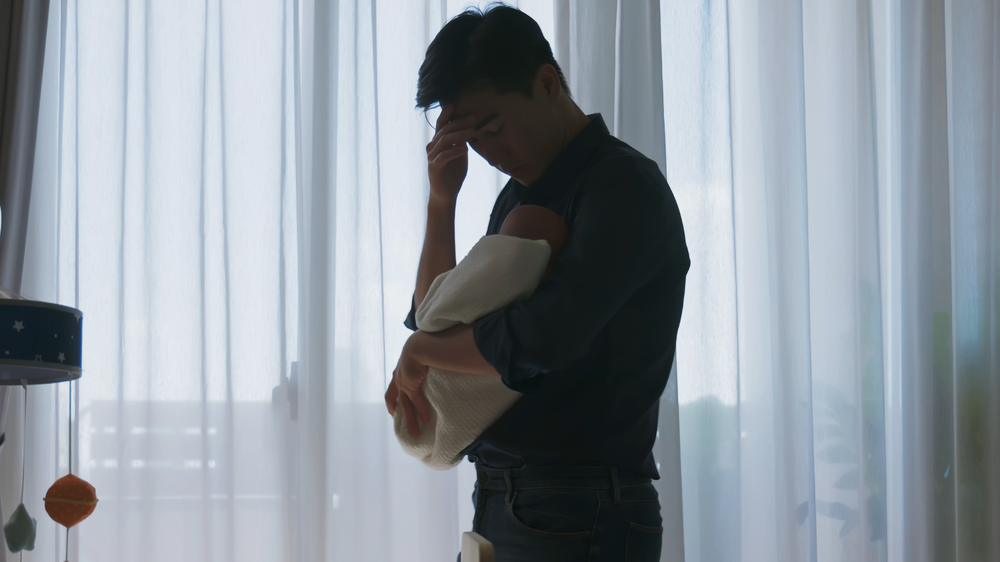
It is a role that leaves little room to admit struggle, let alone seek help. But beneath that composed exterior, a growing number of new fathers are quietly unravelling, not because they are weak, but because they are human, and because no one thought to ask how they were doing.
It is time that changed. Because when a father is struggling, and no one notices, or worse, no one cares to look, everyone in that family pays the price.
What Is Paternal Postpartum Depression?
Postpartum depression is usually thought of as something only mothers experience. And while maternal postpartum depression has been widely studied and increasingly discussed, the paternal version has largely been left in the shadows.
Paternal postpartum depression is a clinically recognised mood disorder that affects fathers and other non-birthing parents, typically within the first year after a baby is born. It is not a sign of weakness. It is not "just stress." It is a genuine mental health condition that affects how a father thinks, feels, and functions, and how he connects with his partner and child.
Approximately 1 in 10 new fathers experiences postpartum depression, a figure that rises to 1 in 4 when their partner is also struggling with depression after birth. Yet most fathers never seek help, and many never even realise they are unwell.
Unlike in mothers, where dramatic hormonal shifts are a known trigger, the causes in fathers are more layered and less straightforward. But that does not make the experience any less real.
Causes of Postpartum Depression in Fathers
Fatherhood is a profound life transition, one that modern culture tends to under-prepare men for. While mothers are surrounded by pregnancy support, parenting classes, and postnatal care visits, fathers often receive little more than a congratulatory handshake and an expectation to "man up."
Several factors increase a father's risk of developing PPPD:
- Sleep deprivation: Chronic sleep loss does not just make you tired; it dismantles emotional regulation, reduces resilience, and heightens anxiety.
- Identity shift: Many men struggle with the loss of their previous role, freedom, and sense of self. Becoming a father can feel disorienting, especially if it doesn't match the emotion they expected.
- Relationship strain: Intimacy changes, reduced connection with a partner, and feeling sidelined in the baby's care can all trigger feelings of loneliness and resentment.
- Financial pressure: The weight of suddenly being "the provider" in a new, more permanent way can generate crippling anxiety.
- A partner with postpartum depression: Studies consistently show that up to 50% of fathers whose partners have PPD are significantly more likely to develop it themselves.
- History of depression or anxiety: Previous mental health struggles are one of the strongest predictors of PPPD.
- Lack of social support: Men, in general, have fewer close friendships and are less likely to seek emotional support, leaving them to process enormous life changes largely alone.
Research shows that new fathers experience hormonal changes after a baby's birth, including drops in testosterone and cortisol shifts, particularly in fathers who are actively involved in caregiving.
A study has confirmed that testosterone levels in new fathers can drop by as much as 30% after their baby is born, a change independently linked to depression in men.
These changes may contribute to mood disturbances. Father's brains also show measurable changes in neural regions associated with empathy and caregiving, indicating the body does respond to new fatherhood.
Signs and Symptoms of Paternal Postpartum Depression
This is where paternal postpartum depression differs most from its maternal counterpart, and why it goes undetected so often. Fathers rarely present with classic tearfulness and sadness. Instead, PPPD in men tends to wear disguises.
Watch for these signs:
- Irritability, short temper, or unexplained rage are often the earliest and most prominent symptoms
- Emotional numbness or feeling detached from the baby or partner
- Escaping into work, screens, alcohol, or other distractions
- Loss of interest in things that used to bring pleasure
- Physical complaints: headaches, digestive issues, fatigue without cause
- Anxiety and intrusive thoughts, especially about something terrible happening to the baby
- Feeling like a failure as a father, partner, or provider
- Withdrawing socially or feeling isolated even in a room full of people
- Difficulty concentrating or making decisions
- In severe cases, thoughts of self-harm or disappearing
The challenge is that many of these signs are socially acceptable in men: "he's just stressed at work," "he's adjusting," "that's just how men are." This social cover is precisely why PPPD remains so dangerously invisible.
The Edinburgh Postnatal Depression Scale (EPDS), the world's most widely used screening tool for PPD, was originally designed for mothers and may miss the atypical, anger-led presentation seen in fathers. Researchers are calling for father-specific diagnostic tools.
How Does It Affect the Family?
Around 10% of new fathers experience postpartum depression, which is double the rate seen in the general male population. This rises to approximately 25% when the mother also has postpartum depression, creating what researchers call a "ripple effect" across the family unit.
Research consistently shows that children of fathers with untreated PPPD are at higher risk for:
- Delayed cognitive and language development
- Emotional and behavioural difficulties in early childhood
- Greater difficulty forming secure attachments
And perhaps most painfully, fathers with PPPD often pull away precisely when connection matters most, for their baby, their partner, and themselves. Early bonding moments that cannot be replicated are quietly lost.
Depressed fathers are less likely to read, play, and engage in positive interactions with their children, and more likely, in untreated severe cases, to exhibit neglectful or harsh parenting behaviours.
This is not about blame. Untreated depression is not a choice. But it is a compelling reason why recognising and treating PPPD matters urgently, not just for the father, but for the entire family.
Treatment Options for PPPD
Paternal postpartum depression is treatable, often very effectively, with the right support. With appropriate treatment, up to 80% of people with postpartum depression achieve full recovery.Treatment options include:
Talking Therapies
Cognitive Behavioural Therapy (CBT) is considered one of the most effective approaches. It helps identify unhelpful thought patterns and replace them with more grounded responses. Many men find structured, problem-focused therapy more accessible than open-ended counselling.Medication
Antidepressants, particularly SSRIs, can be highly effective for moderate to severe paternal PPD. A doctor can discuss the options, benefits, and any side effect concerns in detail.Peer Support and Dad Groups
Something powerful happens when a struggling father hears another man say, "I felt that too." Father-specific support groups, increasingly available online and in communities, can break the isolation that feeds depression.Lifestyle Adjustments
While not a cure on their own, regular physical activity, deliberately protected sleep time, reducing alcohol, and scheduled one-to-one time with a partner all support recovery.Couples Therapy
When PPPD has strained the relationship, working with a couples therapist can help both partners feel heard and rebuild connection together.Paternal PPD in India: A Gap That Cannot Be Ignored
A 2024 review in the Indian Journal of Psychological Medicine highlights that PPPD remains severely under-researched in India, with awareness significantly lagging behind global trends.
A study from NIMHANS, Bengaluru, found that spouses of mothers admitted for severe postpartum mental illness experienced significant psychological distress, yet were offered little structured support during their partner's treatment.
How Partners and Families Can Support Fathers
If you are the partner, parent, friend, or colleague of a new father who seems off, withdrawn, irritable, emotionally absent, or just not quite himself, there are gentle, meaningful ways to help.
- Ask directly and non-judgmentally: "You seem like you're carrying something heavy. How are you actually doing?"
- Avoid dismissing his experience with comparisons, "But you're not the one who gave birth", can shut a man down permanently.
- Encourage him to see his doctor, and offer to help arrange it or even go along.
- Acknowledge the enormous transition he is going through; fatherhood reshapes identity in ways that are rarely discussed.
- Share information without pressure. Sometimes, reading about something privately is the first step toward acknowledging it.
You Are Not Failing, You Are Struggling
Becoming a father is one of the most significant things a man will ever go through. It reshapes who you are, how you see yourself, and what your life looks like, often overnight. And yet, society has spent generations telling men to simply absorb all of that quietly, to get on with it, to be strong for everyone else.
Paternal postpartum depression is what can happen when that expectation meets reality, when the weight is too heavy to carry alone, and no one has told you it is acceptable to put it down.
You are not a bad father for struggling. You are not weak for feeling this way. And you are absolutely not alone. Millions of fathers have sat exactly where you are sitting, exhausted, disconnected, quietly falling apart, and have come through it, often stronger and more present for having faced it honestly.
The first step is rarely dramatic. It might just be telling your doctor at your next visit, "I haven't been feeling like myself since the baby arrived." That one sentence can open a door to the support that changes everything.
Your child does not need a perfect father. They need a present one. If any part of this article felt familiar, please speak to your doctor. You do not need to reach rock bottom before asking for help. Saying "I am not coping well" is one of the bravest things a father can do, and it may be the most important thing you do for yourself and your family this year.
Whether you’re pregnant, a new mom, or navigating postpartum, you don’t have to do it alone. Join our support group to connect, share, and support one another.
FAQs on Paternal Postpartum Depression: The Invisible Struggle No One Talks About
- How long does paternal postpartum depression last?
Without treatment, PPPD can persist for months or even years, in some cases extending well into the toddler years. With appropriate treatment (therapy, medication, or both), most fathers see significant improvement within 8–12 weeks. Early intervention leads to faster an - Can paternal postpartum depression start months after the baby is born?
Yes. While symptoms often emerge in the first 3 months, PPPD can develop or intensify at any point within the first year. Some fathers feel the impact most acutely when the relentlessness of broken nights accumulates, when relationship strain deepens, or around the 3–6 months mark when the initial adrenaline of a new baby fades and exhaustion sets in fully. - Is paternal postpartum depression the same as regular depression?
There is significant overlap, but PPPD has specific triggers tied to the transition to fatherhood, identity disruption, relationship changes, sleep loss, and the weight of new responsibility. Men with PPPD also tend to show more anger and withdrawal rather than sadness, which is why it is frequently missed. A doctor who understands PPPD can make an accurate assessment and guide the right treatment.