With the correct diagnosis and support, the vast majority of women who experience pre-period spotting go on to conceive successfully. Knowledge, not anxiety, is your most powerful tool.
Trying to conceive often makes you more aware of every small change in your body. So when you notice spotting before your expected period, it can raise a lot of questions. Is it an early sign of pregnancy? A hormonal imbalance? Or something that could affect your chances of conceiving?
The truth is, spotting before a period is quite common, and in many cases, it is not a cause for concern. However, tracking your cycle and noting the characteristics of the spotting gives your doctor valuable clues for reaching the right diagnosis. With the right information and timely medical guidance, most causes of pre-period spotting are manageable and should not stand in the way of your dream of becoming a parent.
What Exactly Counts as Spotting?
When you are trying to conceive, you pay close attention to every signal your body sends. So when you notice a small amount of blood or pink-brown discharge in the days before your expected period, it is completely natural to feel a mix of hope and worry. Could it be implantation bleeding? Is something wrong? Should you be concerned?
Spotting refers to very light vaginal bleeding that is distinctly different from a normal menstrual flow. It is usually not enough to soak a pad or tampon, and the colour can range from light pink to dark brown. It may last anywhere from a few hours to a couple of days.
The important thing to know is that spotting before your period while trying to conceive can have many causes, some quite reassuring, and others that may need medical attention. Let us walk through them together.
Spotting vs Period: Key Differences
The table below summarises the key differences between spotting and a regular period, which can help you describe your experience accurately to a doctor.
| Spotting (pre-period) | Regular period |
| Light pink, red, or brown | Bright to dark red |
| A few drops to light flow | Moderate to heavy flow |
| A few hours up to 2-3 days | Typically 4-7 days |
| Minimal or absent cramping | Cramping usually present |
| No clots | Clots may be present |
Understanding Spotting by Cycle Phases
Rather than offering a flat list of possible causes, a more useful approach is to think in terms of where you are in your cycle. Spotting that happens two weeks before your period carries different implications than spotting that occurs two days before it. Here is how to frame your thinking:Phase 1: Around Ovulation (Days 12–16 of a 28-day cycle)
A brief episode of light pink spotting mid-cycle, sometimes accompanied by mild one-sided pelvic discomfort, is often ovulation spotting. It is caused by the small hormonal shift that occurs as oestrogen dips temporarily at the moment of egg release. For women trying to conceive, this is actually useful information: it can help pinpoint the fertile window.Phase 2: After Ovulation, Before Period (Days 17–26)
Spotting in this window, often called luteal phase spotting, carries the most diagnostic weight when you are trying to conceive. It can be a sign of implantation, but it can also reflect inadequate progesterone production, a condition known as luteal phase insufficiency. The distinction matters: one is a sign of early pregnancy, and the other is a condition that may be actively preventing it.Phase 3: Just Before Your Period (Days 27–28)
Brown or dark red spotting in the final one to two days before your period is extremely common and usually represents old blood from the previous cycle being expelled as the uterine lining begins to shed. While generally benign, if this pre-period brown spotting stretches for more than three days every cycle, it may signal low progesterone or endometriosis, both of which warrant investigation in the context of trying to conceive.Implantation Bleeding: Hope, But Not Confirmation
When you are trying to get pregnant, the mind tends to reach immediately for the most hopeful explanation. Implantation bleeding is the light spotting that can occur when a fertilised embryo embeds into the uterine lining. It is real, but it is often misunderstood.What makes implantation bleeding distinctive is not just its timing (typically 7 to 12 days post-ovulation) but its character. It is genuinely light, often described as a single smear or a pinkish tinge when wiping, and it resolves on its own within 24 to 48 hours. It is not accompanied by the building cramps of a period, and it does not progress to heavier flow.
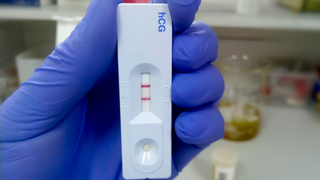
Critically, not every woman who conceives will experience implantation bleeding, and not every episode of luteal phase spotting means implantation has occurred. A home pregnancy test taken 14 or more days after ovulation remains the only reliable way to confirm early pregnancy.
Implantation bleeding is estimated to occur in roughly one in four pregnant women. If you do not experience it, it does not mean conception has not taken place.
According to the Cleveland Clinic, bleeding or spotting occurs in about 15% to 25% of pregnancies, particularly in the early stages.
Progesterone and Pre-Period Spotting
If you have ruled out pregnancy and the spotting is occurring repeatedly in the days before your period, progesterone deserves serious attention. Progesterone is produced by the corpus luteum (the remnant of the follicle that released the egg) after ovulation. Its job is to maintain the uterine lining and support early pregnancy.Luteal Phase Defect
When progesterone levels fall too quickly, a pattern sometimes called luteal phase defect, the lining begins to break down ahead of schedule, producing spotting before a true period arrives. In a trying-to-conceive context, this is clinically significant: low progesterone can prevent a fertilised egg from successfully implanting, or lead to early pregnancy loss that may be indistinguishable from a slightly unusual period.
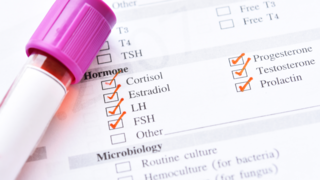
A single blood test measuring progesterone levels on day 21 of a 28-day cycle (or 7 days after confirmed ovulation) can identify this problem. Treatment with progesterone supplementation, typically as a vaginal pessary or oral tablet taken after ovulation, can be highly effective.
When Should You Be Concerned About Spotting?
Spotting before a period while trying to conceive is a common but often misunderstood symptom. In many cases, it reflects natural hormonal changes, but sometimes it can signal issues like progesterone deficiency or underlying conditions.
Rather than assuming the worst, focus on patterns, timing, and associated symptoms. A structured diagnostic approach can help identify the cause and guide appropriate treatment.
Most importantly, spotting is not the end of your fertility journey; it is simply a signal from your body that deserves understanding, not fear.
You’re not alone in your journey when trying to conceive. Join our supportive community to connect with others, share experiences, and find encouragement every step of the way.
FAQs on Why Am I Spotting Before My Period?: Reading Your Body's Signals When You're Trying to Conceive
- Can spotting before my period be a sign of pregnancy?
Yes, it can be implantation bleeding, but this is not very common. Most spotting before a period is due to hormonal changes. If your period is late, take a pregnancy test. - Does spotting before a period affect fertility?
Occasional spotting is usually harmless. But if it happens every cycle, it may indicate a hormonal issue like low progesterone, which can affect implantation. - Is it normal to have 1–2 days of spotting before a period, and can stress cause it?
Yes, light spotting 1–2 days before your period can be normal and is often due to natural hormonal changes. Stress can also disrupt hormone balance, which may lead to early or light spotting before your period.