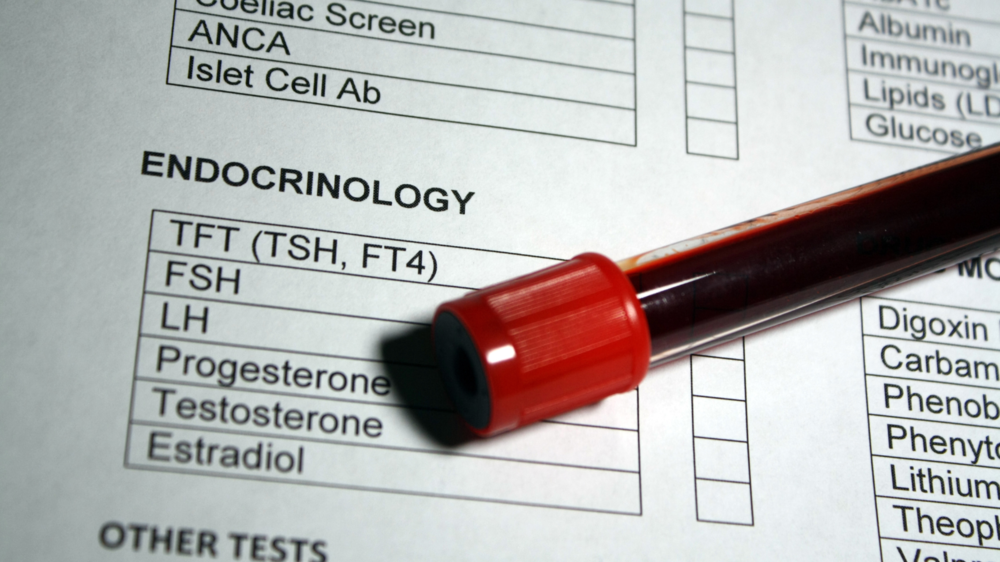
Doctors cannot diagnose this condition with just one test. Instead, they look at your symptoms, a pelvic ultrasound, and specific hormone tests for PCOS. Among these, four are especially important: AMH, the LH: FSH ratio, testosterone, and insulin-related tests. These help your doctor understand what’s really going on and rule out other conditions that can look like PCOS.
Anti-Müllerian Hormone (AMH) Test
The AMH test has become one of the most reliable blood markers for PCOS. This hormone is produced by the small follicles in your ovaries. When you have PCOS, your ovaries contain many more tiny, immature follicles than usual, so the AMH level goes up (often two to three times higher than normal).
A raised AMH level strongly supports a PCOS diagnosis, especially when combined with irregular periods or signs of high androgens. It also gives an idea about ovarian reserve and how the condition might affect fertility.
Many people with PCOS find the AMH test helpful because its levels remain fairly steady throughout the menstrual cycle, meaning it can be done any day, with or without periods. It also helps doctors plan and personalise a woman’s reproductive health journey, and there’s no need to fast before the test.
LH: FSH Ratio
Luteinising hormone (LH) and follicle-stimulating hormone (FSH) come from the pituitary gland in the brain and control the menstrual cycle. In a typical cycle, LH and FSH levels stay fairly balanced, giving a ratio of around 1:1. In people with PCOS, however, LH is often much higher compared to FSH, creating a ratio of 2:1 or even 3:1.
Years ago, doctors relied heavily on this raised ratio to diagnose PCOS, but today they know it is not always present. Many individuals who definitely have PCOS still show a normal ratio on the day of testing. Because hormone levels can fluctuate during the cycle, the test is best done early in the cycle (usually day 2 or 3).
Even if the ratio is normal, other signs and tests can still lead to a PCOS diagnosis. Doctors now use the LH: FSH result as supporting information rather than the deciding factor.
Testosterone Testing
Women naturally produce small amounts of testosterone, but in PCOS, the ovaries and sometimes the adrenal glands make too much. This extra testosterone causes many of the visible symptoms, like acne that will not clear up, excess hair on the face, chest or back (hirsutism), and thinning hair on the scalp.
Doctors usually measure both total testosterone and free testosterone. Free testosterone is the active portion that is not bound to proteins in the blood. In many women with PCOS, both of these levels are higher than normal.
Insulin Levels or Glucose Tolerance
More than half of people with PCOS have insulin resistance. This means their body does not respond properly to insulin, causing higher insulin levels in the blood. The extra insulin then pushes the ovaries to make even more testosterone, making symptoms worse and increasing the long-term risk of type 2 diabetes and heart disease.
Common ways to check for insulin resistance include:
- Fasting insulin and fasting glucose together: These are taken after you haven’t eaten for 8 to 10 hours. Your doctor may use these two values to calculate a HOMA-IR score, which gives an idea of how hard your body is working to keep blood sugar under control.
- A two-hour oral glucose tolerance test (OGTT): For this test, you drink a sweet, glucose-rich drink, and your blood sugar is measured 2 hours later. This shows how well your body processes sugar and whether it struggles to bring glucose levels back to normal.
- Simple fasting and post-meal blood sugar tests: These check your sugar levels before eating and 1 to 2 hours after a meal, helping your doctor see how your body responds to everyday food.
How Do Hormone Tests Work Together to Confirm a PCOS Diagnosis?
Doctors follow internationally agreed criteria (usually the Rotterdam criteria), which say you need at least two out of these three markers:
- Irregular or absent periods
- Evidence of high androgens (either from symptoms like hirsutism and acne, or from blood tests showing raised testosterone or other androgens)
- Polycystic appearance of the ovaries on ultrasound
These four hormone tests give a clear window into what is happening inside the body. They help confirm PCOS, rule out other conditions, and guide the best treatment plan for each woman.
You’re not alone in your journey when trying to conceive. Join our supportive community to connect with others, share experiences, and find encouragement every step of the way.
FAQs on Hormone Tests for PCOS: AMH, LH: FSH Ratio, Testosterone, Insulin
- What is the normal insulin level for a woman with PCOS?
There is no single “PCOS-specific” normal insulin level, but fasting insulin is generally considered normal when it is below 25 mIU/L. - Are standard ovulation kits reliable for PCOS?
No, these kits often give false positives in PCOS because many women naturally have higher baseline LH levels. More reliable options include tracking basal body temperature (BBT) or monitoring cervical mucus changes.