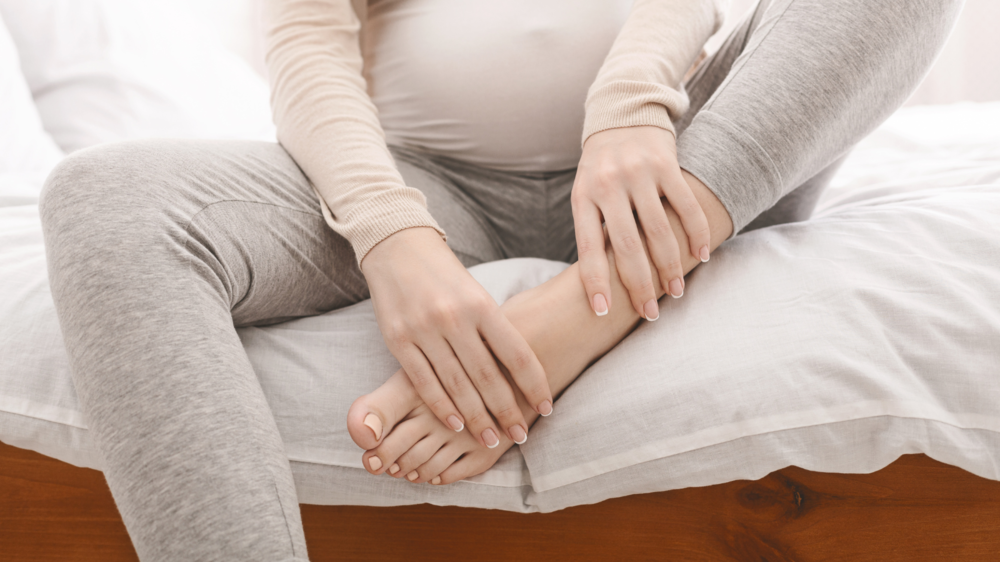
You can better care for your feet once you understand the reasons for foot arch flattening and practical measures to ease discomfort.
Why Do Foot Arches Flatten During Pregnancy?
Several factors contribute to flat feet during pregnancy.- A pregnancy hormone called relaxin makes your ligaments and joints loose throughout your body to prepare for childbirth. It is essential for delivery, but it can also affect the ligaments supporting your feet.
- You may gain about 25-35 pounds during pregnancy. This extra weight increases pressure on the foot arches, potentially causing them to flatten.
- Swelling in your feet and ankles can make your arches appear lower, which reduces the natural curve of your foot.
- Your feet may appear longer, wider, and flatter when all these factors combine, which can also change how your shoes fit.
How Can Flattened Arches Affect You?
Flattened foot arches may seem minor, but they can affect your daily life in several ways.- Pain: You may feel soreness in the arches, heels, or ankles after standing or walking
- Balance: Changes in your foot structure can alter your gait, making balance harder, especially in late pregnancy
- Posture: Flattened arches can affect your lower back, knees, and hips, leading to aches in those areas
- Shoe fit: You may find that shoes that fit before pregnancy now feel tight or uncomfortable
Are Flattened Arches Permanent?
Foot arches return to their pre-pregnancy shape after childbirth in most cases. Studies show that the foot arch becomes flat in the long run in about 25-30% of pregnancy cases. It is more common in cases of multiple pregnancies or too much weight gain. Several factors may influence foot recovery.- Genetics and natural foot structure
- Amount of weight gained during pregnancy
- Level of physical activity and foot care
In this article:
What Can You Do to Support Your Feet During Pregnancy?
You do not have to suffer because of the flat arch because following practical tips can protect your foot:- Wear supportive footwear, as shoes with good arch support or orthopaedic insoles help reduce strain
- Using foot exercises, such as stretching your arches, rolling a ball under your feet, or toe curls, can strengthen foot muscles
- Raise your feet whenever you can to reduce swelling and discomfort
- Maintain a healthy weight gain and follow your doctor’s guidance on appropriate weight, which can minimise pressure on your feet
- Consider orthotics, which can provide additional support for flatter arches
When Should You See a Doctor?
Most flat feet are manageable, but it is best to get your doctor’s opinion in the following conditions:- Severe foot pain or swelling
- Back, hip, or knee pain due to foot changes
- Numbness or a tingling sensation in the feet
- Difficulty walking or balancing while standing
Lifestyle and Emotional Support
Changes in the feet are another unwelcome change of pregnancy. You can express your feelings to your partner, friends, or family to ease the emotional load, if not physical. They can accompany you to shop for comfortable footwear or help you with gentle stretches. Their support can reduce your stress about changes and also help you feel taken care of well in pregnancy.What To Do Next: A Quick Checklist?
You will know what to do if you are pregnant and experiencing changes in your feet.- Observe and track any foot pain or swelling
- Wear supportive shoes and use orthotics if necessary
- Perform gentle foot exercises daily
- Rest your feet on a stool or pillow
- Consult your doctor or a podiatrist for persistent pain or arch changes
- Include partner or family support for mobility and comfort
Whether you’re pregnant, a new mom, or navigating postpartum, you don’t have to do it alone. Join our support group to connect, share, and support one another.
FAQs on How the Foot Arch Flattens During Pregnancy
- Can flattened foot arches cause long-term foot problems?
In some cases, the foot arch may never return to its original form, which can increase discomfort or result in changes in gait. - Are foot exercises safe during pregnancy?
You can try gentle exercises for your foot, such as toe curls, arch stretches and rolling a ball under your feet. You can get your doctor’s opinion if you still have concerns. - Can swelling worsen arch flattening?
Swelling can reduce the height of your arches, and discomfort may feel worse due to it. However, you can manage it by wearing supportive footwear