In this article:
In India, where the incidence of childhood diabetes is on the rise, understanding these early markers is essential. Although rare in the first few months of life, the initial signs of T1D may appear as early as infancy. Making yourself aware of the biological "red flags" can help you seek medical support sooner and control symptoms. Often, this just means staying observant of small, consistent patterns in your baby’s daily life.
What Does Type 1 Diabetes Mean for a Newborn?
T1D occurs when the immune system mistakenly attacks the cells in the pancreas that produce insulin. This is different from type 2 diabetes (T2D) or adult diabetes, and is not related to diet or lifestyle. Frequently, T1D is caused by environmental factors and immune responses, and sometimes genetics.
In neonates and infants, T1D is frequently associated with specific physical markers, such as:
- Excessive Thirst and Dehydration: The baby may seem constantly hungry for milk or water, yet their skin or mouth appears dry.
- Frequent Diaper Changes: You may notice that the baby is passing urine much more frequently than usual.
- Persistent Diaper Rash: High sugar levels in the urine can lead to frequent yeast infections, appearing as a stubborn rash that does not clear with standard creams.
- Unusual Fatigue: The baby may seem unusually drowsy or lack the typical energy expected during their awake windows.
5 Practical Ways to Monitor Newborn Health Markers
Although medical technology provides the final diagnosis, your observations as a parent can guide the paediatrician towards individualised treatments. Being aware of your baby’s symptoms will also help you manage them better.
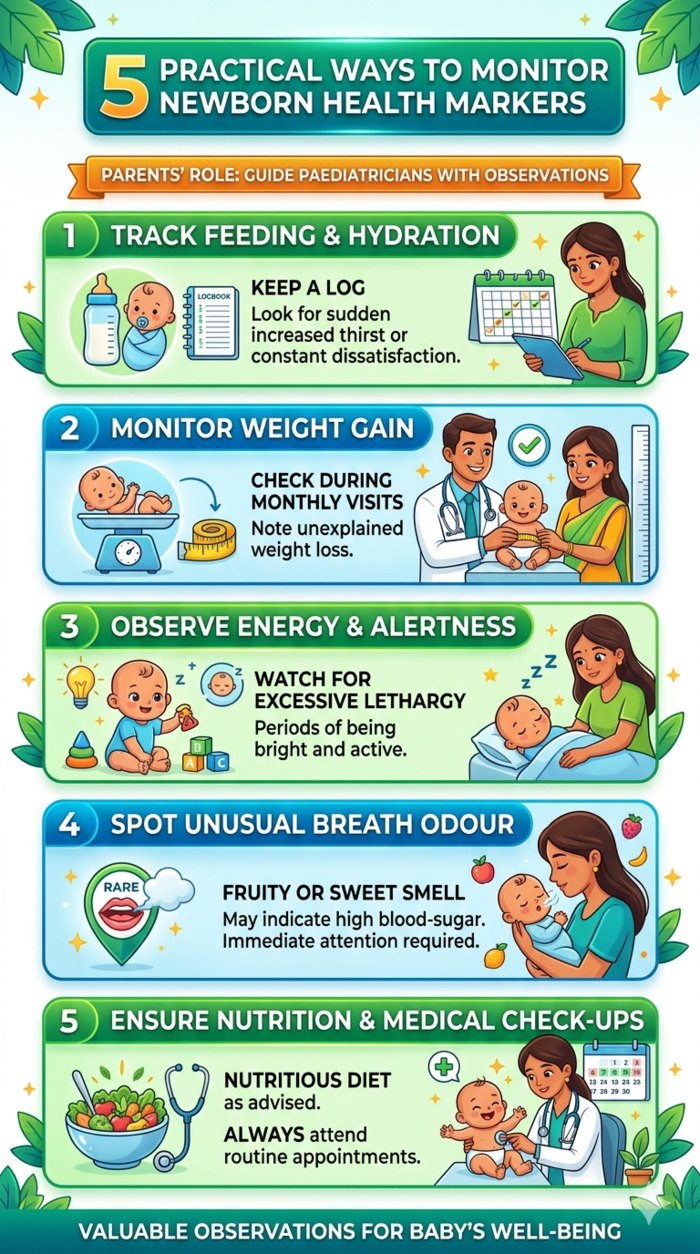
1. Monitor feeding and hydration patterns
Observe feeding patterns and track your baby’s metabolism. Keep a simple log of how often your baby demands milk. While newborns feed often, a sudden and persistent increase in thirst or constant dissatisfaction may warrant a discussion with your paediatrician.
2. Track growth and weight gain
Assist your doctor by keeping a close eye on your baby’s weight during their monthly check-ups. A baby with early diabetic markers may struggle to gain weight despite feeding well, or may even show unexplained weight loss. Whereas stable growth indicates that your baby is processing nutrients effectively. Maintain a table or a weight calendar and show it to your paediatrician during routine check-ups.
3. Observe energy and alertness levels
Help your baby stay healthy by noticing their patterns of alertness. While newborns sleep a lot, they should have periods of being bright and active. If your baby seems consistently lethargic, exhausted or difficult to wake even after a long rest, it may be a sign that their blood sugar levels need checking.
4. Pay attention to breath odour
Indian parents are often hands-on with their baby’s hygiene, which can help them spot this rare marker. If you notice a sweet, fruity smell on your baby’s breath, it could indicate high blood sugar levels. This is a scientifically recognised sign that requires immediate medical attention.
5. Ensure nutrition and do not skip medical check-ups
Children are constantly growing, and the first year of life can be extremely demanding. To support your baby’s metabolism, provide them with a nutritious diet as advocated by your paediatrician. Additionally, always attend routine check-ups and follow-ups. These appointments allow doctors to monitor the baby’s health markers and identify any deviations in blood parameters or developmental milestones early on.
When Would Symptoms Be Alarming?
Consult your healthcare provider or a specialist immediately if:
- Your baby has heavy or soaked diapers much more frequently than usual.
- The baby is breathing rapidly or seems to be struggling for air.
- You notice your baby is unusually fatigued, dizzy, or unresponsive.
- You notice that your baby’s vision seems unfocused or blurred.
How Can You Support This Phase?
Prioritise Accurate Information: Managing a newborn’s health can be demanding, and it is normal to feel anxious. Remember that by seeking professional medical guidance, you are not only being vigilant about your baby’s health, but also preventing unnecessary panic. If you focus on evidence-based diet and lifestyle routines, your child’s health will improve.
Ask for Help: Guide your partner or a close family member regarding how to track your child’s symptoms when you are not around. Further, seek help and emotional support; this will help you keep calm and focused on your baby’s needs.
What to Do Next?
Although symptomatic management and blood sugar control are essential, you must pay attention to your child’s overall well-being. As your baby grows, be ready to adjust their care plan with your paediatrician's guidance.
Whether you’re pregnant, a new mom, or navigating postpartum, you don’t have to do it alone. Join our support group to connect, share, and support one another.
FAQs on Understanding Early Type 1 Diabetes Markers in Newborns: 5 Vital Insights for Parents
- Can T1D lead to long-term health problems?
Yes, if not managed, T1D can have long-term impacts on a child's health. In addition, the condition can increase the likelihood of acquiring other metabolic disturbances. The good news is that high blood sugar levels can be controlled by following an appropriate diet and consistent healthy habits. - Is it possible to manage early markers without medication?
Type 1 diabetes specifically requires insulin administration, along with constant monitoring and regular health check-ups. Many families successfully manage their child's parameters through careful control and medical guidance.