In this article:
What Is Postpartum Anaemia?
Postpartum anaemia is when your red blood cell haemoglobin level drops below the normal range sometime after delivery. Red blood cells carry oxygen to all of the organs in your body, and it is haemoglobin that allows this to happen. This is the most common complication of the postpartum period, but it is all too often disregarded as a normal consequence of having a baby. In truth, it is a condition that deserves to be recognised as a very real one that requires treatment.
What Causes Postpartum Anaemia?
Various contributing factors can lead to a postpartum diagnosis of anaemia:
- Bleeding during labour or delivery
- A woman has been suffering from anaemia during labour
- Pre-existing anemia
- The baby has utilised much of the mother's iron resources during pregnancy
- Carrying multiple babies
- Closely spaced pregnancies
Symptoms of Postpartum Anaemia
- Heart palpitations
- Lightheadedness or dizziness
- Pale skin, lips, or gums
- An inability to concentrate that extends beyond postnatal brain fog
- A feeling of cold that does not go away, regardless of your clothing
- Low mood, sometimes characterised by weepiness and flattened emotions
Postpartum Fatigue-when is it NOT normal?
- Being too tired to perform new parent duties when you have slept for even a short period.
- Feeling breathless when walking from one room to another.
- Having your heart beat fast while sitting still.
- Too weak to hold your baby comfortably.
- A low mood that feels both physical and mental, an unshakeable, heavy sadness.
- Feeling no better days, or even weeks after delivery, than you did right after delivery.
If any of these symptoms are true for you, speak to your doctor. It is a treatable condition with one simple blood test to confirm the diagnosis.
Recovery Nutrition for Postpartum Anaemia
The food that we eat is actually a medicine. And in the case of recovering from postpartum anaemia, this means the foods you eat really matter. A nutritious diet will assist your body to recover both its iron stores and its haemoglobin levels alongside whatever treatment you have been prescribed.
Foods to Focus On
- Rich Iron Sources: The good news is that there are many iron-rich foods you can eat, which are available to buy fresh and preserved. Sources like lentils, chickpeas, kidney beans, spinach, fenugreek leaves, fortified cereals and dried apricots, whereas the readily available iron sources include lean red meat, chicken and fish. These types are more easily absorbed.
- Pair with Vitamin C: The body has been found to absorb iron much more easily when accompanied by foods containing vitamin C, such as lemon added to lentils, and a glass of orange juice with meals helps.
Foods and Habits
These can reduce the amount of iron absorbed from meals:
- Tea and Coffee: Both are known to interfere with iron absorption, and therefore, both should be avoided just before and after meals rich in iron.
- Calcium-rich Foods: Foods such as milk and cheese have been found to interfere with the absorption of iron.
- Processed, low-nutrient foods can only provide calories to your body and nothing much in the way of nutritional support in helping you recover.
Other Nutrients for Recovery
- Folate: Folate is essential for healthy blood cells; it can be found in leafy greens, lentils and fortified foods.
- Vitamin B12: It is found in eggs, milk, cheese, meat and fish and is vital for the creation of haemoglobin, and even more so for vegetarian or vegan mothers.
- Protein: Supports your body's recovery, including a portion in all your meals.
Consult your doctor before eating and consuming any foods.
Treatment for Postpartum Anaemia
Treatment will depend on the severity of the anaemia and the way in which your symptoms affect you:
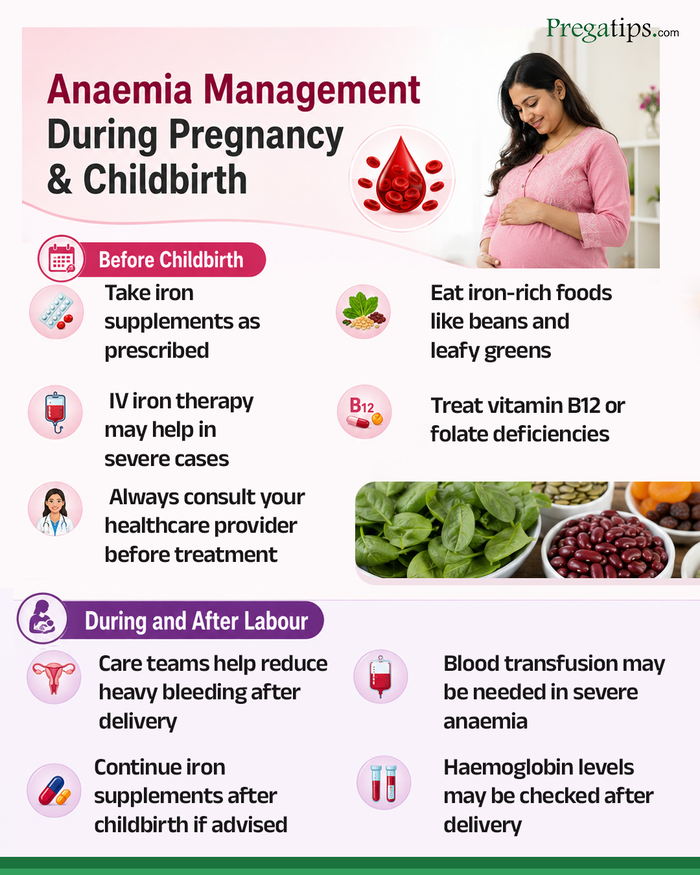
- Oral Iron Supplements: These are the first line of treatment for most mothers. They are available in various forms, and your doctor will prescribe the one that is most suitable for you.
- Intravenous (IV) Iron Therapy: These can be given to women who have not been able to tolerate oral iron supplements due to symptoms of sickness and diarrhoea or constipation, or for mothers who need to increase their haemoglobin levels more rapidly.
- Blood Transfusion: Where mothers are severely anaemic and exhibiting very distressing symptoms, they will be given a blood transfusion in order to bring up their haemoglobin levels quickly.
- Follow-up Blood Tests: You will probably have blood tests again at approximately 4-6 weeks after starting treatment to see how you are recovering.
Watch Out for These Signs
In the postpartum period, do not ignore the signs of postpartum anaemia, seek immediate help if:
- You are becoming breathless, and your symptoms are worsening.
- You are suffering from palpitations when at rest.
- You have experienced fainting or nearly fainting bouts.
- You have excessively heavy, prolonged bleeding for some weeks after giving birth.
- You are experiencing chest pain or pressure.
- You have symptoms of postnatal depression, together with an inability to get moving.
Physical and mental health go hand in hand in the postnatal period. Do not sit tight and wait for symptoms to improve on their own.
When Should I See My Doctor?
You should seek help from your obstetrician, midwife or general practitioner:
- If you are not improving within a few weeks of giving birth.
- If you had significant blood loss during or after giving birth, and your blood levels have not yet been rechecked.
- If you are breastfeeding and are concerned about iron levels.
- If you feel unable to look after yourself or your baby.
A blood test will determine the extent of the problem, and there is no need for you to suffer in silence.
Postpartum anaemia is common and is NOT just part of being a mother; you deserve every assistance to recover. Most mothers who are given an adequate amount of the relevant medication and who take the right foods should start feeling considerably better within weeks of having the illness addressed. Always be honest with your doctor; you will give your baby the same care as you do yourself.
Whether you’re pregnant, a new mom, or navigating postpartum, you don’t have to do it alone. Join our support group to connect, share, and support one another.
FAQs on Feeling Weak After Delivery? It Could Be Postpartum Anaemia
- Is postnatal anaemia linked with postpartum depression?
An iron deficiency is suspected to be strongly linked to low mood, depression, anxiety and other similar feelings during the postnatal period. Discuss the possibility of postnatal anaemia and postnatal depression with your doctor, who can then address both conditions. - How long does it take to recover from postpartum anaemia?
It can take up to two to four weeks before feeling substantially better with the appropriate nutritional care, whereas it can take months for the body to regain the correct levels of stored iron within the system if there has been moderate to severe anaemia or significant blood loss during delivery.