In this article:
Fortunately, you may find relief with the right treatment options, skincare measures, home remedies, and food adjustments.
8 Remedies To Relieve Itching in Palms and Soles During Pregnancy
Here are some remedies that can provide you with relief from itching: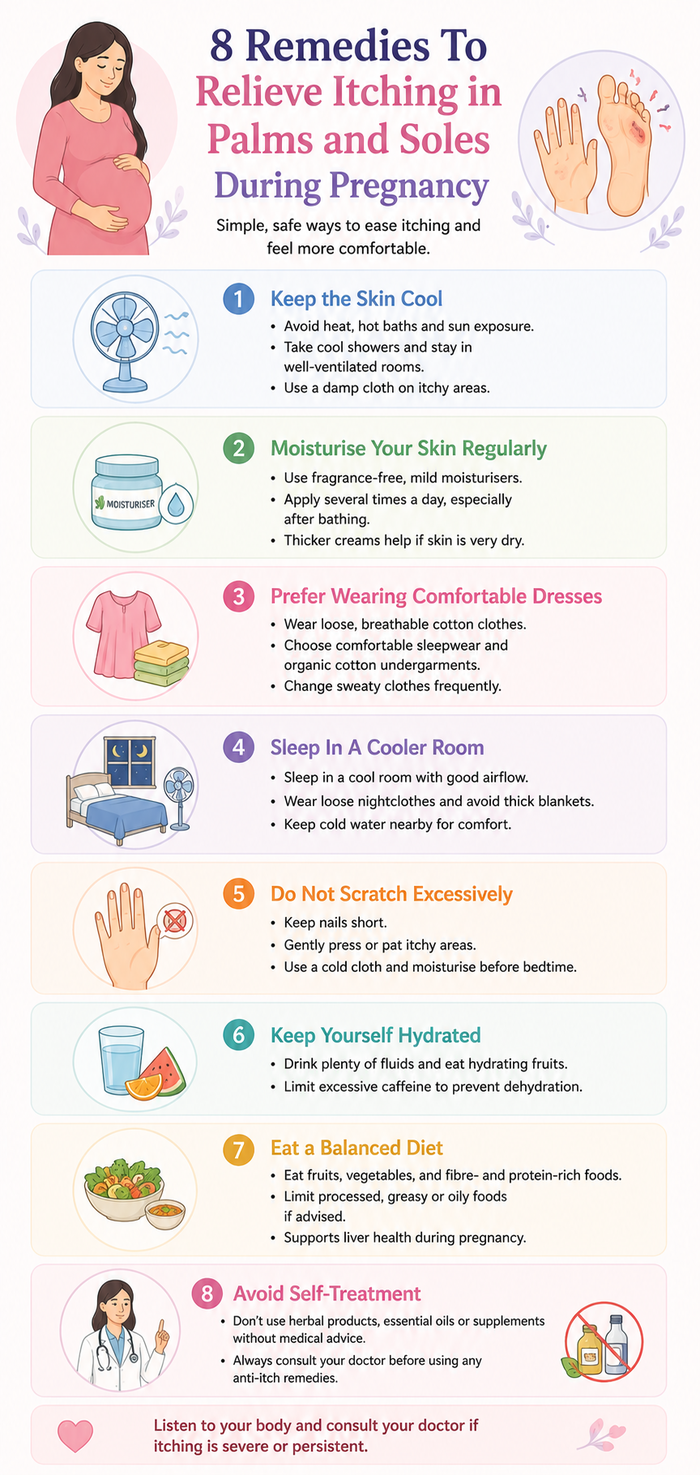
1. Keep the Skin Cool
Heat often intensifies itching. Keeping your body cool reduces skin irritation and flare-ups.
You may find relief by:
- Taking showers more frequently to keep your skin cool
- Avoiding very hot baths
- Keep your bedroom’s temperature a bit down at night
- Using lightweight cotton bedsheets
- Staying in well-ventilated rooms
- Avoiding prolonged sun exposure
2. Moisturise Your Skin Regularly
When you are pregnant, skin issues like dryness may worsen irritation. So, applying moisturiser several times a day may help reduce it.
Try choosing:
- Simple moisturisers without any smell
- Mild creams for sensitive skin
- Products with harmful additives
If your skin feels extremely dry, thicker creams may provide better relief than light lotions.
3. Prefer Wearing Comfortable Dresses
If you choose to wear tight clothes or synthetic fabrics, it may worsen itching. Because heat gets trapped, increasing sweating and irritation.
You may feel more comfortable in:
- Loose breathable cotton clothes
- Comfortable sleepwear
- Prefer undergarments made of organic cotton
4. Sleep In A Cooler Room
Night-time itching is often the hardest part for many pregnant people. Symptoms may suddenly feel stronger after lying down.
To improve comfort at night, you may try:
- Sleeping in a cooler room
- Using a fan for better airflow
- Wearing loose nightclothes
- Avoiding thick blankets if you feel overheated
- Keeping cold water nearby for comfort
5. Do Not Scratch Excessively
Although scratching feels tempting, constant scratching may cause more discomfort.
To reduce irritation:
- Keep your nails short
- Gently press or pat itchy areas instead of scratching hard
- Place a cold cloth on the itchy area during flare-ups
- Moisturise the skin before bedtime
6. Keep Yourself Hydrated
With dehydration, skin dryness and irritation worsen. Eat more hydrating fruits and drink lots of fluids to stay hydrated.
Limiting excessive caffeine may also help prevent dehydration.
7. Eat a Balanced Diet
Although diet alone may not stop itching, healthy eating supports liver functioning during pregnancy.
Doctors may advise:
- Fresh fruits and vegetables
- Fibre- and protein-rich diet
- Limiting highly processed foods
- Avoiding overly greasy or oily meals if advised medically
8. Avoid Self-Treatment
Many herbal oils, supplements, and home remedies promoted online may not be considered safe during pregnancy.
Always speak with your doctor before using:
- Herbal creams
- Essential oils
- Supplements
- Over-the-counter anti-itch medicines
How Medical Care May Help To Relieve Itching
The following are some medical care measures that may help relieve itching and reduce discomfort:
1. Take Medicines As Advised By Your Doctor
If the itching becomes severe or is linked to cholestasis of pregnancy, your doctor may prescribe medicines to help improve bile flow and lower bile acid levels in the blood.
These medicines may:
- Reduce itching gradually
- Improve liver function
- Lower pregnancy-related risks associated with cholestasis
You should avoid starting over-the-counter medicines, herbal products, or oils without consulting your doctor.
2. Get Your Tests Done Regularly
When itching becomes persistent, doctors may recommend repeating certain blood tests to monitor your condition.
These tests may include:
- Liver function tests
- Serum bile acid levels
- Blood clotting tests (only if your doctor feels the need)
3. Get Your Tests Done To Monitor Your Baby’s Health
If cholestasis is suspected or confirmed, your doctor may monitor your baby more closely throughout pregnancy.
Here’s how it's done:
- Tracking the baby’s movements
- Growth scans
- Monitoring the fetal heart rate in some cases
- More frequent antenatal visits
When Is Hospital Care or Early Delivery Needed?
In some pregnancies, bile acid levels may continue rising despite treatment. In such cases, your doctor keeps you on close observation or plans early delivery (nearly 37 to 38 weeks).
However, such measures greatly depend on the following factors:
- Bile acid levels
- Severity of symptoms
- Baby’s condition
- Overall pregnancy health
Does Itching Improve After Delivery?
In most cases, itching caused by cholestasis subsides after delivery.
Bile acid levels and liver function usually return to normal within a few weeks after delivery. However, your doctor may still recommend follow-up blood tests to confirm recovery.
If you have experienced cholestasis once, informing your doctor early during future pregnancies becomes important because the condition may recur.
Precautions To Remember During Pregnancy
You should contact your doctor if:
- The itching becomes severe
- The palms and soles are mainly affected
- Symptoms worsen at night
- You notice dark urine or pale stools
- Sleep becomes severely disturbed
- Baby’s movements feel reduced
Pregnancy-related itching can feel physically exhausting. However, many people experience improvement with proper treatment, supportive skin care, and proper check-ups.
The pregnancy-related itching can be hard to ignore. Your doctor will guide you to the best outcomes.
Don’t be afraid to ask any queries about your diagnosis to your doctor. They will recommend the treatment options to reassure you that you and your baby will be OK.
Whether you’re pregnant, a new mom, or navigating postpartum, you don’t have to do it alone. Join our support group to connect, share, and support one another.
FAQs on 8 Remedies To Relieve Itching in Palms and Soles During Pregnancy
- Is itching in the palms and soles always dangerous during pregnancy?
No. Dry skin, heat, sweating, and hormonal changes may also cause itching. However, severe itching without a rash, especially at night, should always be medically evaluated. - Which month of pregnancy does cholestasis usually begin?
ICP most commonly develops during the third trimester, although some people may develop symptoms earlier. - Can cholestasis happen again in another pregnancy?
Yes. People who have had cholestasis in one pregnancy may have a greater risk of developing it again in future pregnancies.