In this article:
What Is False Pregnancy?
False pregnancy, also known as pseudocyesis, is a condition where you may experience all the symptoms of pregnancy but are not actually pregnant. These symptoms are real, not imagined, even though there is no foetus.
Some common symptoms include:
- Missed or irregular periods
- Abdominal distension
- Nausea or vomiting
- Breast tenderness or milk-like discharge
- Feeling foetal movements
What Is Early Pregnancy, and Why Is It Sometimes Hard to Detect?
Early pregnancy is the initial period that follows conception, which is before 8 weeks. At this point, pregnancy symptoms may be subtle, erratic, or resemble other ailments.
Some of the symptoms of early pregnancy include:
- Missed period
- Fatigue
- Mild nausea
- Breast changes
- Frequent urination
Why Do Pseudopregnancy and Pregnancy Look the Same?
Since similar waves of hormones stimulate both false pregnancy and early pregnancy, they share a common symptom. Stress or yearning to have a baby, fear of being pregnant, or hormonal imbalances might lead to similar symptoms associated with early pregnancy.
Your brain is a very effective conductor of hormones. When emotionally and mentally related stimuli trigger the release of hormones, your body can react as if pregnant.
How Do Doctors Begin the Evaluation Process?
Doctors begin by taking a comprehensive medical history. You may be asked questions about:- Your menstrual cycle
- Sexual activity
- Previous pregnancies
- Previous
- Emotional stress or life changes
How Do Pregnancy Tests Help Distinguish the Two?
Urine Pregnancy Tests
The urine test measures the levels of the hormone hCG, which is produced during pregnancy. During early pregnancy, the levels of hCG increase steadily.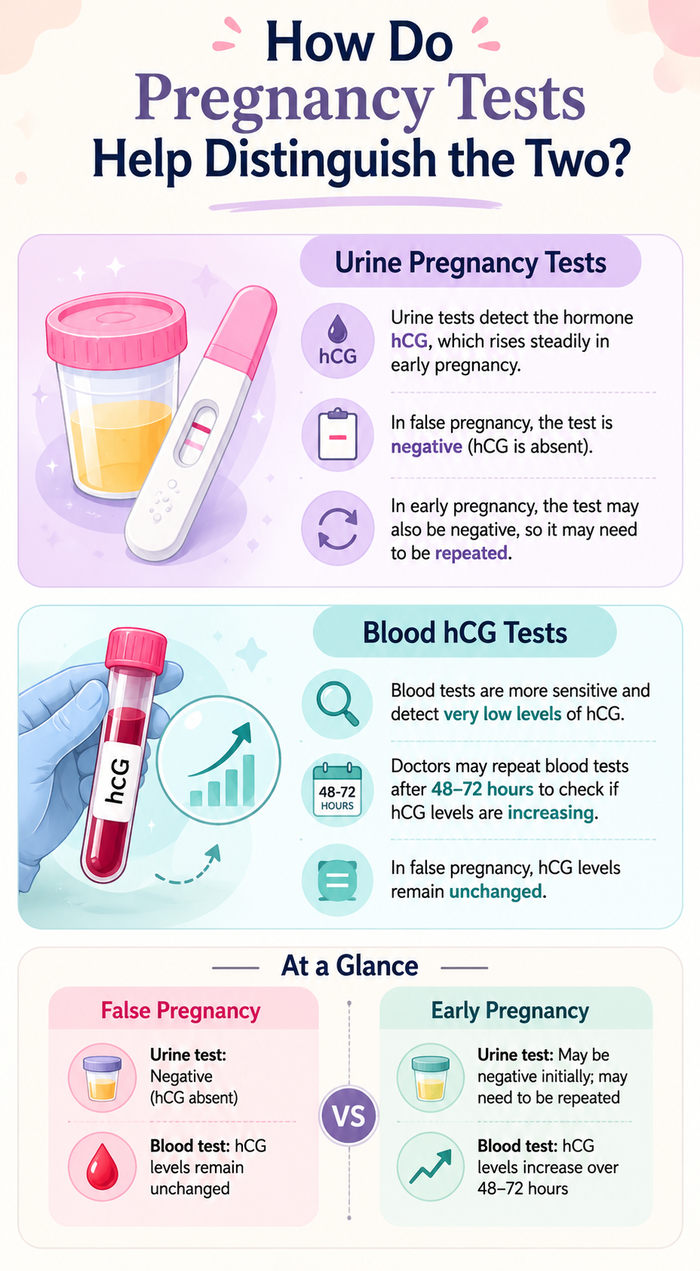
In false pregnancy, the urine test is normally negative because hCG is absent. In early pregnancy, the test may also be negative, which is why the test may need to be repeated.
Blood hCG Tests
Blood tests are more sensitive and can pick up very low levels of hCG. Physicians may also request follow-up blood tests 48-72 hours apart to determine if the levels of the hormone are increasing as they should.In false pregnancy, the levels of hCG remain unaltered or unchanged.
What Role Does Ultrasound Play in Diagnosis?
One of the most accurate methods for differentiating false pregnancy from early pregnancy is an ultrasound.Early Pregnancy Findings
In early pregnancy, an ultrasound may reveal:- Gestational sac at 5 weeks
- A yolk sac shortly after
- Foetal heartbeat at 6-7 weeks
Findings in False Pregnancy
In a false pregnancy, the ultrasound examination reveals the absence of the gestational sac and foetus. The uterus can be normal in size or slightly enlarged because of hormonal influences, but no pregnancy structures are seen.Can Physical Examination Provide Clues?
Yes. In a pelvic exam, the size, shape, and consistency of the uterus are evaluated.
During early pregnancy, the uterus begins to enlarge and soften regularly. During a false pregnancy, this is not the case.
The doctors also check the cervix and ovaries to see if there are any other conditions, such as cysts or fibroids.
Are Hormonal Tests Used Beyond hCG?
Other hormones that may be tested by doctors include:
- Oestrogen
- Progesterone
- Thyroid hormones
How Do Doctors Rule Out Other Conditions?
Several medical conditions can be mistaken for pregnancy, including:
- Polycystic ovary syndrome
- Thyroid disorders
- Ovarian cysts
- Gastrointestinal bloating
To What Extent Is a False Pregnancy Emotionally Experienced?
False pregnancy can have a very heavy psychological burden, too. It may occur due to the strong desire to become pregnant, fear of infertility, miscarriage, or the wishes of others.
This situation is managed carefully by doctors. They understand that the patient's symptoms are genuine and problematic and that this isn’t something that the patient imagines to be happening or decides to occur.
How Is False Pregnancy Explained To Patients?
Specialists discuss their findings with patients in a soft, easy-to-understand manner. They take patients through images of their ultrasounds to make them comprehend their conditions.
Support will be needed on the emotional level. Counselling services might be recommended to assist in dealing with the impact.
Can False Pregnancy Impact Mental Health Issues?
Absolutely. Knowing you weren’t pregnant when you thought you were can be a source of sadness, embarrassment, or mental shock.
When it comes to recovery in terms of emotional healing, having support from healthcare practitioners, partners, and families counts for a lot. Mental recovery can’t be overemphasised when it comes to the process of healing.
What Happens After Diagnosis?
Once a false pregnancy is diagnosed, the following are the areas of focus by doctors:
- Treating hormonal imbalances if present
- Emotional Well-being Support
- Establishing normal menstrual cycles
- Monitoring physical symptoms until they resolve
When Should You Seek Medical Attention?
You should see a doctor if:
- Pregnancy tests are unclear or conflicting
- Symptoms remain present despite negative test results
- The enlargement of the abdomen worsens
- Emotional pain becomes unbearable
What Should You Do Next?
- Seek medical testing for confirmation
- Follow up on repeat tests if advised
- Ask questions until you feel clear
- Accept emotional support from trusted people
- Consider counselling if distress persists
- Emphasis on overall physical and mental health
Emotional Impact
Having feelings of uncertainty in relation to pregnancy can impact self-esteem and relationships. Communicating with your partner can help reduce misunderstandings and feelings of emotional isolation. You deserve to be treated with compassion and understanding, no matter what the diagnosis is. Doctors can differentiate between false pregnancy and early pregnancy by history, hormone studies, ultrasound, and psychological evaluation. Although the symptoms may be real and strong, technology can give you the answers. With proper diagnosis and care, you can get the right treatment, find your emotional centre, and move ahead with confidence.
Whether you’re pregnant, a new mom, or navigating postpartum, you don’t have to do it alone. Join our support group to connect, share, and support one another.
FAQs on False Pregnancy vs Early Pregnancy: How Doctors Tell the Difference
- Can stress by itself produce the symptoms of false pregnancy?
Yes. Extreme emotional stress can affect the hormones and cause pregnancy-like symptoms. - Is false pregnancy common?
No. It is a rare occurrence, but it can happen in emotionally or hormonally sensitive situations. - Can false pregnancy occur more than once?
Yes, especially if underlying emotional or hormonal issues are not considered.