In this article:
With proper monitoring and timely treatment, your care providers can significantly improve the outcomes. But staying vigilant about early signs and taking effective measures on time may improve your outcomes.
Physiological Liver Changes During Pregnancy
Not all changes associated with the liver are harmful during pregnancy. Certain changes are expected consequences of hormonal and metabolic adjustments. And that's normal for the following reasons:
- An increase in blood volume and flow
- Surge in hormone levels
- Increased workload on the liver to process nutrients and waste products
Common Normal Changes
With respect to symptoms
You may notice:
- Mild nausea
- Fatigue
- Altered appetite
- Spider angiomas (spider-like red or purple dots on the skin)
- Mild redness on palms
You may notice:
- A rise in alkaline phosphatase (ALP), as the placenta also produces this enzyme
Liver Disorders That May Happen During Pregnancy
Both pre-existing liver disorders and those that develop during pregnancy can have a significant impact on both maternal and foetal health.
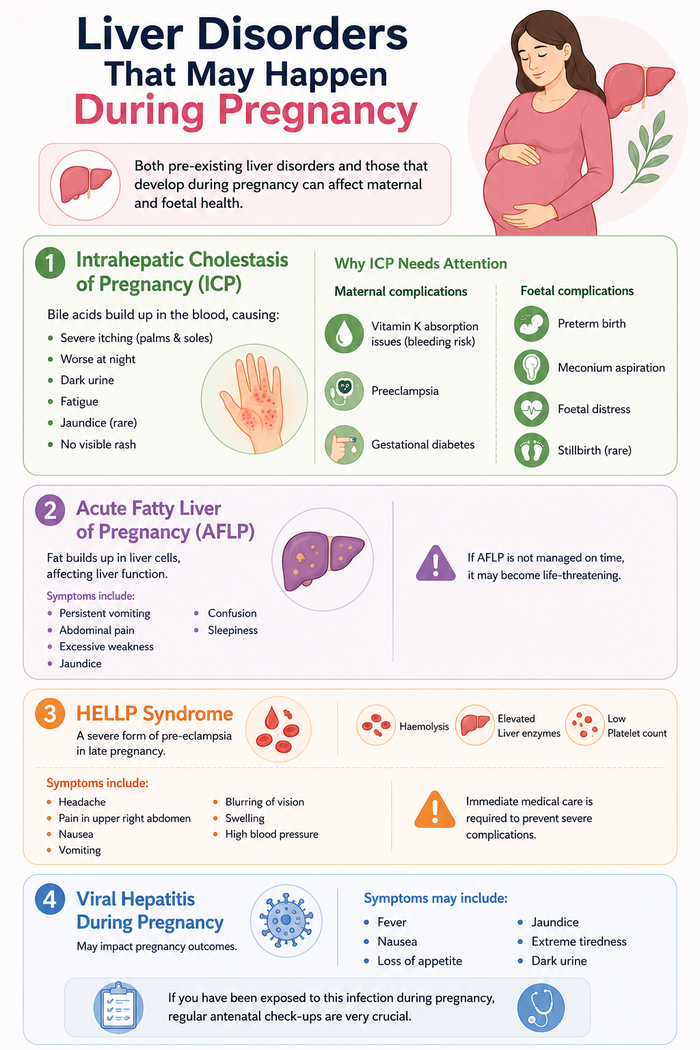
1. Intrahepatic Cholestasis of Pregnancy (ICP)
ICP is one of the commonly reported liver disorders during pregnancy. It mostly becomes noticeable in the late stages.
In this condition, the bile acids do not flow well and start accumulating in the blood. The common symptoms include:
- Severe itching (generally on palms and soles)
- Symptoms worsen at night
- Dark urine
- Excessive fatigue
- Jaundice (rarely)
- No visible rash
Why ICP Needs Attention
The significant complications are associated with ICP if it gets severe and unmanageable. These are:Maternal complications
- Vitamin K absorption issues, which may raise the risk of severe bleeding during delivery
- Preeclampsia
- Gestational diabetes
- Preterm birth
- Meconium aspiration
- Foetal distress
- Stillbirth (rare)
2. Acute Fatty Liver of Pregnancy (AFLP)
AFLP happens rarely, but it is a serious condition. It is often detected in the later stages of pregnancy.
It is characterised by fat accumulation inside the liver cells. As a result, liver function gets affected.
The symptoms of AFLP include:
- Persistent vomiting
- Abdominal pain
- Excessive weakness
- Jaundice
- Confusion
- Sleepiness
3. HELLP Syndrome
HELLP syndrome is a severe form of pre-eclampsia that often develops in the late stages of pregnancy.
- Haemolysis
- Elevated Liver enzymes
- Low Platelet count
- Headache
- Pain in the upper right abdomen
- Nausea
- Vomiting
- Blurring of vision
- Swelling
- High blood pressure
4. Viral Hepatitis During Pregnancy
Viral hepatitis may also have a significant impact on pregnancy outcomes.
Its symptoms may include:
- Fever
- Nausea
- Loss of appetite
- Jaundice
- Extreme tiredness
- Dark urine
Understanding Symptoms That Need Medical Attention
You may experience similar symptoms with different liver disorders. Therefore, it is very important that you are aware of the warning signs.
You must consult your doctor immediately if you experience the following:
- Yellowing of eyes or skin
- Severe itching with no visible rash
- Frequent vomiting
- Swelling of the face or hands
- Severe pain in the upper right region of the abdomen
- Pale stools
- Dark urine
- Drowsiness
- Reduced foetal movements
Basics of Liver Function Tests (LFTs)
The most common test that a doctor will recommend to check your liver function is the Liver Function Test (LFT).
| Common Component of LFT | What It Indicates |
| Bilirubin | High bilirubin levels may cause jaundice (yellowing of the skin and eyes) |
| AST and ALT | These liver enzymes may rise in response to the damage or inflammation of liver cells. |
| Alkaline Phosphatase (ALP) | ALP levels normally increase during pregnancy because of placental production. Therefore, mildly high values may be considered normal. |
| Serum Albumin | Albumin levels may appear lower during pregnancy because blood volume increases naturally. |
Self-interpreting reports may confuse you, causing treatment delay. Your doctor will modify your treatment depending on your values.
Possible Complications of Untreated Liver Disorders
If liver conditions remain untreated, complications may affect both you and your baby.
Maternal Complications
These may include:- Severe bleeding
- Liver failure
- Kidney injury
- Seizures
- High blood pressure complications
Foetal Complications
Risks may include:- Premature birth
- Low birth weight
- Foetal distress
- Stillbirth in severe cases
Why Early Referral Is Important
Depending on the severity, your doctor may involve:
- Obstetricians
- Hepatologists
- Physicians
- Neonatologists
- Liver enzymes rise rapidly
- Jaundice develops
- Blood pressure increases
- Platelet counts fall
- Symptoms worsen suddenly
Top Tips That Can Support Liver Health During Pregnancy
While not all liver disorders can be prevented, certain measures may help to prevent worsening and possible complications.
Helpful Lifestyle Measures
You can:- Attend regular antenatal appointments
- Drink safe and clean water
- Avoid self-medication
- Take medicines strictly as prescribed
- Eat balanced home-cooked meals
- Report unusual symptoms early
Liver disorders during pregnancy may range from mild temporary changes to serious medical emergencies.
At the same time, early medical support can minimise the risk of complications.
Regular antenatal care, awareness of warning signs, and prompt referral remain central to safer pregnancies and healthier recoveries.
Whether you’re pregnant, a new mom, or navigating postpartum, you don’t have to do it alone. Join our support group to connect, share, and support one another.
FAQs on Liver Disorders in Pregnancy: Symptoms, Risks, and When to Seek Help
- Does itching always indicate liver disease?
No. Mild itching may occur because of skin stretching and hormonal changes. However, severe itching, especially on the palms and soles without a rash, may indicate intrahepatic cholestasis of pregnancy and should be evaluated. - Can liver disorders during pregnancy affect the baby?
Yes. Some liver issues are associated with the risk of preterm birth, foetal distress, and low birth weight. However, timely diagnosis and proper medical care may lower this risk. - When should you seek urgent medical help for liver-related symptoms in pregnancy?
You should get medical attention immediately if you notice jaundice, severe itching, persistent vomiting, severe abdominal pain, confusion, swelling, high blood pressure symptoms, or reduced foetal movements.