In this article:
What Causes Hiccups in Newborns?
Hiccups in newborns can occur for reasons that aren’t always obvious, though feeding often plays a big role. Some common triggers you might notice include:- Swallowing air during feeds: Hungry babies tend to gulp milk quickly, which can trap little air bubbles.
- Overfeeding: A tummy that’s too full can press on the diaphragm, causing hiccups.
- Feeding too fast: When milk flows rapidly, the stomach can expand suddenly and trigger spasms.
- Poor feeding position: If the bottle teat isn’t fully filled with milk, the baby may swallow extra air.
- Gastroesophageal reflux: Sometimes, stomach contents flow back up and irritate the diaphragm.
- Excitement or excessive crying: Both can trigger diaphragm contractions.
- Normal development: Hiccups can even be part of muscle practice, starting in the womb.
Are Hiccups Harmful for Your Newborn?
Most hiccups cause no trouble at all for newborns. Unlike adults who might feel annoyed, babies rarely seem distressed.This is why they are usually harmless:
- Babies often sleep through them
- Hiccups don’t affect oxygen flow
- May help with the development of lung and brain function
- They are very common in the first year, and most babies experience them regularly
- Excessive crying around feeds
- Back arching during or after meals
- Frequent spit-up or vomiting
- Irritability after eating
How to Stop Hiccups in Newborns?
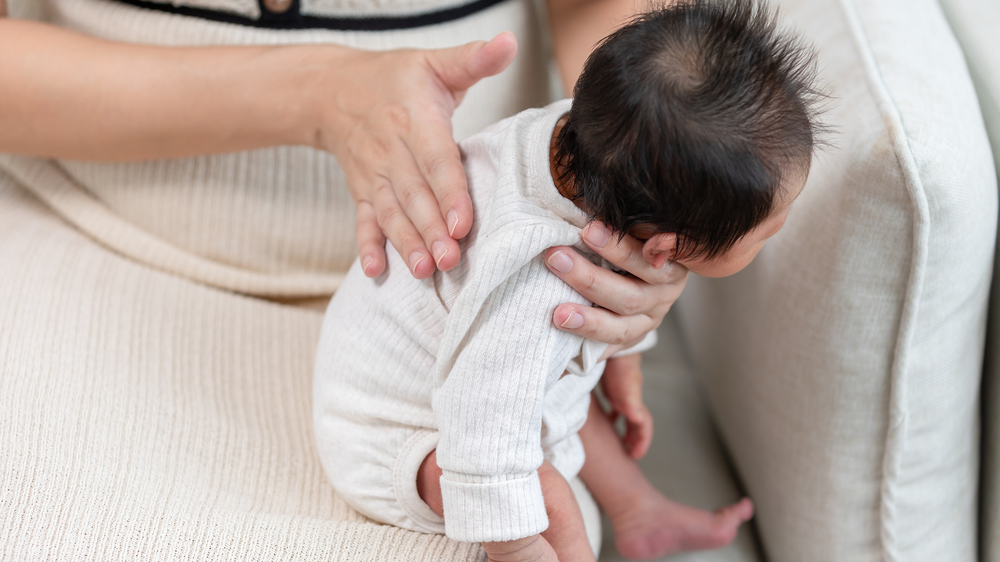
When hiccups appear, and you want to help your baby settle, try these proven techniques:- Burping: Pause feeding every 2 to 3 ounces for bottle-fed babies, or burp when switching breasts during breastfeeding. You can also hold your baby upright against your shoulder and gently pat or rub their back in circular motions.
- Position changes: Keep your baby upright for 20 to 30 minutes after feeds, gently rock back and forth, and avoid lying them flat immediately after eating.
- Soothing methods: Offer a pacifier to help relax the diaphragm, give a gentle back massage from shoulders to lower back, use soft white noise, or gently rub the tummy in clockwise circles to ease stomach tension.
- Feeding adjustments: Tilt the bottle so the teat remains full of milk, and ensure a deep latch that covers the entire areola.
What Home Remedies Can Help Soothe Newborn Hiccups?
When it comes to easing newborn hiccups, a few traditional remedies, such as gripe water, often come up in conversation.Gripe water is a mixture of herbs such as ginger, fennel, and chamomile, which is commonly used to soothe gas or mild tummy discomfort that can trigger hiccups. Some families find it helpful, especially for colic-like fussiness, but research does not show strong evidence that it reliably stops hiccups.
Experts recommend avoiding it for babies under 6 months, as it may reduce breast milk intake or cause mild side effects.
Always consult your doctor before trying any supplement to make sure it’s safe for your newborn.
What Should You Avoid When Dealing with Newborn Hiccups?
When it comes to soothing a baby, some traditional remedies can do more harm than good. These are a few things to avoid:- Never scare your baby: Sudden noises or surprises may seem harmless, but they can actually cause distress and make hiccups worse.
- Don’t pull their tongue: Some old methods suggest tongue pulling, but this can injure delicate tissues in your baby’s mouth.
- Avoid pinching the nose: This can obstruct breathing and is extremely unsafe.
- Skip plain water: Babies under 6 months have immature kidneys that can’t process plain water, which could be harmful.
- Don’t overfeed milk: Adding extra milk may seem like a solution, but it increases stomach pressure and discomfort.
- Avoid upside-down positions or making them jump: These can lead to choking.
When To Seek Medical Help For Newborn Hiccups?
Most newborn hiccups need no medical attention, but contact your doctor if you notice:- Breathing difficulties
- Blue tinge around lips (cyanosis)
- Hiccups lasting over 2 hours
- Feeding problems
- Frequent forceful vomiting
- Excessive crying around feeds
- Poor weight gain
- Coughing during feeding
- Constant unsettled behaviour
- Gulping after burping
- Hiccups continuing after a 1-year-old
Whether you’re pregnant, a new mom, or navigating postpartum, you don’t have to do it alone. Join our support group to connect, share, and support one another.
FAQs on How to Stop Hiccups in Newborns Safely
- Does tummy time help with newborn hiccups?
No, tummy time isn’t recommended right after feeding if your newborn has hiccups, as it can overstimulate them and make hiccups worse. - Are hiccups a sign of colic?
No, hiccups are usually normal and not a sign of colic. Colic is defined by prolonged, inconsolable crying, which is different from occasional hiccups.