In this article:
However, if it happens before age 40, it is called premature menopause. It affects around 1 in 100 people.
On the other hand, when menopause happens before 45 years of age, it is referred to as early menopause. It affects around 1 in 20 people.
Premature Menopause vs Early Menopause vs Natural Menopause
| Type | Age at Menopause | Common Cause | Fertility Impact | Long-Term Health Risk |
| Premature menopause | Before 40 years | Ovarian failure, autoimmune disease, genetics, cancer treatment | Severe early fertility decline | Higher |
| Early menopause | 40–44 years | Smoking, ovarian surgery, family history, medical treatment | Earlier-than-expected fertility decline | Moderate to high |
| Natural menopause | 45–55 years | Natural ovarian ageing | Gradual decline | Age-related |
What Is Natural Menopause?
Natural menopause is a normal biological transition linked to ageing ovaries.
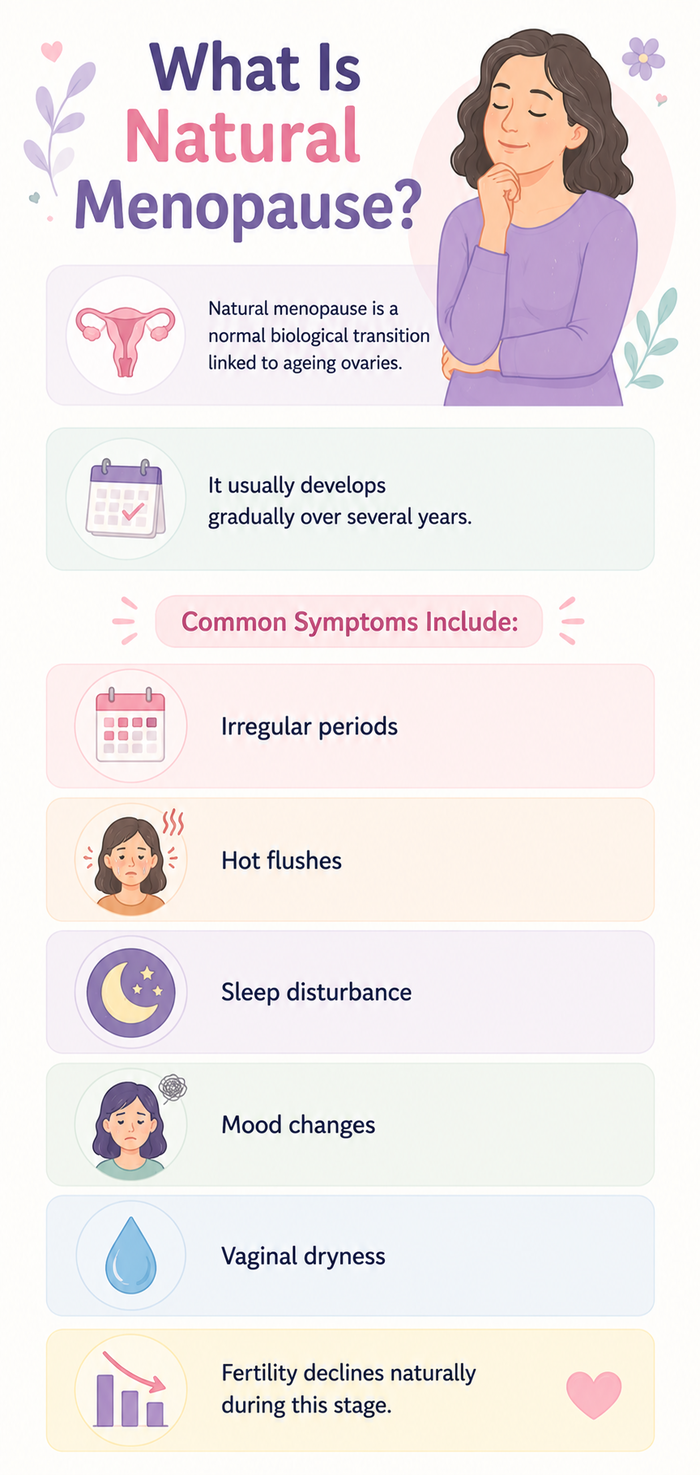
It usually develops gradually over several years.
Common symptoms include:
- Irregular periods
- Hot flushes
- Sleep disturbance
- Mood changes
- Vaginal dryness
What Happens in Premature Menopause?
Premature menopause happens when ovarian function stops before the age of 40.
The following are the possible causes:
- Genetic conditions
- Autoimmune disorders
- Ovarian surgery
- Chemotherapy or radiation
- Severe ovarian damage
Why Is It Important To Manage Premature Menopause
Long exposure to low levels of oestrogen may increase the risk of:
- Osteoporosis
- Heart disease
- Vaginal dryness
- Sexual health concerns
- Reduced fertility at a younger age
In What Ways Does Early Menopause Differ
Early menopause occurs between 40 and 44 years of age. In this condition, ovarian function may decline a bit gradually.
The following are the common triggers:
- Smoking
- Family history
- Endometriosis surgery
- Pelvic radiation
- Certain autoimmune conditions
Which Symptoms Are Often Overlooked That Delay The Management Of Premature Or Early Menopause
In younger individuals, symptoms may be mistaken for:
- Stress
- Thyroid disorders
- Polycystic ovary syndrome (PCOS)
- Lifestyle changes
Difference in Fertility Impact
Premature Menopause
- Fertility decline happens unexpectedly
- Pregnancy planning may be interrupted early
- Fertility preservation discussions may become urgent
Early Menopause
- Ovarian reserve declines earlier than expected
- Natural conception may become difficult sooner
Natural Menopause
- Fertility decline is gradual and age-related
Is Treatment Different?
Management depends on age, symptoms, and overall health.Premature and Early Menopause
Doctors may discuss:- Hormone replacement therapy
- Bone density monitoring
- Fertility counselling
- Cardiovascular risk assessment
Natural Menopause
Management often focuses mainly on symptom control and lifestyle support.Menopause can occur earlier than expected due to many reasons. With early diagnosis and appropriate care, you may better manage the condition.
You’re not alone in your journey when trying to conceive. Join our supportive community to connect with others, share experiences, and find encouragement every step of the way.
FAQs on Premature Menopause vs Early Menopause vs Natural Menopause: What’s the Difference?
- Is it possible to reverse premature menopause?
No. But some may continue to have intermittent ovulation for a certain period of time. - Can I get pregnant after premature menopause?
In some cases, pregnancy still may occur because of intermittent ovulation. - Why do health risks increase with early menopause?
Early menopause is associated with early oestrogen decline. This ultimately may increase the risk of faster decline in bone density and heart disorders.