
In this article:
However, it is not always a serious concern. In such a pregnancy, your doctor will closely monitor your baby’s position. Also, they may change to the safest delivery approach by the end of pregnancy.
Why Is My Baby Still Not Head Down?
The exact cause behind malpresentations is still unknown. But several pregnancy-related factors may affect your baby’s position in the womb. These may include:
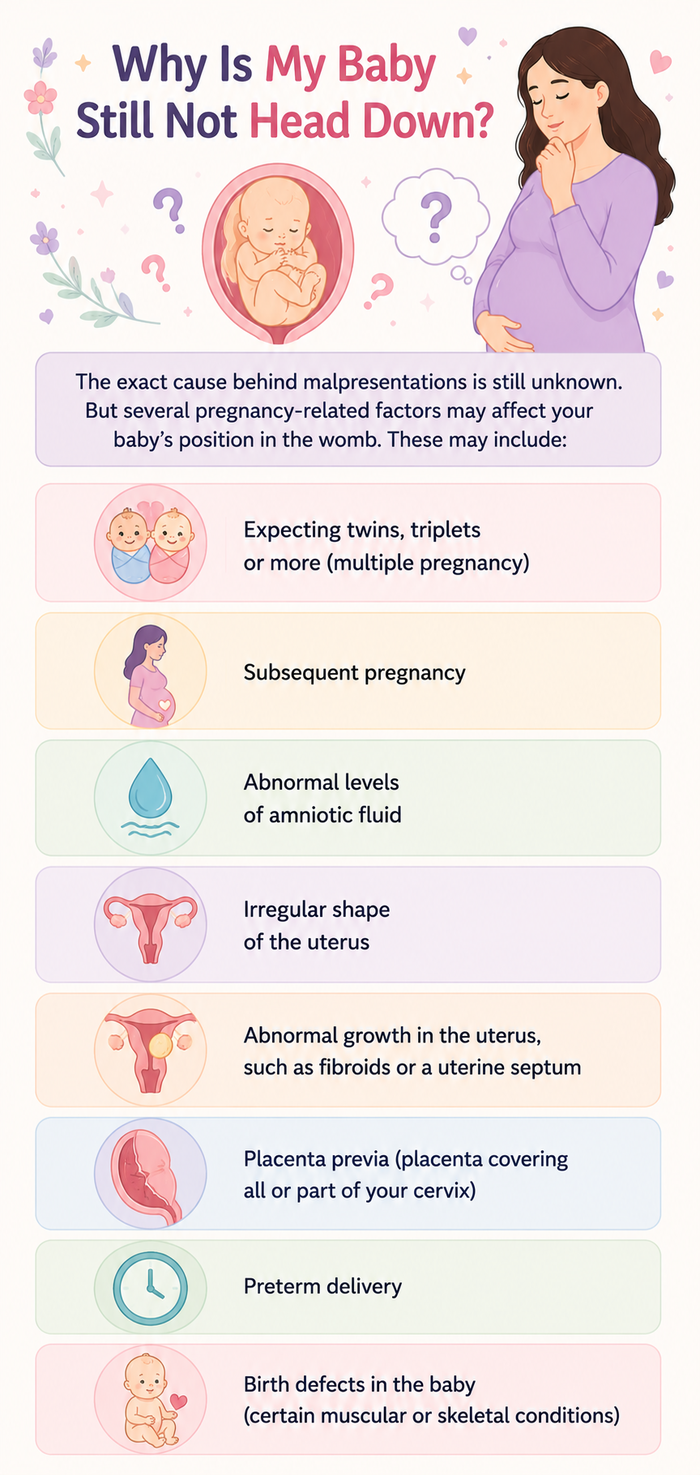
- Expecting twins, triplets or more (multiple pregnancy)
- Subsequent pregnancy
- Abnormal levels of amniotic fluid
- Irregular shape of the uterus
- Abnormal growth in the uterus, such as fibroids or a uterine septum
- Placenta previa (placenta covering all or part of your cervix)
- Preterm delivery
- Birth defects in the baby (certain muscular or skeletal conditions)
Can My Baby Still Turn After 37 Weeks?
Yes. Some babies may still turn naturally in the final weeks before labour.
However, as the baby gets bigger, movement may become restricted. This may prevent the natural turning of the baby.
Signs Your Baby May Not Be Head Down
You may notice:
- Kicks in the lower abdomen
- Pressure under the ribs
- A hard, round shape near the upper belly
Ultrasound scans or physical examination give more accurate information.
Possible Risks if the Baby Remains Breech or Sideways
| Possible Risk | How Doctors Manage It |
| Difficult labour | Close labour monitoring |
| Umbilical cord problems | Timely delivery planning |
| Delayed labour progress | Position assessment during labour |
| Need for C-section | Planned delivery if required |
Close monitoring and timely birth planning often help reduce complications.
What May Help if the Baby Is Not Head Down?
The options for management depend on the following factors:
- Your pregnancy week
- Baby’s position
- Your overall pregnancy health
Your doctor may suggest:
- Regular antenatal check-ups
- Repeat ultrasound scans
- Monitoring baby movements
- External cephalic version (ECV) in selected cases
- Delivery planning closer to labour
When Should You Contact Your Doctor?
You should contact your doctor immediately if you notice:
- Reduced baby movement
- Vaginal bleeding
- Leaking of fluid
- Severe abdominal pain
- Labour pain before your due date
If your baby is not head down at 37 weeks, you may require a C-section. Discuss your childbirth options with your obstetrician without delay to stay prepared. Staying in regular contact with your doctor may make you feel more supported and confident.
Whether you’re pregnant, a new mom, or navigating postpartum, you don’t have to do it alone. Join our support group to connect, share, and support one another.
FAQs on Why Is My Baby Not Head Down Yet at 37 Weeks?
- Is breech position common at 37 weeks?
Some babies may still remain breech at 37 weeks, although most move head down before labour. - Can stress cause the baby to stay breech at 37 weeks?
Stress alone is not usually considered a direct cause of breech position. - How often will my doctor check the baby’s position after 37 weeks?
Your doctor may check the baby’s position during regular antenatal visits until delivery.