Flatulence or gas expulsion is a normal body function in all people. But during pregnancy, farting may become frequent and smelly. It is just because of the pregnancy changes and hormonal shifts. Gas from swallowed air and digestion accumulated in the intestines and passed as flatulence. It's healthy and necessary to pass gas multiple times during a day.
What is Flatulence
Gas release from the digestive tract is called flatulence. It is a natural physiological process that occurs multiple times daily for a healthy human being. Gas forms in two ways in the intestine.
- Air: Swallowed air enters via the mouth during eating and drinking andis absorbed into the intestine.
- Digestion: When the food is digested, gut microbes break down undigested carbohydrates, fibres, and sugar, producing gas such as hydrogen, carbon dioxide and methane.
These gases accumulate in the intestines and are eventually expelled as flatulence for digestive comfort. One must expel gas at least 10-25 times daily, which totals 0.5-2 litres of gas. If the expulsion increases over 25 and causes pain, bloating, or incontinence, it can signal irritable bowel syndrome, small intestinal bacterial overgrowth, celiac disease, constipation, or food intolerance.
Bloating vs Flatulence
- Bloating: It refers to the abdominal fullness or tightness, often from the trapped gas in the intestine, fluid retention, and digestive problems.
- Flatulence: It refers to the audible gas release from the rectum, um which often provides relief from bloating.
Is Gas Common During Pregnancy
Gas and bloating are common during pregnancy. During pregnancy, some women may feel an increase in the frequency and intensity of flatulence, which is mostly due to the hormonal changes. Flatulence increases during pregnancy due to :
Hormonal Changes
Progesterone levels increase during pregnancy to support the uterus. It also relaxes smooth muscles throughout the body, along with the digestive tract, which slows down digestion. This delay increases the duration of contact between the gut bacteria and undigested food. This leads to increased gas production and buildup, resulting in bloating and flatulence.
Growing Uterus
The expanding uterus compresses the intestines and bowel, which reduces the space for gas movement. Compresses the intestines' real gas pockets, leading to fullness, abdominal tightness, and gas pain. This further doubles the frequency of flatulence episodes in many women.
Diet Changes
Pregnancy brings changes in food habits. Some may experience cravings or aversions, and doctors recommend a higher caloric intake during pregnancy. Many pregnancy diets include legumes, vegetables, high-fibre foods, and fruit, which are natural gas-producing. Sudden fibre increases overwhelm colony bacteria and result in more flatulence.
Eating Habits
Eating quickly, skipping meals, or eating more may cause women to swallow more air, increasing gas in the digestive tract. Talking while eating, sipping through a straw, carbonated drinks, sodas, and chewing gum further add to swallowed air. Smaller and slower meals reduce overload on the relaxed system, but increased hunger during pregnancy only amplifies it.
Constipation
Pregnancy also slows down digestion, which means food and waste move slowly. This slow movement leads to constipation, which can trap gas behind hardened stool. When gas cannot move freely, it accumulates and causes bloating, pressure and flatulence.
Common Pregnancy Gas Symptoms
Flatulence during pregnancy comes with other gastrointestinal symptoms due to slow digestion and gas buildup.
- Bloating: Bloating is the feeling of abdominal fullness or visible stomach swelling. It often feels like a tight or rock-hard belly that often worsens after meals. This occurs when gas and stool build up in the intestine due to relaxed muscles and increased pressure.
- Burping: Excessive burping comes from the swallowed air trapped in the stomach. It is triggered by the progesterone relaxation of the lower oesophageal sphincter and frequent small meals. It sometimes comes with a sour taste due to acid reflux.
- Abdominal Pain: Pressure and ache in the lower abdomen are due to gas stretching intestinal walls and constipation, which traps gas behind hardened stool.
- Other Symptoms: More than 20 audible and smelly flatulence episodes, constipation, nausea or vomiting, heartburn, acid reflux, and loss of appetite signal gas issues.
Proven Tips for Relief
To reduce the flatulence episode, you have to treat the gas trouble and constipation. Here are a few proven Tips for relief from frequent flatulence and gas trouble during pregnancy:
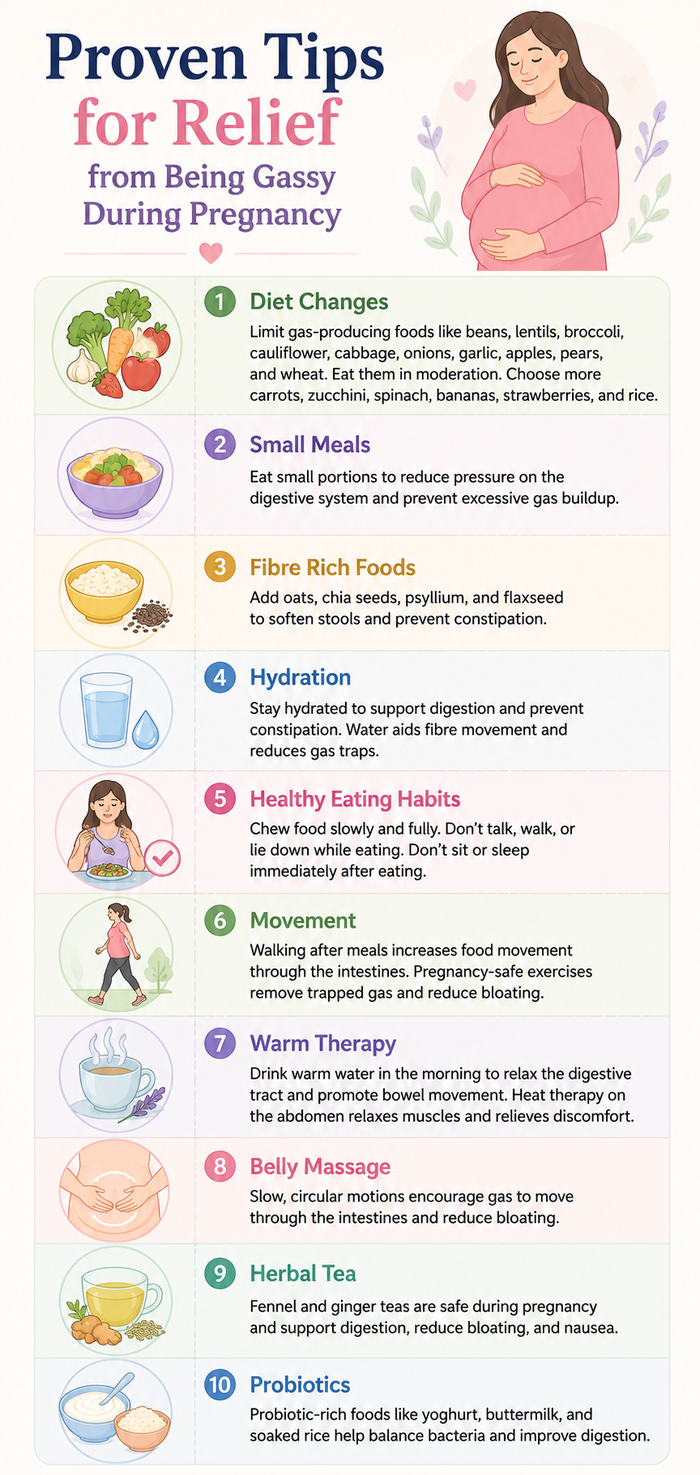
- Diet Changes: Try to limit gas-producing foods like beans, lentils, broccoli, cauliflower, cabbage, onions, garlic, apples, pears, and wheat. These foods are nutritious and must be eaten during pregnancy. So don't avoid it entirely and consume it in moderation. Try to eat more carrots, zucchini, spinach, bananas, strawberries, and rice.
- Small Meals: Don't overwhelm the digestive system with large meals. Try to smell portions to reduce pressure on the digestive system and prevent excessive gas buildup.
- Fibre Rich Foods: Add oats, chia seeds, psyllium, and flaxseed to soften stools and prevent constipation.
- Hydration: Stay hydrated to support digestion and prevent constipation. Water aids fibre movement and reduces gas traps.
- Healthy Eating Habits: Chew food slowly and fully. Don't talk, walk, or lie down while eating. Don't sit or sleep immediately after eating.
- Movement: Walking after meals increases food movement through the intestines. Pregnancy-safe exercises remove trapped gas and reduce bloating.
- Warm Therapy: Drink warm water in the morning to relax the digestive tract and promote bowel movement. Heat therapy on the abdomen also relaxes intestinal muscles and provides relief from discomfort.
- Belly Massage: Slow, circular motions encourage gas to move through the intestines and reduce bloating.
- Herbal Tea: Fennel and ginger teas are safe to drink during pregnancy and support digestion, reduce bloating, and nausea.
- Probiotics: Probiotic-rich foods like yoghurt, buttermilk, and soaked rice help balance bacteria and improve digestion.
Flatulence during pregnancy is normal and safe, and there is nothing to feel embarrassed or uncomfortable about. It is just normal digestive changes happening during pregnancy. However, if the flatulence comes with severe, persistent pain, nausea, vomiting, or sudden severe constipation, you should inform your doctor. It may cause gastrointestinal infections, gallbladder issues, urinary tract infections, or pregnancy complications.
Whether you’re pregnant, a new mom, or navigating postpartum, you don’t have to do it alone. Join our support group to connect, share, and support one another.
FAQs on Feeling Gassy During Pregnancy? Causes and Relief Tips
- Which position is the best to release gas in pregnancy?
Yoga positions like knee-to-chest, child’s pose, cat-cow pose, deep squat, and happy baby pose are perfect to relieve trapped gas. Don't lie flat on your back. After meals, walk for a few minutes to encourage food and gas movement. Don't eat or drink gas-producing foods and drinks. - Can gas affect the baby?
Gas does not harm the baby during pregnancy. A ggastrap is the result of increased progesterone, relaxing the smooth muscles, which slows down digestion. The expanding uterus also puts pressure on the intestines and bladder, which traps gas. Gas and bloating only feel uncomfortable and produce mild pain to the mother, but it doesn't affect the growing foetus in any way.