In this article:
What Did The AIIMS Study Find?
The study, published in EMBO Molecular Medicine, found that particulate matter, especially PM2.5 and PM10, may cross the placental barrier. The researchers reported that urban particulate matter triggered inflammation and oxidative stress, affected gene activity and impaired nutrient transport.The study also identified reduced IGFBP3, a protein linked with placental balance and foetal growth. This suggests that pollution may not only be associated with poor pregnancy outcomes but may also have a biological pathway through which it affects the placenta.
How Can Air Pollution Affect The Placenta?
The placenta acts like a life-support system for the baby. It helps transfer oxygen and nutrients, removes waste and supports growth. When pollution causes inflammation or oxidative stress, placental function may become less efficient.As per the AIIMS study, air pollution exposure may disturb trophoblast function, blood vessel development and nutrient exchange. These changes can affect how well the baby grows inside the womb.
How Does This Affect Indian Pregnant Women?
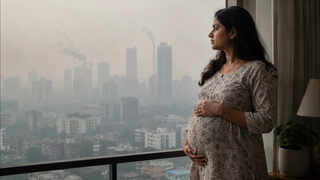
This matters in India because many cities regularly record poor air quality, especially during winter in Delhi-NCR and other northern regions.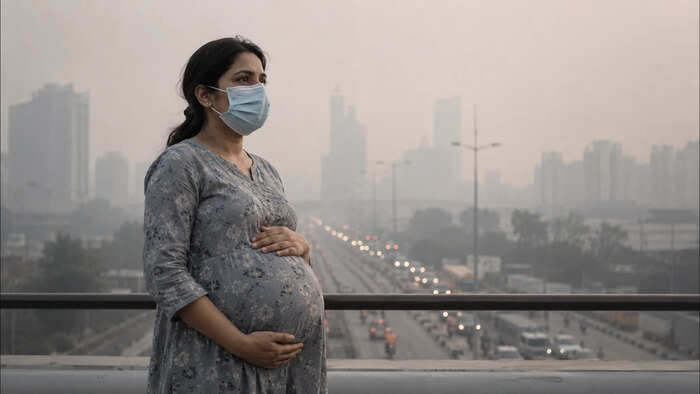
According to an India-focused study in PLOS Global Public Health, in-utero PM2.5 exposure was studied in relation to preterm birth and low birth weight across Indian districts.
Low birth weight is not only a number on a birth record. It can affect newborn health, feeding, immunity and long-term development.
What Pregnancy Risks Are Linked To Air Pollution?
Research has linked air pollution exposure during pregnancy with:- Low Birth Weight: Babies may be born smaller than expected.
- Preterm Birth: Delivery may happen before 37 weeks.
- Preeclampsia: High blood pressure during pregnancy may be more likely.
- Restricted Foetal Growth: The baby may not grow as expected in the womb.
How Can Pregnant Women Reduce Exposure?
Pregnant women cannot control city-wide pollution alone, but small steps can reduce exposure:- Check AQI Daily: Plan outdoor activity when air quality is better.
- Avoid Peak Pollution Hours: Skip early morning or heavy-traffic walks.
- Improve Indoor Air: Keep rooms ventilated when outdoor AQI is safe.
- Avoid Traffic-Side Exercise: Choose indoor or low-traffic areas.
- Attend Check-Ups: Ask the doctor about foetal growth monitoring.
FAQs On How Air Pollution May Harm Placenta And Foetal Growth
- Can Air Pollution Affect The Baby During Pregnancy?
Yes, research links air pollution exposure with low birth weight, preterm birth and restricted foetal growth. - Should Pregnant Women Avoid Going Outdoors During High AQI Days?
Yes, it is safer to reduce outdoor exposure, avoid traffic-heavy areas and speak to a doctor about precautions.