In this article:
Proper knowledge of handling formula milk is essential.
Can You Prepare The Formula In Advance?
Although preparing the formula in advance might be helpful for convenience, it requires special care.
- Best Freshly Made: This reduces the risk of bacteria growing.
- Store If Necessary: Refrigerate it if you will not use it right away.
- Never at Room Temperature: Bacteria will grow fast at room temperature.
Prepare fresh each time you have the opportunity.
How Should Prepared Formula Be Stored?
Correct storage ensures safety.
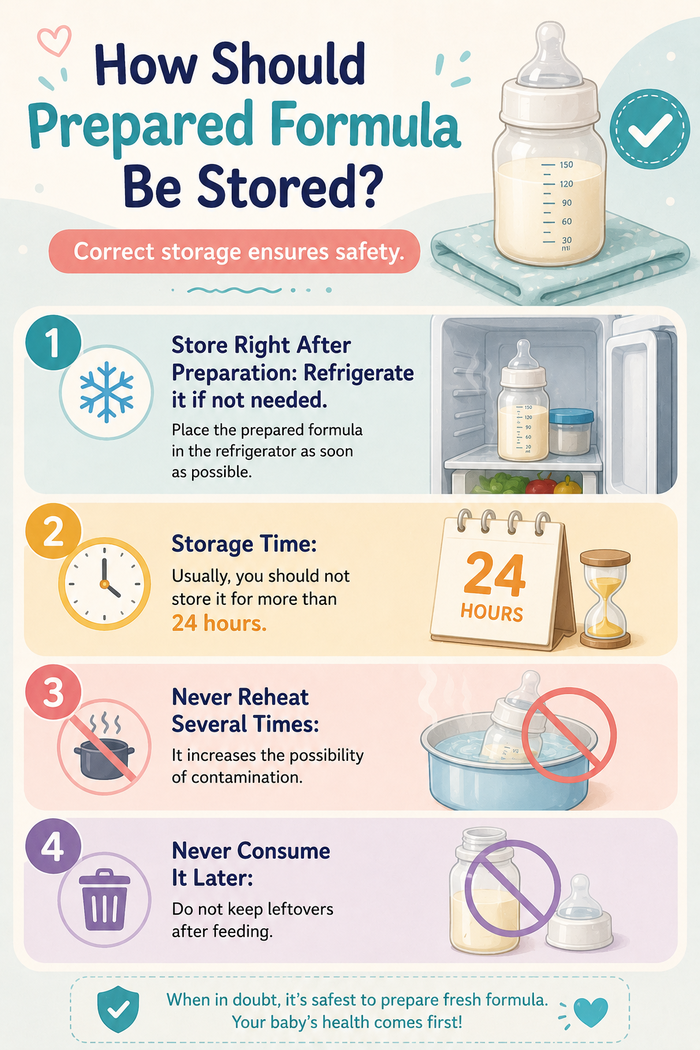
- Store Right After Preparation: Refrigerate it if not needed.
- Storage Time: Usually, you should not store it for more than 24 hours.
- Never Reheat Several Times: It increases the possibility of contamination.
- Never Consume It Later: Do not keep leftovers after feeding.
Sterilisation of the Equipment Used For Feeding
It is very important to keep good hygiene during the process of feeding your infant.
- Washing After Each Meal: Cleaning up all traces of milk.
- Regular Sterilising: Essential, especially during the first months after birth.
- Air-Drying In A Clean Place: This also keeps your equipment clean.
Cleanliness decreases the chance of any diseases.
Mistakes You Should Avoid When Preparing Formula
Avoiding common mistakes will make feeding your baby more secure.
- Wrong Amount of Water: It affects the nutritional value.
- Not Washing Your Hands: Higher chances of contamination.
- Using an Excessively Old Formula: This may not be safe.
- Overheating Formula: Damages the valuable nutrients.
Considering these points helps to avoid mistakes.
Symptoms That Show The Formula Is Unsafe
It is important to check your formula before using it.
- Unusual Odour: Can mean that the formula has gone bad.
- Changing Consistency: Presence of lumps.
- Expiry Date Passed: Always check the expiration date.
Any doubts are reason enough to prepare a fresh bottle.
When Should You Visit a Doctor?
There are times when babies experience changes when it comes to feeding, but there are some instances where your baby should visit a doctor due to specific symptoms.
- If there is any sign of infection or illness in your baby, like recurring infections, fevers, or unusual irritability after feeding periods may signify that there is something wrong with the process of formula feeding or feeding hygiene.
- If your baby suffers from continuous digestive issues like regular vomiting, diarrhoea, constipation, gas, or even pain after formula feeding, it may be time to seek out medical help.
- If your baby refuses formula feeding and becomes distressed because of it, it may mean that your baby is experiencing some kind of intolerance or there is an issue with the handling process.
Whenever there is uncertainty with regards to storing, reheating, and feeding your baby, it may be advisable to talk to your paediatrician.
It is extremely important not only to prepare the formula properly but also to keep and use it safely. Even though the right preparation will make sure that your baby is well-fed, the right ways of handling the formula, including storing and warming up, will help to protect them against infections and stomach issues.
Making several small changes in the way you store, warm up, and feed your child formula will allow you to avoid contamination completely. It is vital to remember that babies’ immune systems are vulnerable, which means any slight deviation from proper handling may result in complications.
With a little effort and dedication, you can establish a feeding practice that will help your baby thrive.
Whether you’re pregnant, a new mom, or navigating postpartum, you don’t have to do it alone. Join our support group to connect, share, and support one another.
FAQs on Baby Formula Safety Tips: Storage, Hygiene, and Common Mistakes
- Can I store prepared formula for future use?
It is possible to store prepared formula if necessary; however, the process requires certain precautions to be taken. The formula should be stored in the refrigerator right away, and it needs to be consumed no later than 24 hours from the time it was prepared. - Is it possible to heat baby formula more than once?
The prepared formula can be heated up before consumption, but only one time should be enough. Multiple warming-ups can lead to bacterial growth, which makes the feed unsafe. Any leftovers need to be disposed of right away after feeding. - What signs of spoilage are there to look out for when using baby formula?
The baby formula needs to be carefully inspected before it is used to avoid feeding the child something that has already gone bad. Such indicators as an unpleasant smell or odd texture or consistency are warning signs that it might be spoiled.