In this article:
In some cases, Ebola may lead to miscarriage, premature labour, heavy bleeding, or stillbirth. At the same time, knowing the precautions and warning signs may help you respond early and reduce complications.
What Is Ebola Virus Disease?
Ebola virus disease is a serious viral infection that has caused outbreaks mainly in parts of Africa. In affected communities, the illness can spread rapidly if people do not follow proper infection control.
How Ebola Spreads
The virus may spread through contact with:
- Blood or body fluids of an infected person
- Contaminated needles or medical equipment
- Infected clothing or bedding
- Certain infected animals
| Common Sources of Ebola Exposure | Examples |
| Body fluids | Blood, vomit, urine, saliva |
| Contaminated objects | Needles, bedding, clothes |
| Close physical care | Caring for infected individuals without protection |
| Animal exposure | Handling infected wild animals |
Symptoms of Ebola During Pregnancy
Symptoms may appear between 2 and 21 days after exposure.
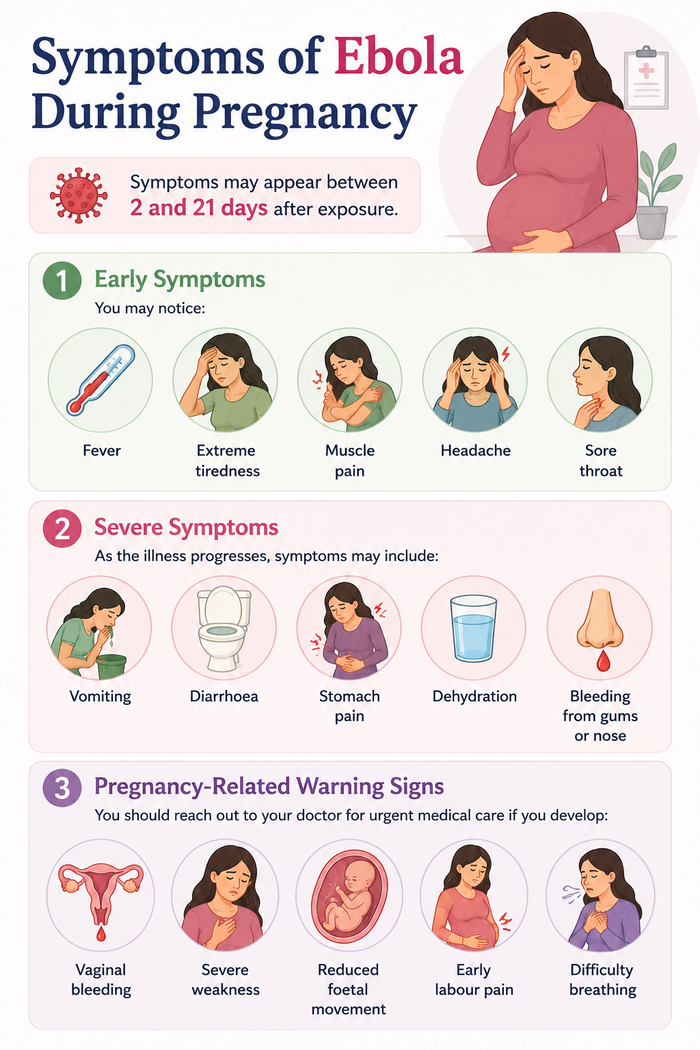
Early Ebola Symptoms
You may notice:- Fever
- Extreme tiredness
- Muscle pain
- Headache
- Sore throat
Severe Symptoms
As the illness progresses, symptoms may include:- Vomiting
- Diarrhoea
- Stomach pain
- Dehydration
- Bleeding from gums or nose
Pregnancy-Related Warning Signs
You should reach out to your doctor for urgent medical care if you develop:- Vaginal bleeding
- Severe weakness
- Reduced foetal movement
- Early labour pain
- Difficulty breathing
How Ebola May Affect Pregnancy
Ebola infection during pregnancy can become severe quickly. It may also increase health risks for both the mother and the baby.
| Pregnancy Complication | How Ebola May Affect Pregnancy |
| Miscarriage and Stillbirth | Pregnancy loss has been reported in many Ebola infections. The virus may affect the placenta and fetal development. |
| Premature Labour | Severe infection and inflammation may trigger labour before full term. |
| Heavy Bleeding During Delivery | Ebola may affect blood clotting. Because of this, heavy bleeding during labour or after childbirth may occur. |
Can Ebola Affect Your Baby?
Yes. Ebola may pass to the baby during pregnancy or childbirth.
Possible newborn complications include:
- Severe infection after birth
- Breathing problems
- Fever
- Feeding difficulties
- Lower chances of survival in severe maternal infection
Breastfeeding and Ebola Risks
In some cases, the virus may pass through breast milk and also infect the baby. Therefore, your doctor may advise you to feed your baby only after thorough assessment.How Doctors Diagnose and Treat Ebola During Pregnancy
Doctors usually assess the following factors:
- Your symptoms
- Your travel history
- Whether or not you were in touch with infected individuals
- Pregnancy stage
Supportive Treatment During Pregnancy
Ebola infection cannot be treated with a single approach. Treatment mainly involves a multi-disciplinary approach with prime focus on supportive medical care. This includes:
- IV fluids for dehydration
- Oxygen support
- Monitoring blood pressure
- Managing infections and complications
- Careful foetal monitoring
What Happens If There Is a Suspected Ebola Case?
At present, there is no widely available vaccine for every Ebola strain. Because of this, prevention and early identification remain extremely important.
The World Health Organization (WHO) has also declared certain Ebola outbreaks as a Public Health Emergency of International Concern (PHEIC). Therefore, countries, including India, usually maintain strict monitoring systems during outbreaks.
Standard Steps Usually Followed in India To Prevent The Spread
If doctors suspect an Ebola infection, health authorities generally follow standard safety protocols, such as:
- Isolation of the infected person to reduce further spread
- Assessment of recent travel history and possible exposure
- Laboratory testing through approved virology centres, including the National Institute of Virology (NIV), Pune
- Contact tracing to identify people who may have been exposed
- Airport and travel surveillance during outbreak periods
How You Can Protect Yourself During an Ebola Outbreak
If you are pregnant and are in a high-risk zone of the Ebola outbreak, then taking protective measures becomes crucial.
1. Avoid Contact With Body Fluids
Avoid exposure to:
- Blood
- Vomit
- Saliva
- Urine
- Contaminated materials
- Always wash your hands with soap and water frequently.
- Alcohol-based sanitisers may also help when soap is unavailable.
Try to avoid unnecessary travel to outbreak-affected regions.
4. Do Not Ignore Signs Of Infection
Do not ignore fever, vomiting, or unusual bleeding during pregnancy, especially after possible exposure.
Early diagnosis may help reduce complications.
Whether you’re pregnant, a new mom, or navigating postpartum, you don’t have to do it alone. Join our support group to connect, share, and support one another.
FAQs on Ebola During Pregnancy: What Expecting Mothers Need to Know
- Can Ebola cause miscarriage during pregnancy?
Yes. Ebola infection may increase the risk of miscarriage, stillbirth, and pregnancy loss, especially during severe illness. - Can Ebola spread to the baby before birth?
Yes. The virus may pass to the baby during pregnancy, labour, or delivery. - How can pregnant individuals protect themselves from Ebola?
You may lower your risk by avoiding contact with infected body fluids, practising hand hygiene, following outbreak advisories, and seeking medical care early if symptoms develop.