
In this article:
Why Do Babies Sleep So Much?
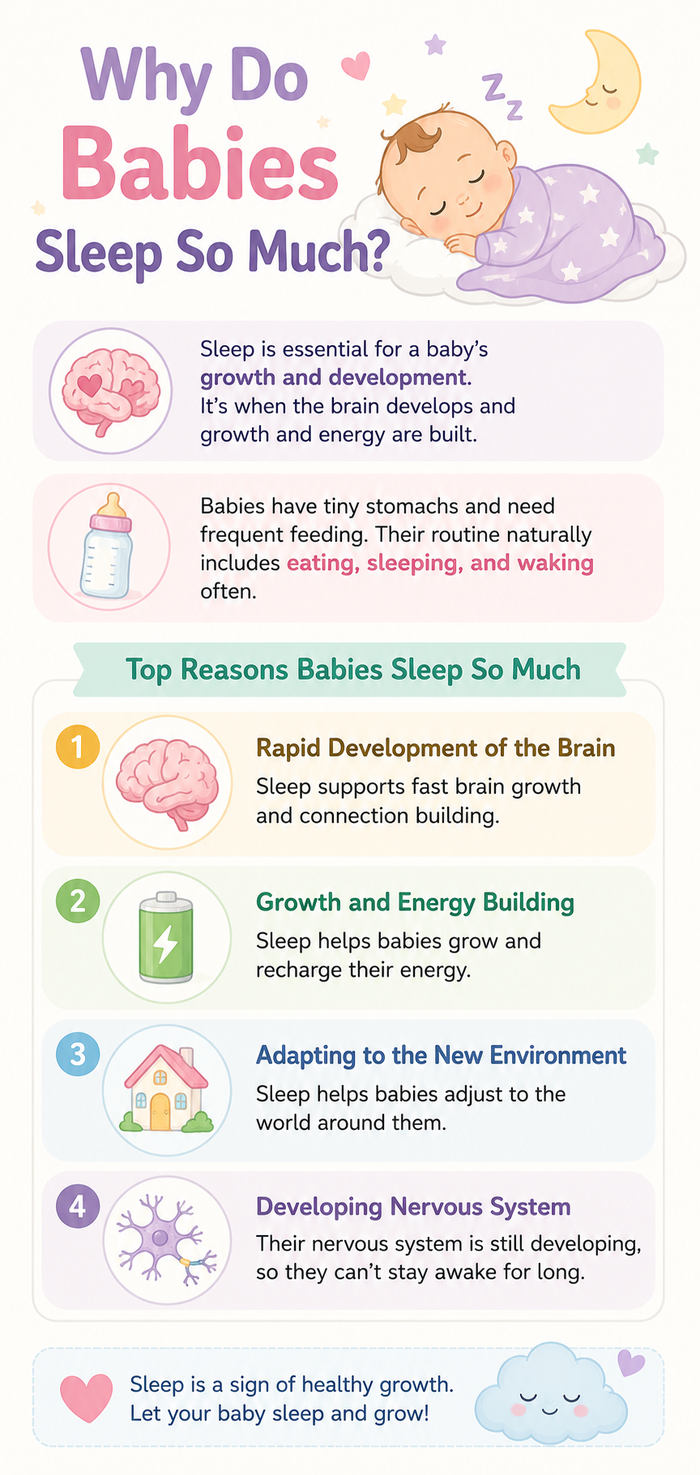
Sleep is one of the important aspects of a baby's growth and development. It is at this time that the brain is developing and growth and energy are being accumulated.Babies, particularly infants, have tiny stomachs and need feeding quite often. That's why their schedule includes frequent eating, sleeping, and waking.
Some of the explanations for why babies sleep so much are the following:
- Rapid development of the brain
- Growth and accumulation of energy
- Adaptation to the new environment
- Inability to stay awake for a long time due to the development of the nervous system
How Much Sleep Is Normal?
How much sleep your baby requires varies with age:- Babies (0-3 months): 14-17 hours per day
- Infants (4-11 months): 12-15 hours per day
- Toddlers (1-2 years): 11-14 hours per day
Signs Your Baby’s Sleep Is Normal
It is important to understand that even when your baby sleeps all day long, some indications would prove your child is healthy.Pay attention to these healthy indicators
- Your baby is awake to feed
- The baby feeds well and gains weight
- There are normal, wet and dirty diapers
- The baby responds to stimuli during awake times
- There are wakeful moments for the baby
When Should You Be Concerned?
Although sleeping frequently is quite common, there can be instances where an excess of sleep could require some medical attention. As a responsible parent, it is necessary to understand the warning signs beforehand.Consult your paediatrician if you notice that your baby:
- Does not want to be woken up for their meals
- Refuses food or doesn't take much at all
- Is lethargic and makes weak cries
- Makes fewer dirty diapers than should be expected
- Is floppy or unusually quiet
- Has a fever or displays any other unusual symptoms
Tips to Manage Your Baby's Sleep
If your baby is sleeping a lot, you can easily guide him into adopting a good routine.Some practical suggestions are as follows:
- Wake your baby up for feeding if he sleeps a lot (particularly newborn babies)
- Maintain an active environment during the day
- Make the night environment quiet and dark
- Feed your baby based on hunger signs rather than crying
- Note down feeding and diaper patterns
Understanding Sleep Patterns Over Time
There will be a change in your baby's sleep pattern as they grow older. A baby’s sleep feels erratic; however, as babies grow, they tend to sleep for longer periods during the night and become active during the day.These changes include:
- Sleep regression
- Growth spurts
- Milestones in development
Nevertheless, you should always listen to your intuition. If you feel that something is wrong and notice any strange symptoms, visit the paediatrician immediately. Just remember that every baby is special and unique. With time, your baby will establish a more regular schedule for themselves.
Whether you’re pregnant, a new mom, or navigating postpartum, you don’t have to do it alone. Join our support group to connect, share, and support one another.
FAQs on Baby Sleeping All Day? Here's When It's Normal and When to Worry
- Do I have to wake my baby up during the day for feeding?
You generally do not need to wake up your healthy baby during the day for feeding if they are gaining weight well. However, newborns under two weeks or those with weight gain concerns should still be woken every 2-3 hours to ensure adequate nutrition. - Will too much sleep affect my baby's development?
Not generally. As long as your baby is feeding well, gaining weight, wetting diapers, and responding to stimulation when awake, frequent sleeping is beneficial for the baby's development. - Is it ok if my baby sleeps a lot during periods of growth spurts?
It is absolutely ok if your baby sleeps during growth spurts. Babies conserve energy for rapid development since growth hormones are released during sleep.