In this article:
Is Brinjal Safe During Pregnancy?
Dr Lipi Sharma, Consultant, ShardaCare-HealthCity, says, “Brinjal, or eggplant, can generally be consumed during pregnancy as part of a balanced diet.”There is no strong evidence that eating cooked brinjal in moderate amounts harms a healthy pregnancy. According to ACOG, eating well during pregnancy means including vegetables, fruits, whole grains, protein foods and key nutrients that support maternal health and foetal growth.
What Nutrients Does Brinjal Provide?
Dr Sharma explains that brinjal is “a good source of dietary fibre, antioxidants, folate, potassium, and vitamins that support overall health.”Its possible benefits include:
- Digestive Support: Fibre may help prevent constipation, which is common during pregnancy. As per ACOG, fibre from fruits, vegetables, whole grains, beans, nuts and seeds can help fight constipation.
- Antioxidant Support: Dr Sharma notes that antioxidants in brinjal “protect the body’s cells from oxidative stress.” A review published in Food Chemistry also describes eggplant as a source of vitamins, phenolics and antioxidants.
- Balanced Meal Addition: Brinjal can add variety to curries, bharta, sambhar, stir-fries and mixed vegetable dishes.
When Should You Limit Brinjal?
Dr Sharma cautions, “Some people may experience acidity or bloating after consuming brinjal, and those who notice such symptoms should limit their intake.”You should also seek personalised advice if you have:
- Food allergies
- Gestational diabetes
- High-risk pregnancy
- Severe acidity or bloating
- Specific dietary restrictions
- Any pregnancy-related complications
How To Eat Brinjal Safely
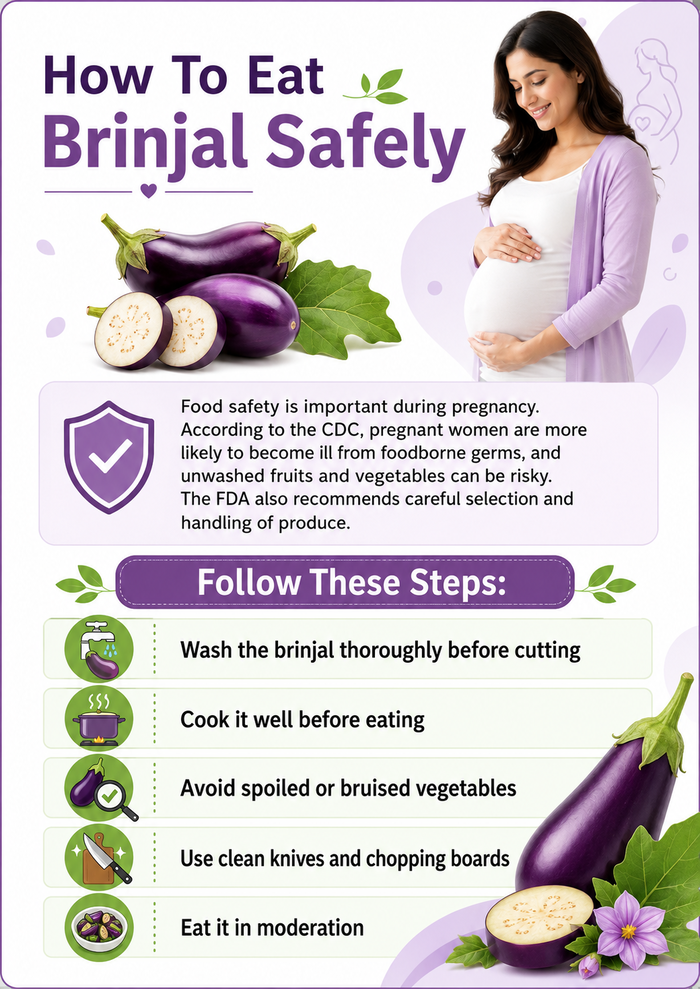
Food safety is important during pregnancy. According to the CDC, pregnant women are more likely to become ill from foodborne germs, and unwashed fruits and vegetables can be risky. The FDA also recommends careful selection and handling of produce.Follow these steps:
- Wash the brinjal thoroughly before cutting
- Cook it well before eating
- Avoid spoiled or bruised vegetables
- Use clean knives and chopping boards
- Eat it in moderation
FAQs On Brinjal During Pregnancy
- Can I Eat Brinjal Daily During Pregnancy?
It is better to eat brinjal in moderation as part of a varied diet rather than daily in large amounts. - Can Brinjal Cause Acidity During Pregnancy?
Some women may experience acidity or bloating after eating brinjal. Limit intake if it triggers discomfort.