In this article:
What is Pregnancy Nose?
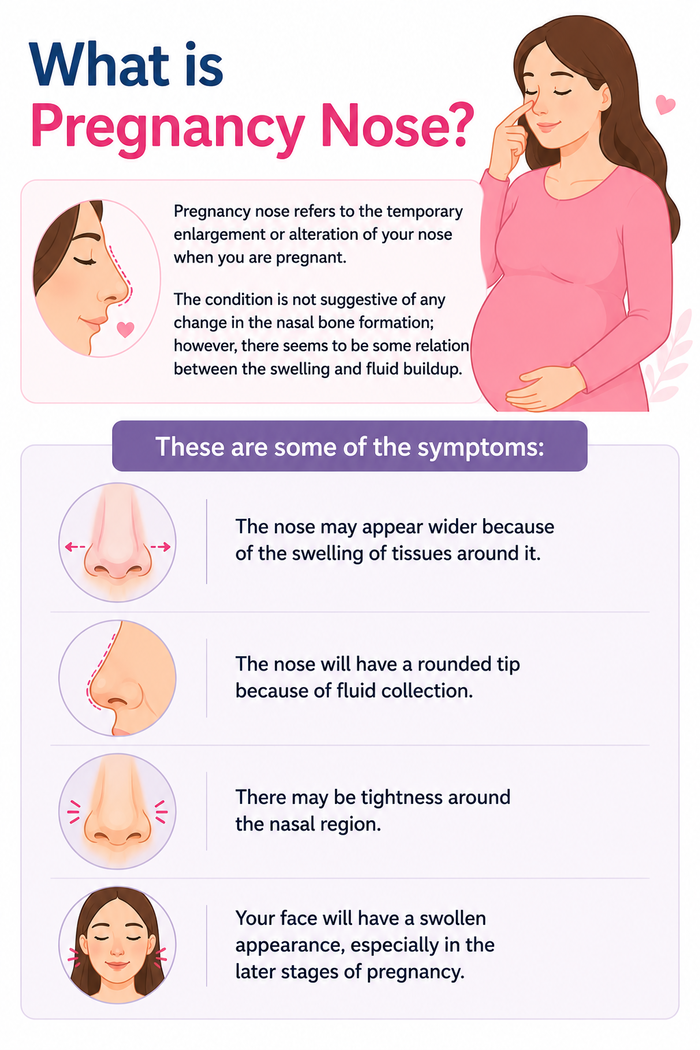
Pregnancy nose refers to the temporary enlargement or alteration of your nose when you are pregnant. The condition is not suggestive of any change in the nasal bone formation; however, there seems to be some relation between the swelling and fluid buildup.
These are some of the symptoms:
- The nose may appear wider because of the swelling of tissues around it
- The nose will have a rounded tip because of fluid collection
- There may be tightness around the nasal region
- Your face will have a swollen appearance, especially in the later stages of pregnancy
Why Does Your Nose Grow Larger During Pregnancy?
There are several physiological reasons behind this change. These include the following:
Increase in Blood Volume
While pregnant, your body will produce more blood volume for the development of your baby and help the placenta perform its duties. The increase in your blood volume can cause dilation of the small blood vessels within your nose, resulting in widening of your nose. It is one way through which your body reacts physiologically to make sure that the baby has access to oxygen and nutrients.Hormonal Changes
Some hormones, such as oestrogen and progesterone, are known to rise during pregnancy. These hormones affect various parts of your body. They help in relaxing the lining of your blood vessels and lead to some swelling in your face, hence the enlargement of your nose. They also cause your body to retain more water.Fluid Retention
Water retention is quite common during pregnancy and affects various parts of the body, such as the face. Excess water might accumulate in the soft tissues, leading to mild swelling of the nasal area. As a result, the nose may look larger without any changes in its shape. The amount of water retention depends on diet, nutrition, and lifestyle.Pregnancy Rhinitis
Pregnant women often suffer from nasal congestion, known as pregnancy rhinitis. There may be swelling of the nasal mucosa, which may affect the appearance of the nose. You might have a feeling of a constantly blocked nose. It is not dangerous but rather uncomfortable.When Do You Notice Your Nose Change?
There is no fixed time as to when you will notice a pregnancy nose. Some may notice changes during their first trimester because of hormonal changes, while others during their second trimester due to increased blood volume. However, it is important to note that some pregnant women can experience a pregnancy nose during the third trimester because of water retention.
Would The Changes Remain Permanent After Giving Birth?
One thing that comes to mind is whether or not these changes will remain permanent after giving birth. Worry not, because:
- Hormones go back to normal after birth
- There will be no more fluid retention, and swelling will also begin to decrease
- Normal blood flow will be retained, giving your natural look back
- For women, it takes only a few weeks before their noses return to normal
Practical Approaches for Managing Swelling
Although you cannot prevent a pregnancy nose altogether, there are ways that you can minimise the swelling and be more comfortable.
Maintain Proper Hydration
- Hydration is important because your body will manage the levels of fluid in your body better
- When properly hydrated, you will be able to limit the amount of fluid retention in your body and face.
Restrict Sodium Intake
- When you limit sodium intake, you will prevent water retention in your body
- It is important to eat a balanced diet made up of fresh food
Get Enough Sleep
- With proper sleep, your body will recover well and keep its blood flow regulated
- Elevate your head when sleeping to prevent swelling on your face
Gentle Exercises
- Perform light exercises like walking to promote blood flow
- Good blood flow will help reduce the swelling
Myths About Pregnancy Nose
Some myths may create confusion and unwarranted stress. Here is a list of some common misconceptions.
Myth 1: The nose becomes structurally different
- Pregnancy does not affect the bones and cartilage in your nose
- The difference is temporary since it is caused by swelling
Myth 2: It predicts the baby's gender
- There is no proven scientific evidence suggesting that the condition of your nose reflects the gender of your baby
Myth 3: It happens to all women
- Some women experience the phenomenon differently
When Should You Seek Professional Help?
Pregnancy nose typically doesn't pose any risk to your health, but some symptoms must never be taken lightly.
- A sudden swelling in the face, hands, and feet must not be overlooked
- Repeated episodes of nosebleeds or a blocked nose must be brought to the notice of your doctor
- Any swelling associated with headache, poor vision, and hypertension must be immediately brought to your doctor's notice
Post-Delivery Effects of Pregnancy on the Nose
After giving birth, your body will slowly start to heal itself.
- Your hormones will begin to drop and normalise
- Excess fluid will be easily expelled from your body, and your face, including your nose, will begin to heal
- The process may take time, so you need to be patient and take care of yourself.
As you go through your pregnancy and become a mom, you can expect the changes in your body to fade away naturally. Meanwhile, be kind and compassionate with yourself and enjoy all your new physical features while embracing the strong and resilient process of creating a new life inside you.
Whether you’re pregnant, a new mom, or navigating postpartum, you don’t have to do it alone. Join our support group to connect, share, and support one another.
FAQs on Is “Pregnancy Nose” Real? Why Your Nose May Change During Pregnancy
- Is pregnancy nose associated with breathing problems?
Yes, pregnancy nose can affect breathing. Changes in hormones lead to increased blood flow, resulting in nasal swelling and congestion. It causes stiffness, obstruction of the nose, and some breathing difficulties. Such Symptoms are temporary and disappear after giving birth. - Does pregnancy nose cause snoring?
Yes, a pregnancy nose can cause snoring. Pregnancy hormone fluctuations result in nasal swelling and congestion that narrows the air passages and causes airflow resistance, making it harder to breathe. As a result, the pregnant woman begins snoring. Snoring during pregnancy is normal and happens quite frequently and ends with childbirth due to normalisation of hormone levels. - Does the sleeping position affect snoring during pregnancy?
Yes, the sleeping position can make snoring worse during pregnancy. Sleeping on your back leads to the development of nasal swelling and narrowing of the airway passages. The pregnant woman is more likely to snore because of these conditions.