The Importance of Bath Time Safety
Children can drown easily and can do so in just 20 to 60 seconds with virtually no sound or splashing to warn an adult. The other hazards of bath time include being scalded by the water temperature, falling on slippery surfaces, skin irritation from products used, and injuries from sharp or protruding bath fixtures. Knowledge of these risks allows you to safely enjoy bath time without taking your attention away for even an instant.
Preparing for Safe Bath Time
Before you put your baby or toddler into the bath, have all of the following things close by and ready:
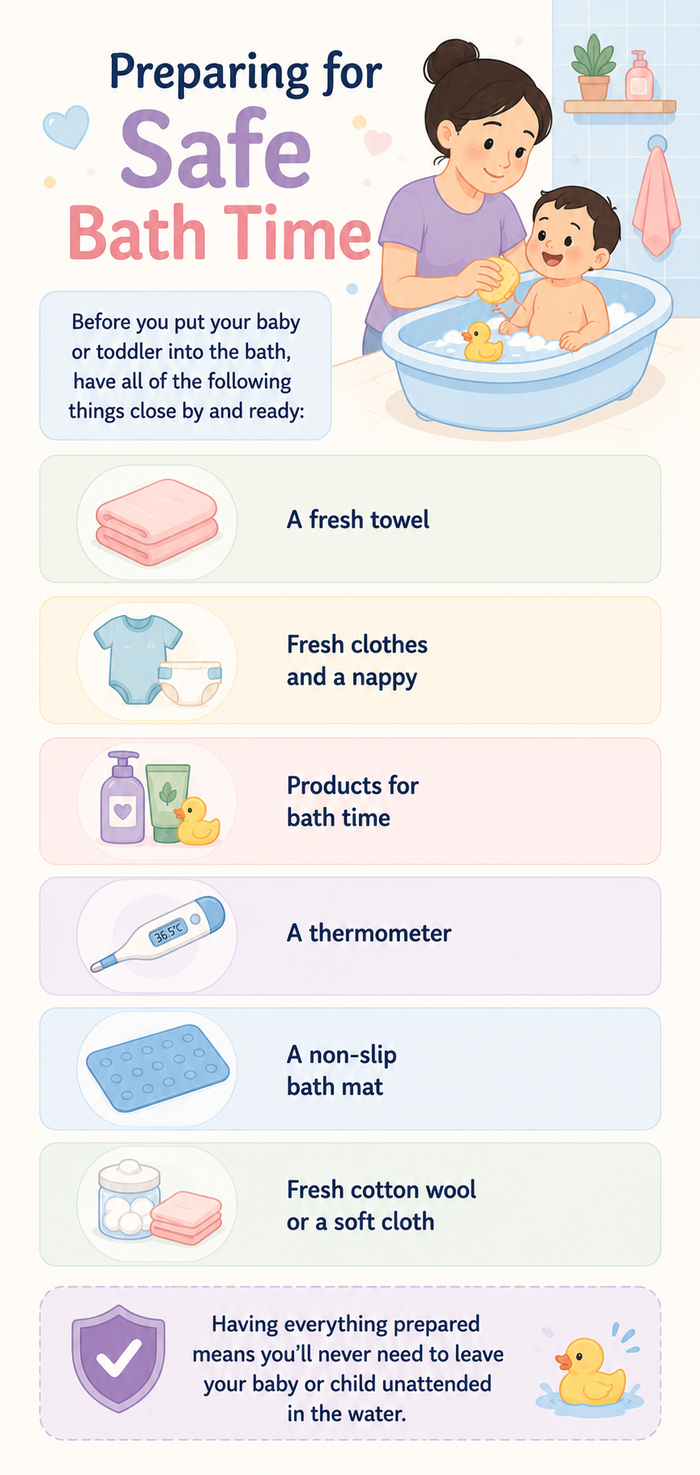
- A fresh towel
- Fresh clothes and a nappy
- Products for bath time
- A thermometer
- A non-slip bath mat
- Fresh cotton wool or a soft cloth
Having everything prepared means you'll never need to leave your baby or child unattended in the water.
Safe Water Temperature
A child's skin is much more sensitive to heat than an adult's, and water that is merely warm to an adult's hand may cause serious burns or scalds in a matter of seconds for a young child. For this reason, your child's bath should be between 37 and 38 degrees Celcius, which is warm to the touch but not hot. This can be done through:
- Checking the temperature by using either the elbow or wrist.
- Using the bathing thermometer.
- Always turn the tap on to start with cold water first.
- Adjusting the water heater temperature to the right level.
Safe Handling of Babies During Baths
- Support the head and bottom. Cradle the back of their head in the crook of your arm and support their bottom with your hand. Your free hand does the washing.
- Lower your baby feet-first into the water, then ease the body in slowly.
- Movement control stops you from losing your hold on your baby. Uncontrolled movements increase the likelihood of slippage.
- Prepare the bathroom in advance, as it makes sure that your baby is not exposed to temperature shock when moving the baby out of the bath.
Gentle Products to Use
Choosing appropriate products is key to safety:
- Use products that are made specifically for baby use.
- Buy tear-free formulas.
- Avoid bubble baths when bathing a baby or younger child.
- Remember to moisturise baby’s skin after their bath.
Bath Toys and Hygiene Recommendations
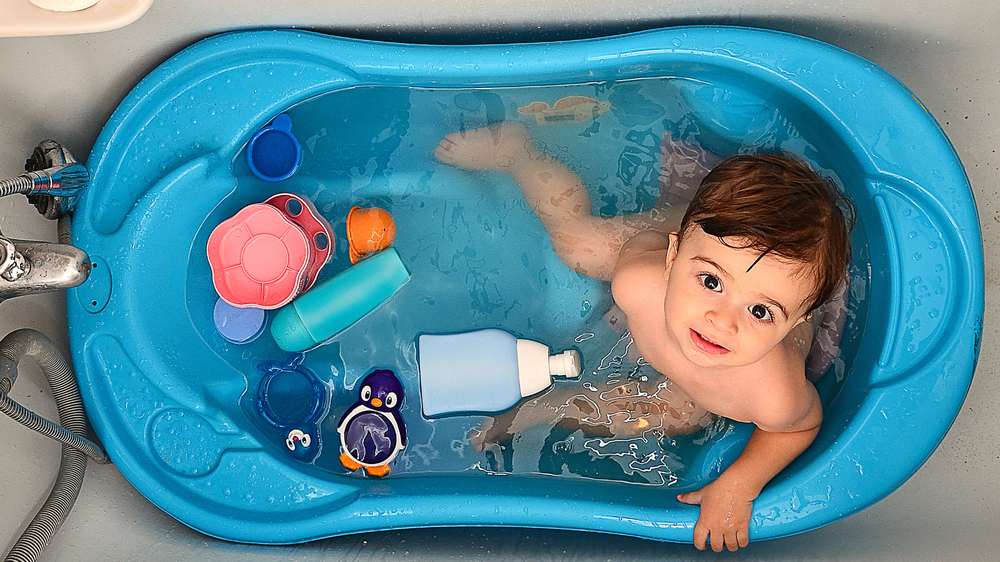
- Do not use toys that are filled with holes since they will retain water and soap, resulting in the growth of bacteria and fungi.
- Clean the toys with hot, soapy water from time to time.
- Do not introduce too many toys into the bath as this may make the bath dirty and expose the baby to numerous germs.
- Ensure toys are age-appropriate for your child.
Common Bathtime Mistakes to Avoid
- Leaving the child unattended
- Using too much water
- Using the phone while bathing the baby
- Making older siblings supervise
- Bathing when exhausted
- Skipping the water temperature check
Warning Signs
- If your baby or child shows any lack of response and becomes unconscious, even for a few seconds.
- If they have unusual or heavy breathing and become drowsy after the incident, they could be suffering from delayed drowning, which may show its symptoms even hours after the actual incident has occurred.
- If their skin shows redness or blistering, and pain from contact with the hot water.
- If any bath product, cleaning substance or other chemical has been swallowed, then the poison control or emergency services should be called immediately.
- Any cut or injury which does not bleed with continuous and firm pressure applied.
When to Seek Medical Advice
You should take your child to the emergency room straight away if they:
- Have been submerged in the water and are experiencing any oddities, whether hours after the incident.
- Have ingested something toxic or unfamiliar.
- Are experiencing any scalding or burns requiring attention.
- Have experienced a head injury in a fall, and you notice they seem to be acting oddly.
If you have any concerns about your child's skin care, about using products for children with conditions such as eczema, or about their general bathing routines, please speak to your health visitor or your local paediatrician.
Bathtime is meant to be one of the warmest and most enjoyable experiences for children. With the right preparations and your vigilant attention, it absolutely can be. The tips offered in this guide are not intended to detract from the joy of this everyday routine, but to preserve it for years to come.
Whether you’re pregnant, a new mom, or navigating postpartum, you don’t have to do it alone. Join our support group to connect, share, and support one another.
FAQ on How to Make Bath Time Safe for Babies and Toddlers
- How much water should I use when bathing my baby?
For newborn babies, approximately 5 to 8 cm of water will suffice to keep your baby's bottom side down in water. For toddlers in a bathtub, ensure that you only use an adequate amount of water required to cleanse and that more water is not added than is necessary. - Can babies slip easily in the bath?
Yes, wet skin combined with a slippery tub surface is a real risk for babies of all ages, and those who cannot even crawl. Using a non-slip bath mat or non-slip stickers on the tub bottom and keeping a constant, secure hand or arm on your baby at all times are your best bets. - At what age should children be allowed to go to the bathroom on their own?
Most child safety experts suggest that parents should keep a close watch on their children during baths until age 6, and ensure the bathroom is safe for kids until they can comprehend safety instructions.