In this article:
=IF(O:O="getting pregnant", "", "")
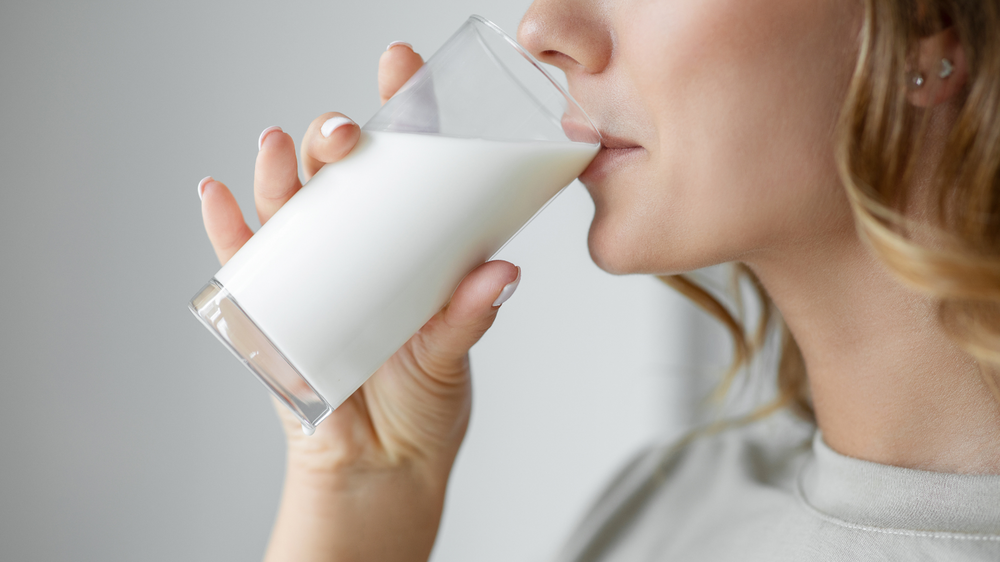
Your ability to make calm and confident decisions is directly correlated to your level of knowledge about how different foods influence your hormones, particularly milk and milk products.
Moreover, planning for pregnancy will be less of a hassle if you know how much of an influence dairy will have on your fertility journey.
How May Milk Cause Hormonal Dysregulation?
Did you know that milk, naturally, contains small amounts of hormones?
Yes. It does. This is because it is produced by cows during their reproductive cycle, especially when they are pregnant or producing milk after giving birth.
However, taking any product that contains reproductive hormones, even in trace quantities, may affect your hormonal balance to some extent. This is how:
- Milk contains small amounts of hormones like oestrogen and progesterone
- It also includes growth factors like IGF-1
- These compounds may start affecting your hormonal balance in your body
What Is the Correlation of Dairy Intake And Ovulation?
For pregnancy to happen, your body carries out ovulation by releasing an egg during your every cycle. Some research suggests that dairy intake may, in certain cases, affect this process.
- Excessive intake of low-fat dairy may be linked with ovulatory infertility
- Full-fat dairy may show a neutral or slightly protective association
- Findings are, importantly, not consistent across all studies
What are the possible causes?
- Fat removal disturbs the hormonal profile of milk
- This, in turn, may affect signals that regulate ovulation
Low-Fat vs Full-Fat Dairy
| Aspect | Low-Fat Dairy | Full-Fat Dairy |
| What it means | Fat is removed during processing | Natural fat is retained |
| Hormonal impact | May, in some cases, alter hormonal signalling linked to ovulation | May support a steadier hormonal balance |
| What research suggests | Some studies associate higher intake with ovulatory issues | No effect or slightly supportive (in some cases) |
| Possible reasons | Removal of fat may change the balance of hormones and may modulate specific metabolic signals affecting ovulation | Natural fats may help maintain the stability of the hormone signals and energy balance |
| When it may matter | In case of excessive consumption | When included in moderate, balanced quantities |
| Practical understanding | Not harmful on its own, but excess may not be ideal | Can be included as part of a balanced diet |
How Can Milk Enhance The Risk Of Early Menopause?
As per emerging research studies, there may be a possible link between dairy and ovarian ageing.
Research-Backed Inferences
- High intake of low-fat dairy may be associated with earlier menopause
- Therefore, early menopause can shorten the fertility window
- However, research is still underway for stronger evidence
Important perspective
Dairy is just a small factor. Genetic association, lifestyle, and certain health conditions continue to be the main risk factors of infertility.How Can Igf-1 Present In Milk Affect Fertility?
Certain studies indicate that milk and dairy product intake is associated with higher IGF-1 concentrations. IGF-1 can influence ovarian function and follicle development.
However, the effect depends on your overall diet, metabolism, and health status.
Myth Busting: Fast Facts About the Effect Of Milk On Fertility
Myth 1: Milk always harms fertility
Fact: Effects vary. Moderate intake is generally safe and, in some cases, neutral.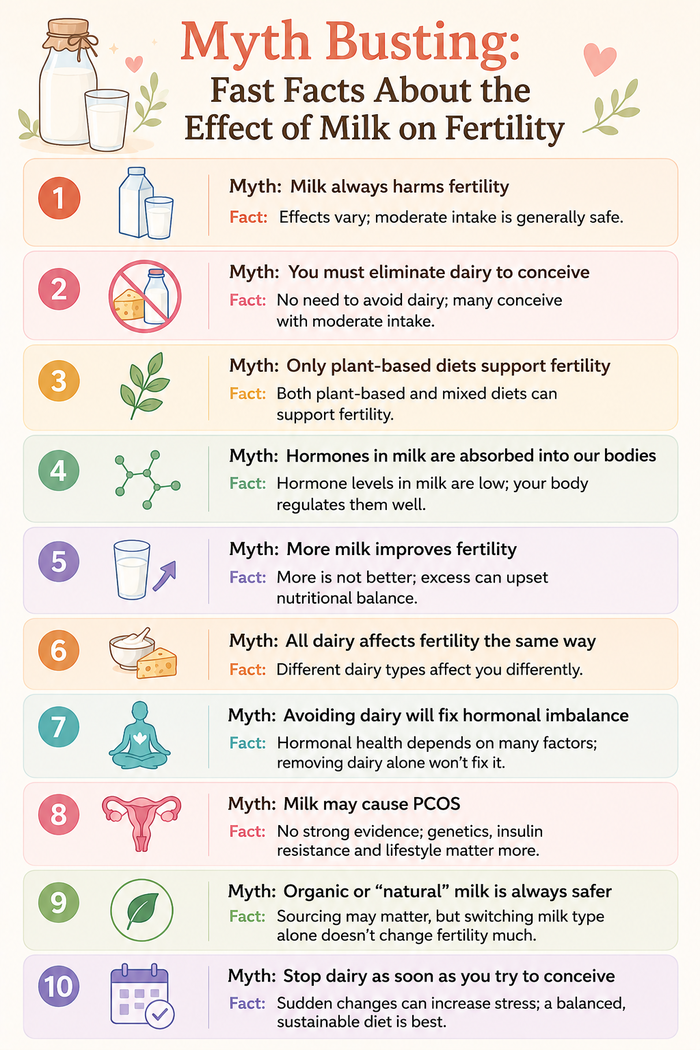
Myth 2: You must eliminate dairy to conceive
Fact: There is no universal recommendation to avoid dairy. Many people conceive while consuming balanced amounts of dairy.Myth 3: Only plant-based diets support fertility
Fact: Both plant-based and mixed diets have a positive impact on fertility when nutritionally balanced.Myth 4: Hormones in milk are directly absorbed into our bodies
Fact: The hormone levels in milk are relatively low. Your body regulates hormones efficiently, limiting their overall effect.Myth 5: More milk improves fertility
Fact: Excess intake does not improve fertility. In fact, too much of any single food may disturb nutritional balance.Myth 6: All dairy products affect fertility in the same way
Fact: Different dairy types affect your body differently.Myth 7: Avoiding dairy will fix a hormonal imbalance
Fact: Hormonal health depends on many factors. These include:- Dietary choices
- Level of physical fitness
- Mental and physical stress
- Underlying medical conditions
Myth 8: Milk may cause PCOS
Fact: There is no strong evidence that milk directly causes such conditions. Genetics, insulin resistance, and lifestyle factors play a major role.Myth 9: Organic or “natural” milk is always safer for fertility
Fact: Sourcing may matter. But there is limited evidence that switching types of milk alone significantly changes fertility outcomes.Myth 10: You should stop dairy as soon as you start trying to conceive
Fact: Sudden dietary changes may have adverse effects by increasing stress levels. A balanced, sustainable diet is more helpful than a strict elimination.The impact of dairy on reproductive capability, or fertility, is still being studied. Currently, there are no known studies that provide definitive evidence against the consumption of dairy foods as part of a healthy diet. But dairy products may include certain agents that may impact your hormones. However, the effects may vary significantly from one another.
Moderation is the key. For individual recommendations, you should consult a nutritionist and a fertility specialist.
You’re not alone in your journey when trying to conceive. Join our supportive community to connect with others, share experiences, and find encouragement every step of the way.
FAQs on Milk, Hormones, and Fertility: Myths vs Facts
- Does milk directly cause infertility?
No, milk does not directly cause infertility. Its effects are indirect and vary between individuals. - Is adopting plant-based milk in the diet a better option?
You may include plant-based options. Ensure they provide enough calcium, protein, and nutrients. - How much dairy is safe when trying to conceive?
Moderation is key. However, you must keep checks on quantity. It is better to avoid excessive intake.