In this article:
However, the chances of preserving fertility vary among individuals. For some survivors, it is possible to conceive naturally, while others may require assisted care.
Factors Increasing Your Pregnancy Chances After Treatment
It might be possible to conceive naturally after cervical cancer treatment in some cases.
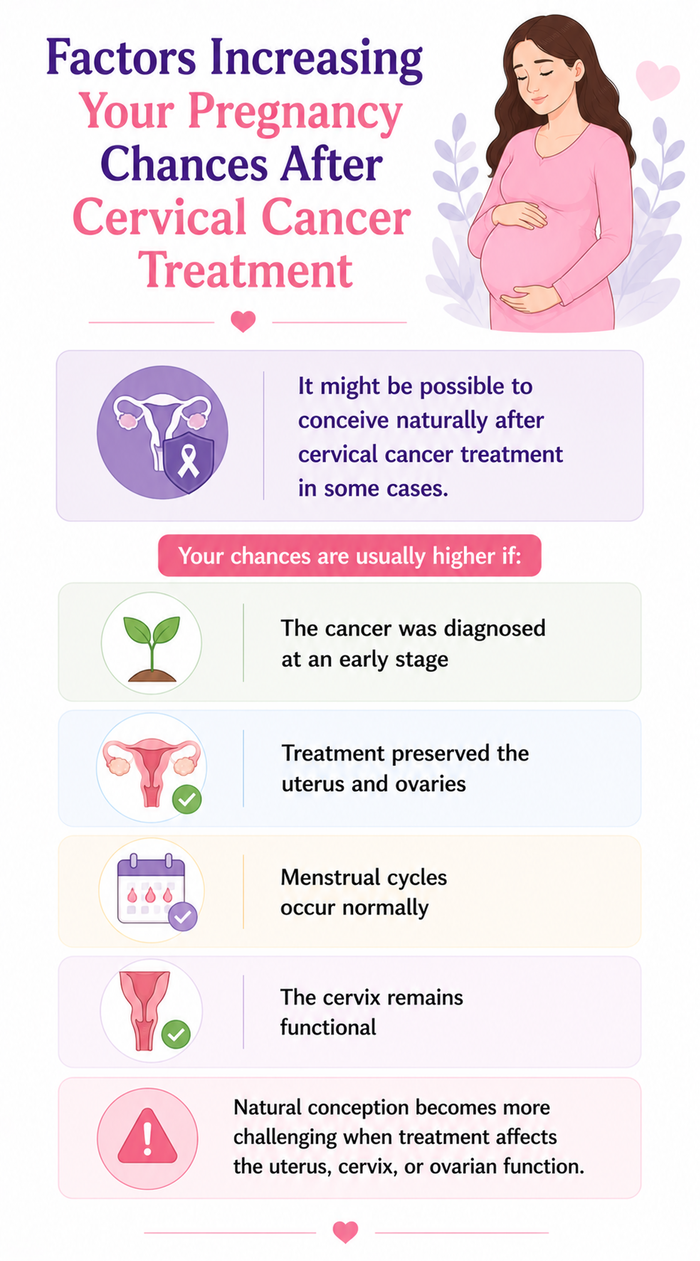
Your chances are usually higher if:
- The cancer was diagnosed at an early stage
- Treatment preserved the uterus and ovaries
- Menstrual cycles occur normally
- The cervix remains functional
Impact of Different Cervical Cancer Treatments on Fertility
Not all cervical cancer treatments affect fertility in the same way.
| Treatment | Possible Impact on Pregnancy |
| Cone biopsy | Usually preserves fertility |
| LEEP procedure | Fertility often remains unaffected |
| Trachelectomy | Pregnancy may still be possible as the main body of the uterus remains intact after the surgical removal of the uterine cervix |
| Hysterectomy | Natural pregnancy is not possible |
| Pelvic radiotherapy | May affect the ovaries and uterus |
| Chemotherapy alone | Fertility effects vary depending on age and treatment type |
The impact depends on the extent of treatment and your individual reproductive health.
Fertility-Sparing Cervical Cancer Treatments
Certain treatments are planned to remove cancer while preserving reproductive potential.
These may include:
- Cone biopsy
- Large loop excision of the transformation zone (LLETZ)
- Radical trachelectomy
Non-Fertility-Sparing Cervical Cancer Treatments
More advanced cancers may require treatments that remove or damage reproductive organs.
These may include:
- Hysterectomy
- Extensive pelvic surgery
- Pelvic radiotherapy
What Signs Suggest That Your Fertility May Be Preserved?
Certain signs may indicate that your reproductive function remains intact.
| Sign | What It May Suggest |
| Regular menstrual cycles | Ovarian function may be preserved |
| Normal hormone test results | Ongoing egg production |
| Healthy ovarian reserve tests | Better fertility potential |
| No significant uterine damage | Greater chance of carrying a pregnancy |
| Successful ovulation | Natural conception may still be possible |
These signs cannot guarantee pregnancy. However, they provide useful information about your reproductive health.
Pregnancy-Related Complications Associated With Cervical Cancer Treatment
Certain cervical procedures may weaken the cervix. This can increase the risk of:
- Miscarriage
- Premature birth
- Cervical insufficiency
- Pregnancy complications requiring closer monitoring
Many survivors still go on to have successful pregnancies with appropriate care.
How Long Should You Wait To Plan Pregnancy After Cervical Cancer Treatment?
The timing depends on your treatment plan and follow-up results.
Your healthcare team may recommend waiting until:
- Treatment is complete
- Follow-up examinations show no evidence of disease
- Your body has recovered adequately
- Pregnancy is considered medically safe
Therefore, discuss pregnancy plans with both your oncologist and fertility specialist before trying to conceive.
When Should You Consult a Fertility Specialist?
Consider seeking fertility advice if:
- Your periods have not returned after treatment
- You are over 35 years of age
- You have been trying to conceive without success
- You received pelvic radiotherapy
- You are worried about a decline in your ovarian reserve
Many cervical cancer survivors can plan a pregnancy, especially if they have received fertility-sparing treatment. You can discuss your family planning goals with your doctors to understand your fertility potential and available options.
You’re not alone in your journey when trying to conceive. Join our supportive community to connect with others, share experiences, and find encouragement every step of the way.
FAQs on Can Cervical Cancer Survivors Get Pregnant Naturally
- Will I be able to conceive naturally after cervical cancer treatment?
Your chances of conceiving naturally may be high if you had fertility-sparing treatment for cervical cancer. - How does trachelectomy affect your fertility?
Pregnancy is possible after a trachelectomy. However, you may need specialised obstetric care due to a higher risk of preterm birth. - Is IVF always necessary after cervical cancer treatment?
Not always. Some survivors conceive naturally. Fertility treatment may be considered if natural conception does not occur or if treatment has affected reproductive function.