In this article:
In this guide, we explain treatment options and prevention tips for Mother’s Thumb.
What Are the Treatment Options for Mother’s Thumb?
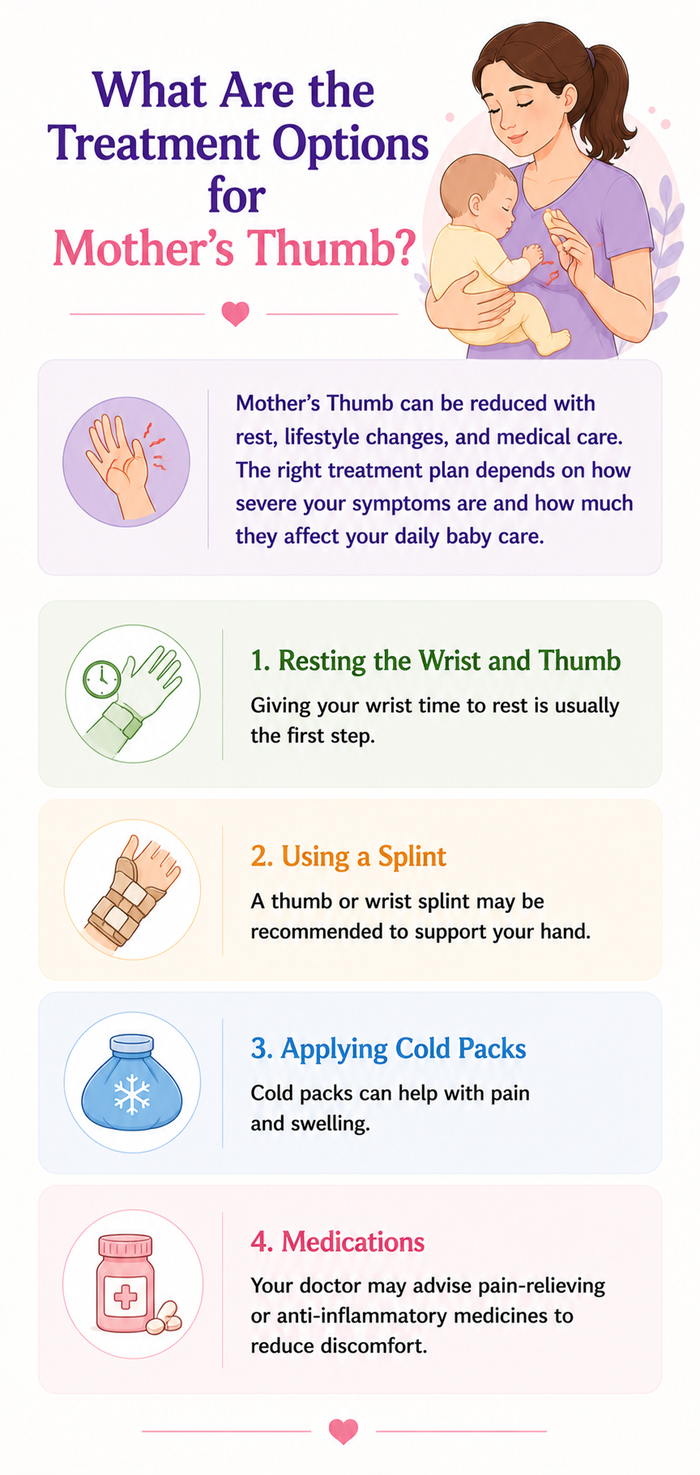
Mother’s Thumb can be reduced with rest, lifestyle changes, and medical care. The right treatment plan depends on how severe your symptoms are and how much they affect your daily baby care.
Resting the Wrist and Thumb
Giving your wrist time to rest is usually the first step. Try to reduce activities that trigger pain and avoid repeated thumb and wrist movements to help healing.Using a Splint
A thumb or wrist splint may be recommended to support your hand and limit painful movements. Wearing a splint can reduce strain on the tendons and give them time to recover.Applying Cold Packs
Cold packs can help with pain and swelling. Place an ice pack wrapped in a cloth on your wrist for short periods. Avoid putting ice directly on your skin.Medications
Your doctor may advise pain‑relieving or anti‑inflammatory medicines to reduce discomfort. Always follow medical guidance, especially if you are breastfeeding or taking other medicines.What Can You Do at Home to Relieve Mother’s Thumb?
Along with medical care, a few small changes in your daily routine can reduce pressure on your wrist and thumb.
- Lift your baby with both hands instead of putting all the weight on your thumb and wrist
- Use pillows during feeding to support your baby and reduce strain on your arms
- Switch hands often when carrying or holding your baby
- Take short breaks to give your wrists time to rest
- Keep your wrist straight and avoid bending too much during baby care
Which Exercises May Help Mother’s Thumb?
Once the pain and swelling have improved, gentle exercises may help improve movement and flexibility in the thumb and wrist.Thumb Stretch
- Place your affected hand flat on a table, palm facing down
- Use your other hand to gently lift the thumb away from the table
- Hold for 5 seconds
- Slowly bring the thumb back down
- Repeat 5 to 10 times
Wrist Stretch
- Rest your forearm on a table with your wrist near the edge
- Keep your thumb facing upward and let your hand hang slightly over the edge
- Slowly bend your wrist downward toward the floor
- Hold for 5 seconds
- Return to the starting position
- Repeat 5 to 10 times
Side Thumb Stretch
- Place your hand on its side with the little finger resting on a table
- Keep your thumb pointing upward
- Gently move the thumb away from your fingers until you feel a stretch
- Hold for 5 seconds
- Return to the starting position
- Repeat 5 to 10 times
When Is Medical Treatment Needed?
While many cases of Mother's Thumb improve with self-care and lifestyle changes, medical treatment may be needed in certain situations.- Home remedies do not provide enough relief
- Pain continues to interfere with daily activities
- You are unable to comfortably hold or lift your baby
- Symptoms return repeatedly after improving
- Wrist movement becomes increasingly limited
- You find it difficult to perform simple hand movements
- Pain affects your sleep or overall quality of life
Whether you’re pregnant, a new mom, or navigating postpartum, you don’t have to do it alone. Join our support group to connect, share, and support one another.
FAQs on How Can You Manage Mother’s Thumb After Childbirth?
- Can Mother’s Thumb affect both hands?
Although it usually affects the hand used most often, some mothers may develop symptoms in both wrists. - Should I wear a wrist splint all day?
It depends on your symptoms and your doctor's advice. Follow the instructions provided by your healthcare provider. - Is Mother’s Thumb more common in first-time mothers?
It can occur in any mother, but first-time mothers may be more likely to experience it as they adjust to new baby-care routines.