
In this article:
When Should You Tell Your Older Child About the New Baby?
The right time is dependent on your child's age.
- Children Under 3 Years: They lack the concept of time; therefore, telling them in advance can result in confusion and too many questions. The right time will be when you start showing a bump, and this will ideally happen during the 2nd trimester.
- Children 3 to 5 Years: They can handle the news in advance with excitement while posing questions that need to be answered properly and with patience.
- Older Kids: Children above five years can be informed at an earlier stage of pregnancy. Their comprehension will be higher, and their emotional responses may be more complex and will require open and honest discussion.
Regardless of age, it is always best for them to hear the news directly from you first; this way, they know they are a priority.
How to Break the News to Your Older Child
While there is no script, there are some guiding principles to live by:
- Keep it simple and honest, use language a child understands.
- Give your child space to react and ask any questions that arise, and then answer them simply.
- There are many beautiful children's books available about becoming a big sibling. Reading together can be a natural and reassuring way to introduce the topic.
- Show them the scan; this can make the unborn baby feel like a reality. Most kids would love to see their siblings' first picture.
- Let them feel baby kicks, come along to the occasional appointment if you are comfortable with that, or help pick out a name and a piece of clothing.
Understand Your Child’s Emotional Response
Your older child's reaction to the news may vary; he or she might be ecstatic, quiet, withdrawn, or even angry. All feelings are normal and acceptable.
- Excitement and Pride: Especially in those who have requested a sibling, or those who find the idea of being a big brother or sister exciting.
- Anxiety: As children are inherently aware that a major change is looming, some become more physically attached to their parents.
- Regression: Temporary return to an earlier stage, like thumb-sucking, bedwetting, or wanting a bottle, is quite common during pregnancy.
- Jealousy: Perfectly healthy and expected reactions that parents should acknowledge and reassure children about, rather than dismiss.
The most important action you can take is to ensure your child understands that any feelings he or she may have are perfectly okay and that your love for them remains constant.
Useful Preparation Advice for Your Older Child
- Discussing Your Life With an Infant's Arrival: The kids should know about the changes to come. Tell your children the practical details about their new sibling, such as who will care for him/her when you have to go to the hospital, and about the infant sleeping a lot, eating often, and crying.
- Sticking to Established Routines and Rituals: For older children, sticking to routines is vital. This means continuing all rituals, including those regarding bedtime as well as weekends together, which is crucial for bonding between parents and kids.
- Making Them Part Of The Process: The participation of older children can be very helpful to them. Let them help set up the baby’s room or pick out a special soft toy to give to the baby when he or she arrives. Encourage them to tell family and friends, and to sing and play with the baby.
- Read Books About Being an Older Sibling: It helps validate feelings, gives children the feeling of acceptance rather than being different from others, and shows children that other kids have felt the same way.
Preparing for the Arrival of the Baby
The first weeks of the baby’s life will be memorable for your older child. A bit of planning and consideration will go a long way:
- If possible, have someone your child trusts bring them to meet the baby, instead of having them arrive to see you holding a newborn. Allow your older child to come to you first.
- Parents can present a thoughtful gift to their older child when he or she first meets the new baby, a simple gesture that sets a warm tone for the relationship.
- With close monitoring and guidance, you may allow your elder child to hold the baby gently.
- Spend about ten to fifteen minutes a day exclusively on your elder child.
What Signs to Look Out For
Some change behavior in children are completely normal. However, be sure to ask your child's doctor or a child psychologist if they:
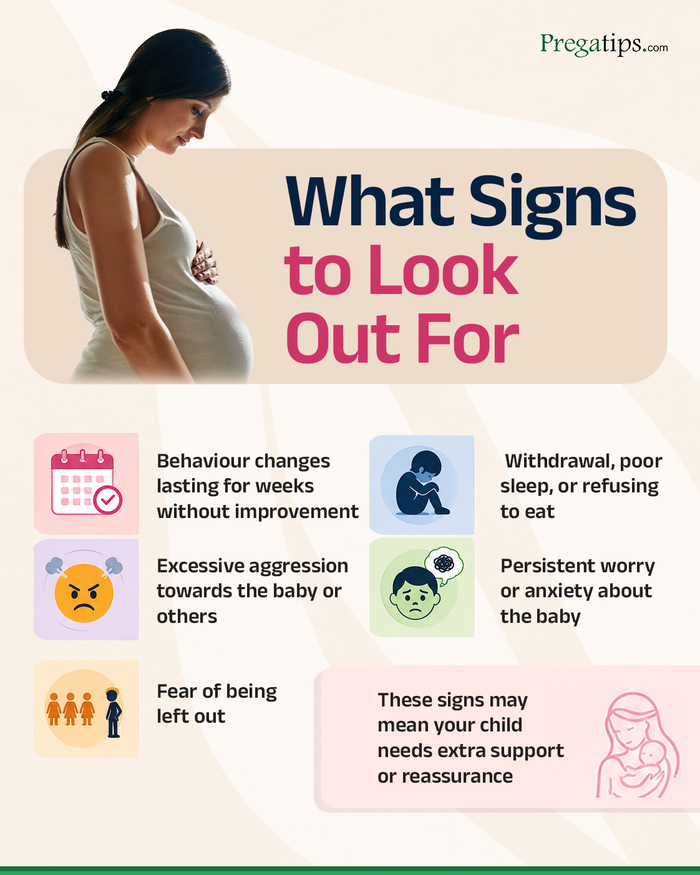
- Are taking a long time to adapt, for weeks on end, and the behaviour is not improving.
- Are aggressive towards the baby or people around them to a level that seems excessive.
- Are withdrawn, refusing to eat, or not sleeping well at all.
- Show extreme and persistent worry or anxiety about the baby or about being left out.
The signs are nothing to worry about, but are indicative that your child needs some extra support, which is perfectly okay to seek.
When You Need to Seek Help From a Doctor
If your older child is struggling a great deal with the transition, before the baby's arrival or afterwards, there's nothing better than talking to your paediatrician or a child counsellor. Ask them for advice if:
- The changes in behaviour are drastic or long-lasting.
- Anxiety is significantly interfering with sleep, appetite, or everyday enjoyment.
- You are struggling to juggle the needs of your older child alongside a newborn.
- They are questioning the baby or your love for them in a way that you can't easily answer.
Seeking advice is one of the best things you can possibly do as a parent; you model the emotional honesty that you are hoping your child will embrace.
When preparing your older child for the arrival of a new sibling, it's not about perfection. It's about continued connection, honesty, and reminding your child through words, as well as small, everyday actions, that you love them fully and there is no risk of that changing. A baby does not divide your love; it multiplies it.
FAQs On How to Prepare Your Older Child for a New Baby: Practical Tips That’ll Help
- What if my older child acts like they don't care about the baby at all?
Acting completely indifferent about the new baby is one of the most common reactions, particularly for younger children who can't fully conceptualise what having a new baby means. This is not a problem. Continue to include your child gently, letting their bond with their sibling grow naturally when the baby arrives. - Is it normal for my older child to regress once the baby arrives?
Absolutely. Regression is one of the most common symptoms your child may exhibit. It's perfectly normal for their behaviour to slip, typically resolving in weeks after the new baby's arrival. Respond with patience rather than aggravation; comfort and reassure them that they are still safe and loved.