In this article:
If prepared correctly, even formula has sufficient water content. The key is to follow the instructions on the formula pack or as advised by your doctor.
Babies Can't Handle Large Amounts of Water
Newborns can't filter out plain water efficiently as their kidneys are still immature and underdeveloped.
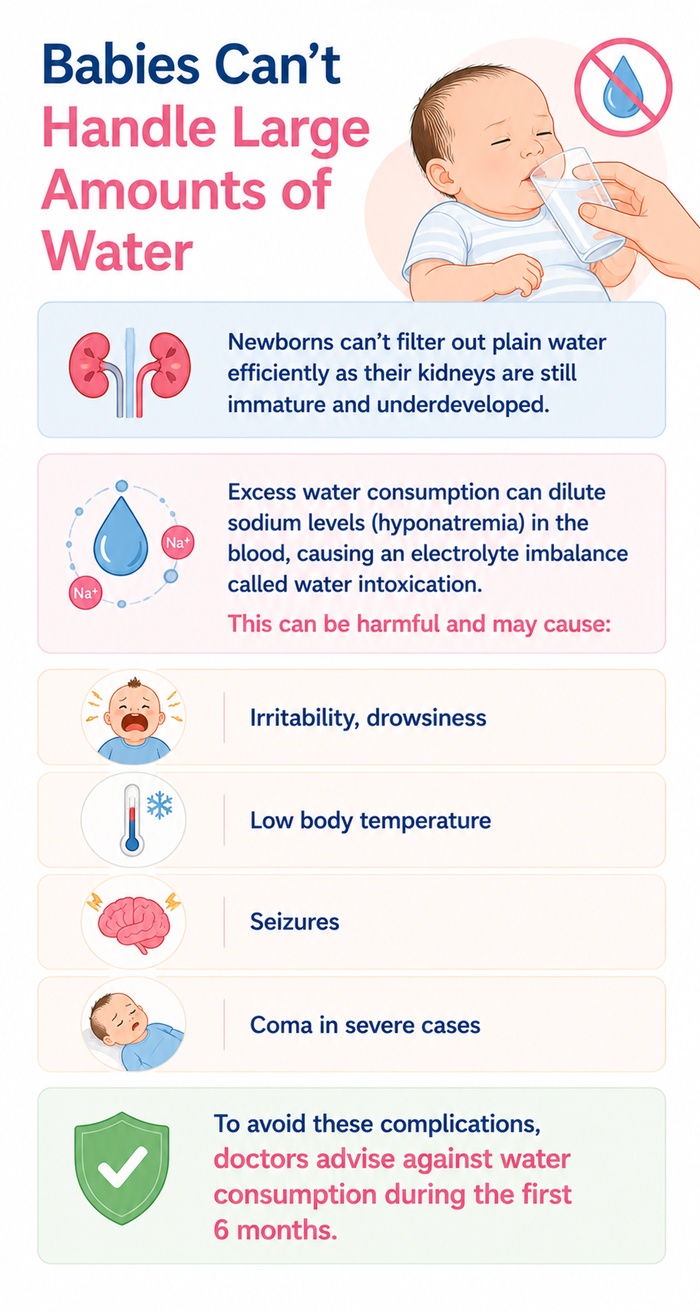
Due to this, excess water consumption can dilute sodium levels (hyponatremia) in the blood, causing an electrolyte imbalance called water intoxication. This can be harmful and may cause:
- Irritability, drowsiness
- Low body temperature
- Seizures
- Coma in severe cases
To avoid these complications, doctors advise against water consumption during the first 6 months.
Water Reduces Milk Intake
Babies have smaller stomachs that can either accommodate breastmilk or water in adequate amounts. If they receive water, it fills their stomachs and kills the appetite for breastmilk.
This is concerning as water has no nutritional value; it lacks calories, nutrients, and protective immune factors. This can cause the baby to:
- Not gaining weight may even lead to malnutrition.
- Fall sick frequently due to poor immunity.
- Milk production is dependent on how often and how much the baby feeds. If frequency goes down, so does the mother's milk supply.
Growing babies need adequate nutrition and protection, so every feed matters.
Higher Chances of Infection
In developing countries like India, water safety and storage are real issues. Giving water to a newborn can increase the risk of diarrhoea and other stomach infections.
Since so many people don't have access to clean, uncontaminated drinking water, it's better to avoid it for the first 6 months.
Breastmilk is essential to decrease infection risk as it not only protects but also trains the baby's immune system for future challenges.
When Can Babies Start Drinking Water?
After six months, solid foods and small sips of water can be introduced to the baby along with breastfeeding.
Consuming water at this stage can help with swallowing solid foods better, preventing constipation and learning to drink from a cup.
What About Hot Weather?
Summers in India can get incredibly hot, and many parents wonder if their baby can get dehydrated without water. While breast milk and formula contain adequate amounts of water, these points should be kept in mind:
- Ensure that the baby feeds frequently.
- The baby's lips and tongue appear moist, indicating that the baby is hydrated.
- The baby appears to be active and alert.
- Keep a count of wet diapers (at least 6 or more)
A woman’s body is designed to produce breastmilk that can fully nourish, protect, hydrate and sustain the baby for the first 6 months of life without any need for water.
When in doubt, always consult a paediatrician and keep yourself informed!
Whether you’re pregnant, a new mom, or navigating postpartum, you don’t have to do it alone. Join our support group to connect, share, and support one another.
FAQs on Why Can't Babies Drink Water? What Parents Need to Know
- What happens if I accidentally give my baby water?
If it's a small amount, the baby is likely fine. Look out for signs such as irritability or unusual sleepiness and consult your paediatrician. - When is it safe to give babies water?
You can introduce small sips of water after 6 months, along with solid foods and continued breastfeeding. - Can I give my 3-month-old water in the summer?
Ideally, even in summer, babies under 6 months receive enough hydration through breastmilk, and water should be avoided. If you're worried about dehydration, you can feed the baby more often.