In this article:
Problems arise only when consumed in excess; large amounts can lead to weight gain, elevated cholesterol, or excess Vitamin A. If you have gestational diabetes, obesity, or high cholesterol, discuss ghee intake with your doctor before adding it to your diet.
What Ayurveda Says About Ghee During Pregnancy
In Ayurveda, ghee is classified as a rasayana: a substance that nourishes body tissues, builds strength, and supports longevity. Specific recommendations come from the Charaka Samhita and have been passed down through generations. They form the core of advice most pregnant women receive from family and elders.
Ghee in the First and Second Trimester
- First and second trimester: Daily ghee with milk is believed to stabilise the foetus and support early development.
Ghee in the Third Trimester
- Third trimester: Ghee is recommended to ease digestion, relieve constipation, and prepare the body for labour.
- Near delivery: Ayurvedic texts suggest ghee can lubricate the birth canal, promote smooth contractions, and ease delivery.
Ghee During Pregnancy: Ayurveda vs Science
Modern nutrition science agrees that ghee contains beneficial compounds, but it does not confirm every Ayurvedic claim.
| Claim About Ghee in Pregnancy | Science Says | Notes |
| Provides fat-soluble vitamins (A, D, E, K) | Supported | Important for foetal bone development, immune function, and cell growth |
| Butyric acid (a fatty acid in ghee) supports gut health | Supported | Reduces intestinal inflammation; explains traditional use for digestive comfort |
| Contains Omega-3 and Omega-6 fatty acids | Supported | Present in small amounts; supports foetal brain and eye development |
| Conjugated Linoleic Acid (CLA) has anti-inflammatory properties | Partially supported | Seen in ghee from grass-fed cows; limited pregnancy-specific studies |
| Safe for lactose-sensitive women | Supported | Ghee has negligible lactose content |
| Lubricates the birth canal | Not supported | No clinical evidence; traditional belief only |
| Induces labour or stimulates contractions | Not supported | No studies confirm this effect |
| Directly increases foetal intelligence | Not supported | Lacks clinical trial evidence |
| Prevents stretch marks | Not supported | Popular belief; no strong scientific backing |
How Much Ghee Is Safe During Pregnancy?
Nutritionists and obstetricians recommend 1 to 2 teaspoons (approximately 5–10 ml) per day for a healthy pregnant woman. Some guidelines extend this to 3 teaspoons if the woman has no weight concerns or metabolic conditions.
Ghee is calorie-dense; one teaspoon contains approximately 45 calories and 5 grams of fat. A pregnant woman needs around 300–350 extra calories per day in the second and third trimesters. Ghee can contribute to those calories, but it should not replace other nutrient-dense foods.
Risks of Eating Too Much Ghee in Pregnancy
Here are some of the risks of eating too much ghee during pregnancy.
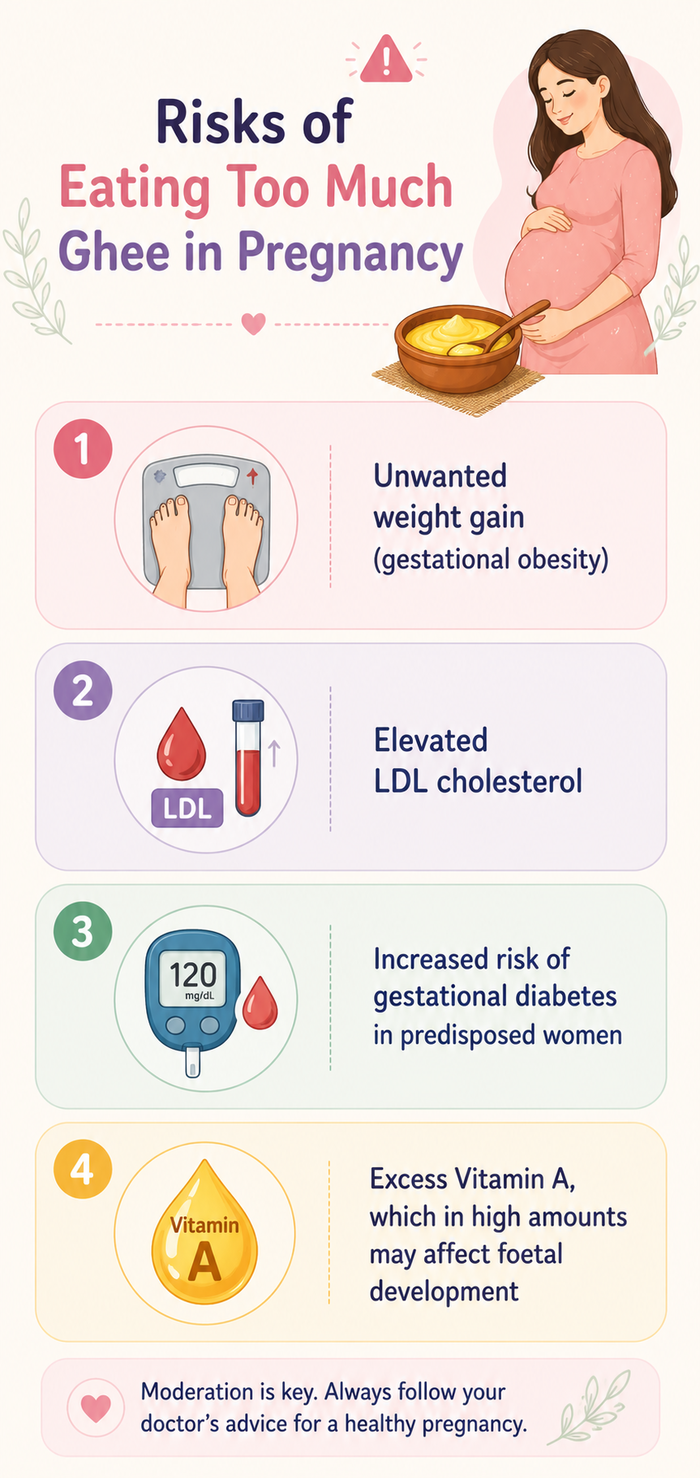
- Unwanted weight gain (gestational obesity)
- Elevated LDL cholesterol
- Increased risk of gestational diabetes in predisposed women
- Excess Vitamin A, which in high amounts may affect foetal development
Should You Eat More Ghee in the Third Trimester?
The third trimester is when ghee is most commonly pushed in households, often in larger amounts, based on the belief that it eases delivery.
There is no scientific evidence that increasing ghee intake in the last month makes labour easier or delivery faster. Doctors and obstetricians specifically advise against overloading on ghee in late pregnancy, as it adds calories at a time when weight management matters. Normal delivery depends on multiple factors: foetal positioning, cervical readiness, and uterine function, none of which are influenced by dietary fat alone.
Continue using ghee in the same moderation as earlier trimesters. Do not increase the amount based on traditional advice unless your healthcare provider recommends it.
Whether you’re pregnant, a new mom, or navigating postpartum, you don’t have to do it alone. Join our support group to connect, share, and support one another.
FAQs on Is Ghee Good During Pregnancy? Ayurveda vs Science Explained
- Can I have ghee with milk during pregnancy?
Ghee with warm milk is a traditional Ayurvedic combination recommended throughout pregnancy. It is safe and easy to digest. Women with lactose sensitivity can tolerate ghee, as it is lactose-free, though the milk component may cause discomfort in some cases. - Can I apply ghee to my belly during pregnancy?
Topical application of ghee on the belly is a traditional practice believed to reduce stretch marks and keep skin soft. There is no clinical evidence confirming that it prevents stretch marks, but ghee is non-toxic and safe to apply externally. It works as a basic moisturiser due to its fat content. - Can I eat ghee on an empty stomach during pregnancy?
Yes, consuming a small amount of ghee on an empty stomach is considered safe. It may support digestion and bowel regularity, which many pregnant women struggle with. Limit it to half to one teaspoon. If you have acidity, nausea, or morning sickness, wait until after a light meal.