In this article:
But if the lump becomes painful, red, and swollen, it cannot be ignored as a temporary change. These symptoms are linked to a breast infection called a breast abscess.
It may begin as mild tenderness, which could progress into a bigger lump over time. Being aware of this condition can help you know when it is time to see a doctor.
What Is a Breast Abscess?
A breast abscess is an accumulation of pus under your breast caused by an infection in the body. This occurs because bacteria invade your breast tissue, causing inflammation that results in a painful lump.
The development of a breast abscess may occur in both breastfeeding and non-breastfeeding mothers, though it is common in breastfeeding mothers.
As per research, about 5% to 11% of breastfeeding women with mastitis may go on to develop a breast abscess.
What Can Lead to a Breast Abscess?
Here are some conditions that may lead to the development of a breast abscess:
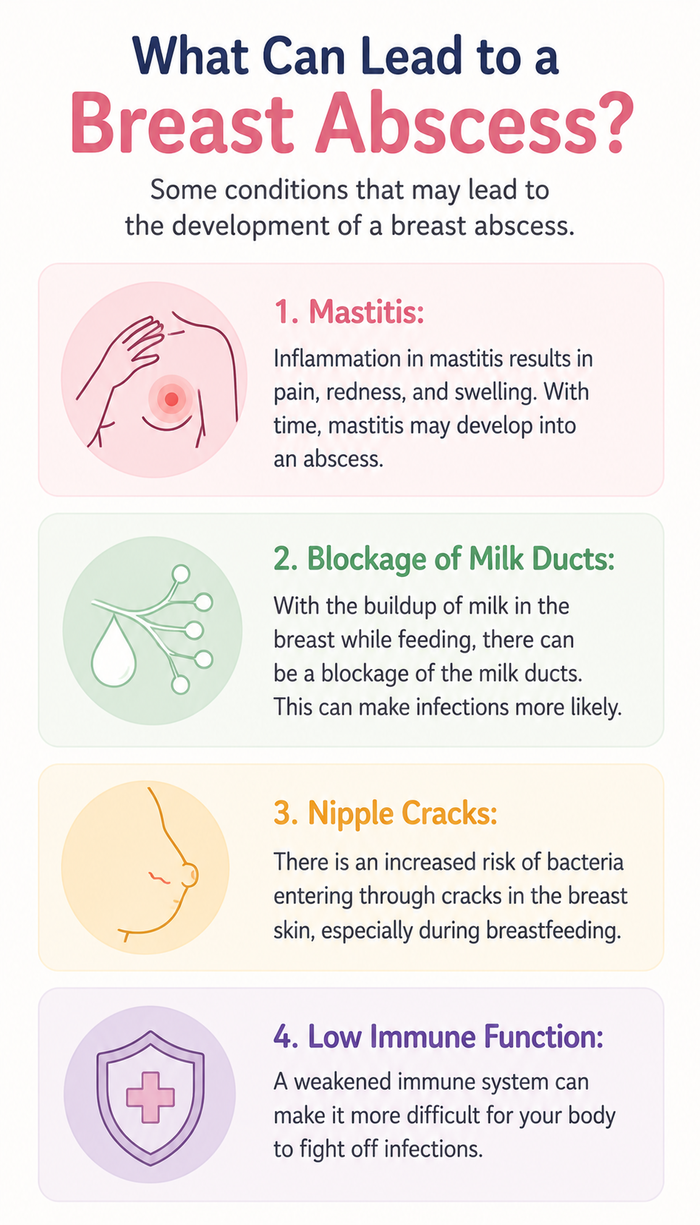
Mastitis:
Inflammation in mastitis results in pain, redness, and swelling. With time, mastitis may develop into an abscess.Blockage of Milk Ducts:
With the buildup of milk in the breast while feeding, there can be a blockage of the milk ducts. This can make infections more likely.Nipple Cracks:
There is an increased risk of bacteria entering through cracks in the breast skin, especially during breastfeeding.Low Immune Function:
A weakened immune system can make it more difficult for your body to fight off infections.How Does a Breast Abscess Usually Present?
There are certain symptoms that you observe when developing an abscess in your breast. These include:
- A painful lump
- Skin redness
- Swelling of the affected area
- Increased warmth around the lump
- Tenderness in the affected breast
- Having a fever or chills
- Draining pus from the abscess
How Is a Breast Abscess Diagnosed?
A doctor usually diagnoses a breast abscess based on your symptoms, a physical examination, and sometimes a few tests.
Assessment of Your Symptoms:
Your doctor asks about:- The time when you first noticed the lump
- If you experience pain, redness or swelling
- Fever or chills
- If you are breastfeeding or not
- History of any previous breast infections or abscesses
Physical Examination:
The doctor examines the affected breast for tenderness, warmth, swelling, or fluid.Ultrasound of The Breast:
This test is aimed at helping the doctor determine whether an abscess contains pus and where it is located.Testing a Sample of the Fluid:
If pus is obtained, a sample of it is sent to the laboratory in order to establish the bacteria responsible for the infection.How Is a Breast Abscess Treated?
Treatment depends on the size of the abscess, the severity of symptoms, and the underlying cause.1. Drainage of the abscess
If an abscess contains pus, it needs to be drained.- Needle aspiration: The doctor inserts a needle and removes pus under ultrasound guidance.
- Incision and drainage: A small cut is made if the abscess is large or located deep inside.
2. Antibiotics
Antibiotics are used to kill bacteria and prevent the spread of infection. It is important to complete the full course, even if you start feeling better.3. Managing Discomfort
Simple steps may reduce your discomfort.- Taking medications prescribed by your doctor
- Placing a warm compress on your breast to reduce pain
- Having enough rest and drinking plenty of water
Can a Breast Abscess Cause Complications?
Most breast abscesses get better with treatment. But if the infection is not treated promptly, complications may occur.
- Infection spreading to nearby breast tissue
- The abscess is coming back after treatment
- Scarring in the affected area
- Trouble with breastfeeding, such as pain or less milk flow
- Formation of a fistula, which is an abnormal passage that may cause ongoing drainage
- More pain and discomfort as the infection worsens
When Should You See a Doctor?
You should see a doctor if you experience:
- A breast lump that does not get better after a few days
- A lump that keeps getting bigger over time
- Symptoms that come back after treatment
- A new lump develops after a past breast infection
- Breast pain that disturbs your daily life or sleep
- Fluid draining from the breast on its own
- If you have diabetes or another condition that weakens your immune system
Whether you’re pregnant, a new mom, or navigating postpartum, you don’t have to do it alone. Join our support group to connect, share, and support one another.
FAQs on Breast Abscess: Signs, Causes, and Treatment Options
- Can a breast abscess go away on its own?
A breast abscess usually does not go away without treatment. Because it contains pus, medical treatment is often needed to clear the infection and prevent it from worsening. - Is a breast abscess cancerous?
No, a breast abscess is not a type of cancer. However, any new breast lump should be evaluated by a healthcare provider to determine its cause. - Will a breast abscess leave a scar?
Some women may have little or no visible scarring, while others may develop a small scar after drainage procedures or severe infections.