What Is an Episiotomy?
An episiotomy is a surgical incision done under local anaesthesia using a scalpel into the perineum just before delivery to widen the vaginal opening.
The two main types:
- Mediolateral episiotomy: the cut goes diagonally to the side.
- Median (midline) episiotomy: the cut goes straight down toward the anus.
What Is Perineal Tearing?
Perineal tearing is a natural split in the perineal tissue as the baby's head and shoulders are delivered. Tears are classified into four degrees:
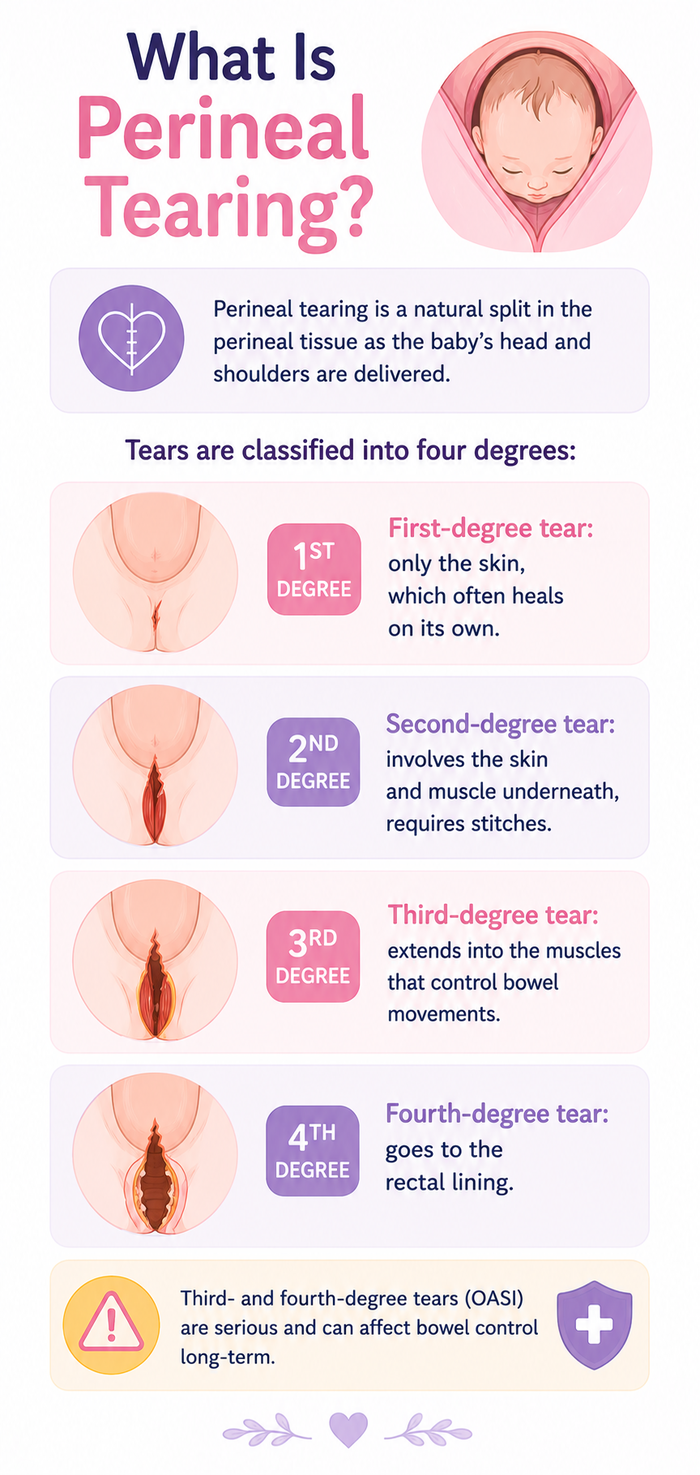
- First-degree tear: only the skin, which often heals on its own.
- Second-degree tear: involves the skin and muscle underneath, requires stitches.
- Third-degree tear: extends into the muscles that control bowel movements.
- Fourth-degree tear: goes to the rectal lining.
Third- and fourth-degree tears (together called obstetric anal sphincter injuries or OASI) are serious and can affect bowel control long-term.
What Does the Evidence Say?
A Cochrane review comparing selective versus routine use of episiotomy for vaginal birth found that:
- Routine episiotomy increases the risk of third- and fourth-degree tears.
- Women who had episiotomies reported more pain in the days and weeks after delivery.
- Healing time was similar to, or longer than, that of spontaneous tears of the same degree.
- There was no significant difference in long-term pelvic floor function, urinary incontinence, or sexual satisfaction between the two groups when episiotomy was used routinely.
The World Health Organization now recommends that episiotomy should only be used selectively, only when there is a clear clinical need, such as:
- Foetal distress requiring rapid delivery
- A large baby or assisted delivery (forceps or vacuum)
- A rigid perineum that is at risk of severe tearing
- Shoulder dystocia (baby's shoulders get stuck behind the pelvic bone)
- Preterm delivery
- Breech presentation
Recovery: Cut vs. Tear
| Factor | Episiotomy | Spontaneous Tear |
| Pain in the first week | Often higher | Usually lower (if minor tear) |
| Healing time | 2–4 weeks typically | 1–3 weeks for minor tears |
| Risk of infection | Slightly higher (surgical wound) | Lower for minor tears |
| Long-term pain or scarring | Possible, especially mediolateral | Less likely with minor tears |
| Sexual discomfort (dyspareunia) | Reported more often | Less common with minor tears |
| Severe tear risk | Higher with routine use | Depends on management |
Tips for Perineal Recovery
Whether you have a cut or a tear, these steps help:
- Keep the area clean and dry: Rinse gently with warm water after using the toilet. Pat gently to dry the area.
- Use ice packs in the first 24 hours: Wrap the ice pack in a cloth to reduce swelling. Never apply ice directly.
- Take stool softeners: If advised by your doctor to avoid straining.
- Do pelvic floor (Kegel) exercises: Start as soon as you are comfortable; they improve blood flow and healing.
- Watch for signs of infection: Report to your doctor promptly if there is increased redness, swelling, a bad smell, or fever.
- Rest as much as possible: Especially in the first two weeks, and avoid sitting for long stretches without a cushion.
Most women feel significantly better within 2–3 weeks. Full healing of deeper tissues can take up to 6 weeks or more.
A well-indicated, properly performed episiotomy remains a valuable obstetric tool. But when done routinely, without a clear medical reason, it causes more harm than it prevents. Most first- and second-degree spontaneous tears heal with less pain, fewer complications, and faster recovery than a routine episiotomy.
Whether you’re pregnant, a new mom, or navigating postpartum, you don’t have to do it alone. Join our support group to connect, share, and support one another.
FAQs on Tearing vs Episiotomy During Childbirth: Which Is Better?
- How long does it take to heal after an episiotomy?
Most episiotomy wounds take 2 to 4 weeks to heal on the surface, though deeper tissues may take up to 6 weeks. Pain, especially while sitting, is common in the first week. If pain worsens after the first few days or you notice signs of infection (discharge, odour, fever), contact your doctor. - Does an episiotomy affect sex life after delivery?
Yes. Studies show that women who had episiotomies, especially mediolateral cuts, report higher rates of painful sex in the months after delivery compared to those with minor spontaneous tears. Scar tissue contributes to tightness or discomfort. - Can I refuse an episiotomy, and how do I bring it up with my doctor?
Yes, you have the right to refuse an episiotomy, as long as there is no immediate medical emergency. Both the WHO and FOGSI (Federation of Obstetric and Gynaecological Societies of India) now advise that episiotomy should be done selectively, not as a routine procedure. The best time to raise this is at a prenatal visit before your due date.