
In this article:
In India, where co-sleeping is common, and family schedules tend to run later into the evening, babies may take slightly longer to settle into a predictable night routine.
Why Newborns Cannot Sleep Through the Night
Small Stomachs Require Frequent Feeding
Newborns have small stomachs and fast metabolisms. They need to feed every 2 to 3 hours around the clock, which means waking at night is a biological necessity, not a habit. On average, a newborn sleeps 14 to 17 hours in 24 hours, but rarely for more than 2 to 3 hours at a stretch.
Developing Circadian Rhythms
Their circadian rhythm, the internal clock that separates day from night, has not developed yet. It begins to mature around 3 to 4 months of age. Until then, babies sleep in cycles without distinguishing between day and night.
The 4 Month Sleep Regression: Why Sleep Gets Worse Before It Gets Better
Around 3 to 5 months, many parents notice their baby, who was sleeping in longer stretches, suddenly starts waking more frequently. This is called a 4-month sleep regression.
At this stage, a baby's brain is developing rapidly. Sleep patterns shift permanently from the short, simple cycles of a newborn to a more mature structure with distinct light and deep sleep stages. Babies now briefly surface between cycles, and if they have not learned to fall back asleep on their own, they cry out for a parent. This is a sign of normal brain development.
Not every baby goes through a noticeable 4-month regression, but common signs include:
Common Signs of the 4-Month Sleep Regression
- More frequent waking at night
- Shorter or disrupted naps
- Difficulty settling at bedtime
- Increased fussiness during the day
How Long Does Sleep Regression Last?
Sleep regressions can also occur at 6, 8, 12, and 18 months as the baby continues to develop. The 4-month regression typically lasts a few days to a few weeks.
What Helps Babies Sleep Longer Stretches?
Here are some tips to help your baby sleep better.
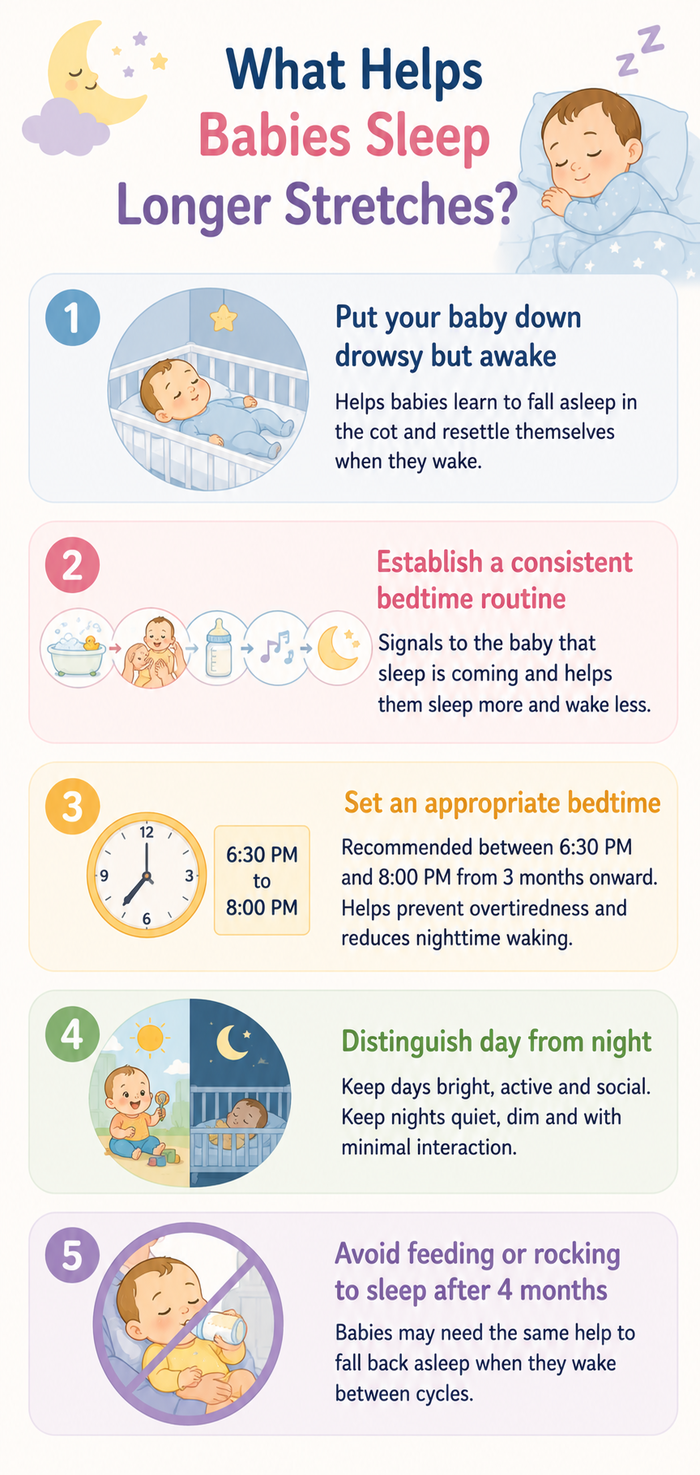
- Put your baby down drowsy but awake: When a baby falls asleep in your arms and wakes in the cot, they do not recognise their surroundings and call out. If they learn to fall asleep in the cot, they can resettle themselves when they wake between cycles.
- Establish a consistent bedtime routine: A short, repeatable sequence- warm bath, gentle massage, feed, lullaby, lights out- signals to the baby that sleep is coming. Studies show that babies with a consistent bedtime routine sleep more and wake less.
- Set an appropriate bedtime: Most paediatric experts recommend a bedtime between 6:30 PM and 8:00 PM for babies from 3 months onward. An overtired baby is harder to settle. Later bedtimes can worsen nighttime waking.
- Distinguish day from night: During the day, keep feeds active and social, rooms bright, and noise at normal levels. At night, keep feeds quiet, dim the lights, and minimise interaction.
- Avoid feeding or rocking to sleep after 4 months: If a baby falls asleep while feeding or being rocked to sleep every night, they will need the same to fall back asleep when they wake between cycles at 2 AM.
When to See a Doctor
Consult your paediatrician if:- Your baby snores loudly or seems to stop breathing during sleep
- Your baby is over 6 months and waking more than 4 to 5 times a night consistently
- Sleep disruption comes with poor weight gain
- Your baby seems unwell, has a fever, or is unusually fussy during the day
FAQs on Baby Not Sleeping Through the Night? What Experts Want Parents To Know
- Does co-sleeping help babies sleep better at night?
Bed-sharing babies tend to wake more frequently at night because the mother's proximity and scent prompt more frequent feeding. The AAP recommends room-sharing (baby in a separate cot in the same room) for at least the first 6 months, as the safer and more sleep-friendly option. - How many times should a baby wake up at night?
Newborns wake every 2 to 3 hours for feeds. By 3 to 4 months, some babies manage a 4 to 5 hour stretch. By 6 months, waking once or twice is common. Waking 3 or more times after 6 months, without a medical reason, is usually a sleep habit issue rather than a hunger issue. - Should I feed my baby every time they wake at night?
In the first 3 months, newborns need frequent feeds around the clock. By 5 to 6 months, most babies no longer need more than one nighttime feed, provided they are gaining weight normally.