
In this article:
What is Colic?
Crying in a healthy baby frequently and for long durations is termed colic. Colic usually develops during the first few weeks after birth and may last for up to three or four months. Babies affected by colic usually exhibit vigorous crying and leg pulling.Although the exact cause is not known, feeding issues such as sucking air may increase the intensity of colic.
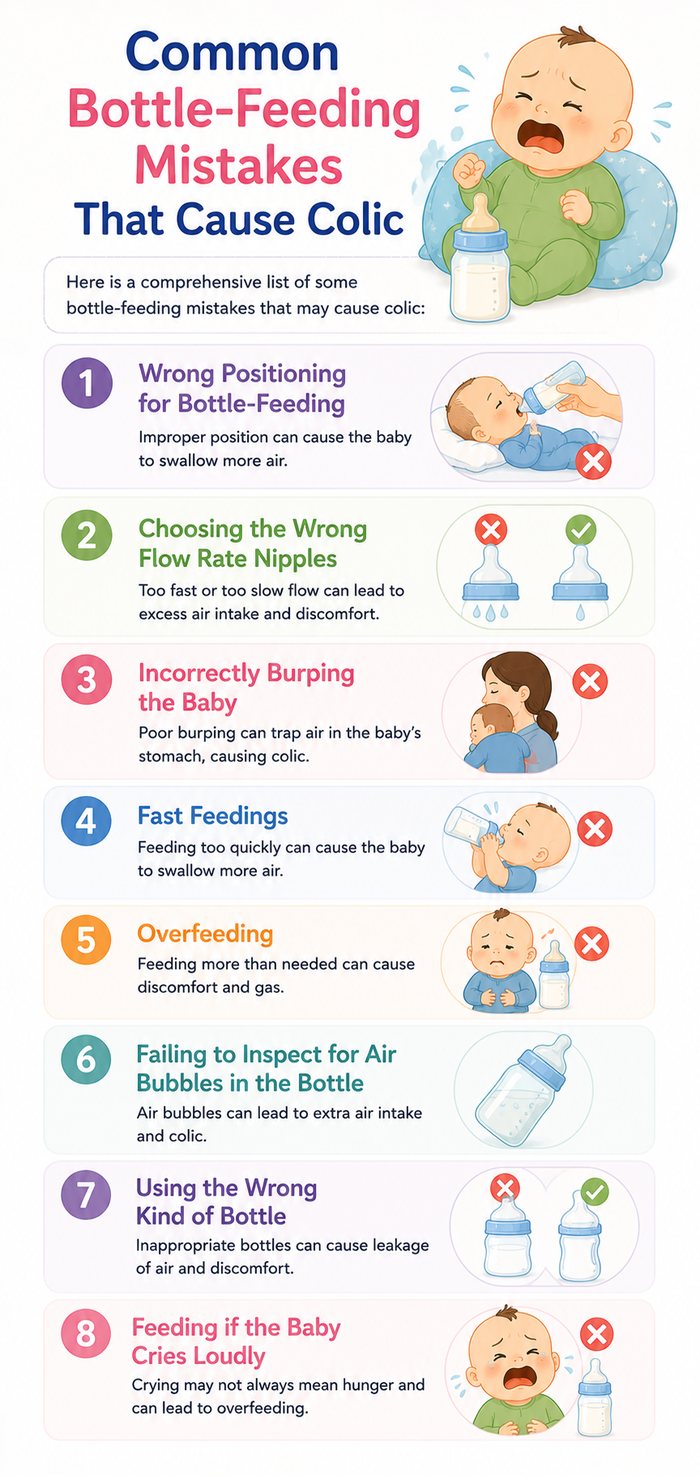
Common Bottle-Feeding Mistakes That Cause Colic
Here is a comprehensive list of some bottle-feeding mistakes that may cause colic:Wrong Positioning for Bottle-Feeding
Babies who drink milk when lying down may end up taking in air along with the milk.
Here are some steps you can take:
- Hold the baby in a slightly upright position
- The head should be a bit higher than the stomach
- Provide gentle support for the neck of the baby
Nipples are available in varied flow rate options. If the flow rate is high, the baby might consume milk very fast and thus ingest air. On the other hand, if the flow rate is too low, your baby may continue sucking hard and end up taking air in the process.
Indicators of wrong nipple flow rate include:
- Choking or coughing while feeding
- Milk leaking from the mouth
- Being fussy when feeding
Incorrectly Burping the Baby
Burping is a technique that helps release air from the baby's tummy. This is an important aspect, as a lack of burping may lead to the accumulation of gas in your baby's tummy.
Tips:
- Burp the baby halfway through the feeding process
- Burp the baby at the end of the feeding process
- Let them be in an upright position and pay on their backs
Fast Feedings
Fast feedings are too much for your baby’s digestion to handle and result in excessive intake of air.
What you can do:
- Stop at intervals when feeding
- Watch how your baby acts
- Allow time for your baby to swallow
Overfeeding
Obviously, you want to see that your baby is full; however, overfeeding can be hard for your baby's small stomach to handle, resulting in discomfort.
Symptoms of overfeeding include:
- Spit-ups often
- Crying or fussiness after feeding
- Swollen or tight belly
Failing to Inspect for Air Bubbles in the Bottle
Agitating the bottle while preparing the mixture may lead to bubble formation, which might ultimately be transferred into your baby's stomach during feeding.
Alternative way:
- Swirl the bottle gently
- Wait for a minute before feeding
Using the Wrong Kind of Bottle
Some bottles have been specially created to minimise the amount of air being ingested by having special venting mechanisms. A regular bottle may cause more gas problems for gassy babies.
Things to consider include:
- Testing out anti-colic babies
- Checking if there is any improvement in symptoms
If the baby is screaming, then feeding them will cause them to take in more air along with the milk.
Steps to be followed next:
- In the first place, one needs to ensure that the baby is not crying
- One can do this by soothing the baby
- Then one can move ahead and feed the baby
When Should You Visit a Paediatrician?
The colic problem is not a serious one; nevertheless, you have to be sure that there are no other health problems involved. You should visit a paediatrician if your child:- Cries non-stop for many hours each day
- Is not gaining weight
- Has problems such as vomiting, fever, or diarrhoea
- Has difficulty feeding
Changing the baby’s posture while feeding, his pace, and ways of feeding will surely improve the feeding experience. Listen to your baby and trust your maternal intuition. If you feel anything is off, consult a doctor.
Whether you’re pregnant, a new mom, or navigating postpartum, you don’t have to do it alone. Join our support group to connect, share, and support one another.
FAQs on Bottle-Feeding Mistakes That Cause Colic in Babies
- Can changing baby formula help cure colic?
Not always, and it usually depends on the situation. If your baby is sensitive or allergic, the doctor might suggest changing his/her formula. - For how long do babies have colic?
Normally, colic occurs until the baby turns 3-4 months old due to the development of his digestive tract. - Do only formula-fed babies get colic?
No, even breastfeeding babies can be diagnosed with colic; nevertheless, feeding practices are important.