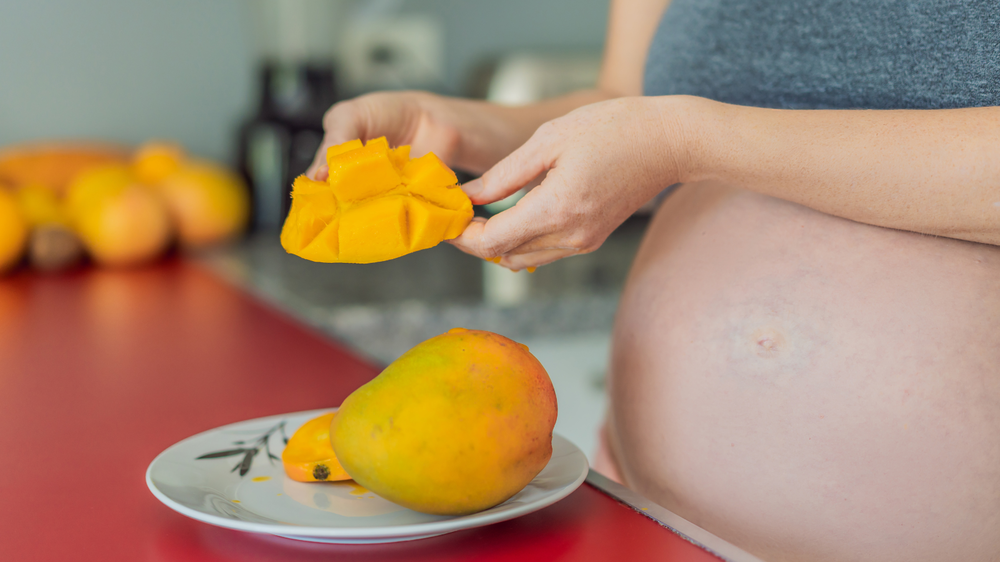
The good news is that mangoes can be enjoyed in moderation while nursing. They offer important nutrients and energy. Understanding their benefits, safety aspects, and common myths can help you include them in your diet with confidence
Nutritional Benefits of Mangoes
Mangoes come loaded with several nutrients beneficial for you and your child.- They contain vitamin C, which improves your immunity levels and helps in the post-delivery recovery period
- It contains vitamin A, which helps in improving the vision of your child and boosts their immune system
- Mangoes contain fibre content that aids digestion and prevents constipation
- The natural sugar content of mangoes provides you with a rapid burst of energy
- Mangoes have antioxidants that help protect your body from any kind of stress
Health Benefits of Mangoes for Breastfeeding Mothers
There are several health benefits associated with consuming mangoes when breastfeeding.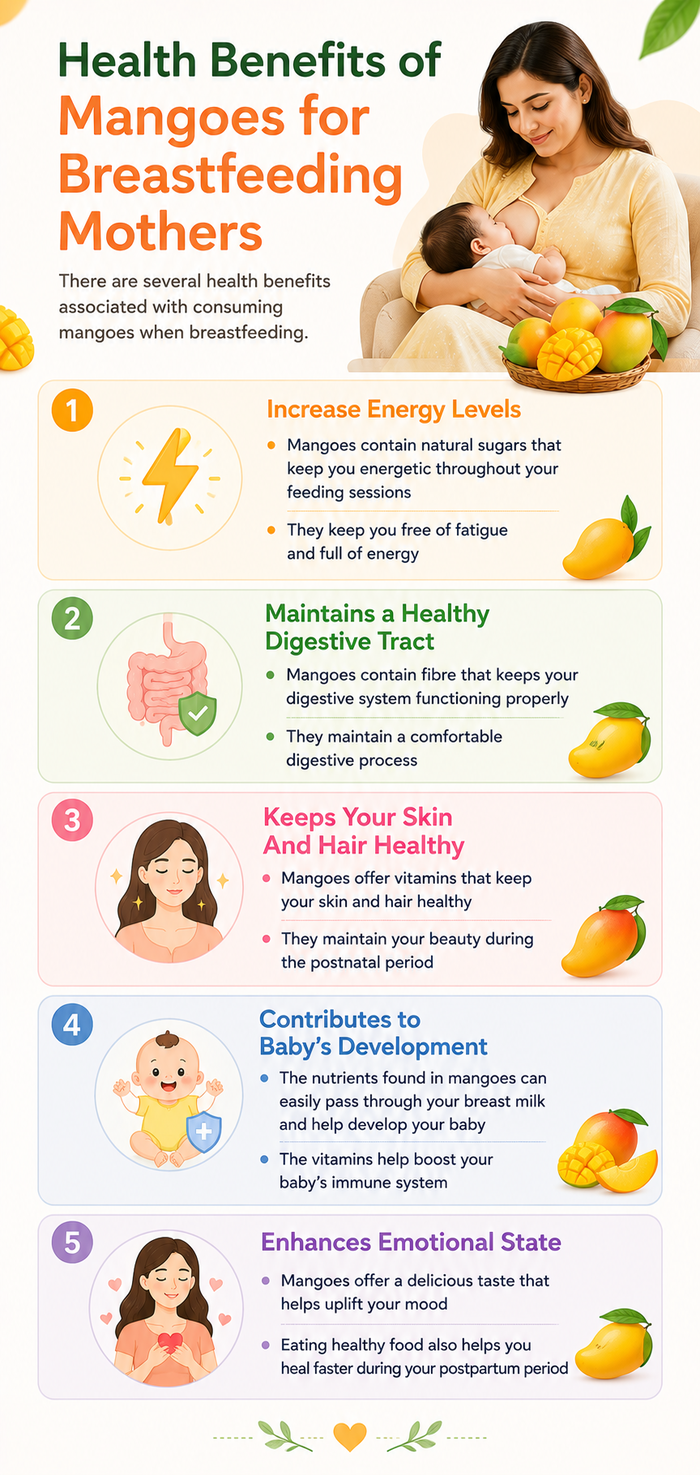
Increase Energy Levels
- Mangoes contain natural sugars that keep you energetic throughout your feeding sessions
- They keep you free of fatigue and full of energy
Maintains a Healthy Digestive Tract
- Mangoes contain fibre that keeps your digestive system functioning properly
- They maintain a comfortable digestive process
Keeps Your Skin And Hair Healthy
- Mangoes offer vitamins that keep your skin and hair healthy
- They maintain your beauty during the postnatal period
Contributes to Baby’s Development
- The nutrients found in mangoes can easily pass through your breast milk and help develop your baby
- The vitamins help boost your baby's immune system
Enhances Emotional State
- Mangoes offer a delicious taste that helps uplift your mood
- Eating healthy food also helps you heal faster during your postpartum period
Safe Mango Consumption Methods
Eating mangoes in a safe and balanced manner is important. Here are some useful tips:- Mangoes should be thoroughly washed before peeling to eliminate dirt and any chemicals present on the surface
- Fresh mangoes should be chosen as opposed to processed or tinned ones
- One should start by consuming a small quantity when consuming mangoes after delivery
- A lot of mangoes should not be consumed to ensure good digestion
- Mangoes should be combined with other foods such as yoghurt or oats
Can Mangoes Harm The Baby?
In general, babies will not have any problems with their mothers eating mangoes. Nevertheless, knowing about some unusual symptoms will make you more prepared.- You can keep an eye on your baby for any symptoms such as a rash or diarrhoea
- You can avoid eating mangoes for a little while if you notice any abdominal pain in the baby and irritability
Common Myths About Eating Mangoes While Breastfeeding
There could be many misconceptions that create confusion; hence, knowing the reality would make things easy.Myth 1: Mangoes cause an increase in body temperature
Fact: Mangoes do not raise body temperature when eaten in moderation
Myth 2: Mangoes may make your baby irritable and cranky
Fact: Most babies do not have any problems due to mango consumption by the mother during nursing. However, monitor for any unusual signs
Myth 3: Mangoes lower the production of milk
Fact: Mangoes do not reduce breast milk supply. A balanced diet supports healthy lactation and nutrition
Mangoes can be a delicious and nourishing part of your breastfeeding diet when enjoyed in moderation. They offer essential nutrients that support both mother and baby. Stay mindful of your baby's response and choose fresh, well-washed fruit. If you notice any unusual reactions, consult your doctor. Eat balanced meals, stay hydrated, and enjoy seasonal fruits with confidence.
Whether you’re pregnant, a new mom, or navigating postpartum, you don’t have to do it alone. Join our support group to connect, share, and support one another.
FAQs on Mangoes While Breastfeeding: Benefits, Safety, and Myths
- Can I eat mangoes on an empty stomach when lactating?
Yes, you can eat ripe mangoes on an empty stomach while breastfeeding as long as you tolerate them well. However, to prevent instant sugar spikes, it is recommended to eat them along with other foods. - Do mangoes support recovery postpartum?
Yes, mangoes can support postpartum recovery as part of a balanced diet, mainly through their vitamins, antioxidants, fibre, and hydration benefits. - How many mangoes can I eat while breastfeeding?
You can safely eat about one small mango per day, or 2-3 slices at a time, as part of a balanced diet, if you and your baby can tolerate it well.