In this article:
Why Home Care Matters After Hospital Discharge
Home care plays an important role after your baby leaves the hospital because bilirubin levels often peak between the third and fifth days of life. For many babies, this happens after they have already gone home. During this time, bilirubin levels may continue to change, making follow-up care especially important.In most babies, jaundice is mild and goes away with time. However, very high bilirubin levels that are not recognised and treated can lead to serious complications. In rare cases, bilirubin can affect the brain and cause a condition called kernicterus. This may lead to long-term problems such as hearing loss, movement difficulties, or developmental delays.
Because of these possible complications, home care remains an important part of your baby's recovery.
Why Is Regular Feeding Important for Babies With Jaundice?
Feeding your baby regularly is one of the most important parts of caring for jaundice at home. Bilirubin leaves your baby's body through urine and stools. When your baby feeds well, they stay hydrated and pass more stools, which helps remove bilirubin naturally. Poor feeding can sometimes lead to dehydration and may cause bilirubin levels to rise.- If you are breastfeeding, aim to feed your baby 8 to 12 times in 24 hours. Newborns often need to feed every two to three hours, including during the night. If your baby is sleepy, your doctor may advise gently waking them for feeds.
- If your baby is formula-fed, they may take about 1 to 2 ounces every two to three hours, depending on their age and your doctor's advice.
What Signs Should Parents Monitor at Home?
As your baby recovers at home, paying attention to a few changes can help you understand how they are doing.- Skin and eye color changes
- Feeding patterns and appetite
- Wet diapers and bowel movements
- Sleepiness or difficulty waking
- Activity level and alertness
- Weight gain and overall growth
Simple Home Care Tips for Babies With Jaundice
Simple steps at home can help support your baby's recovery and keep them comfortable during this time.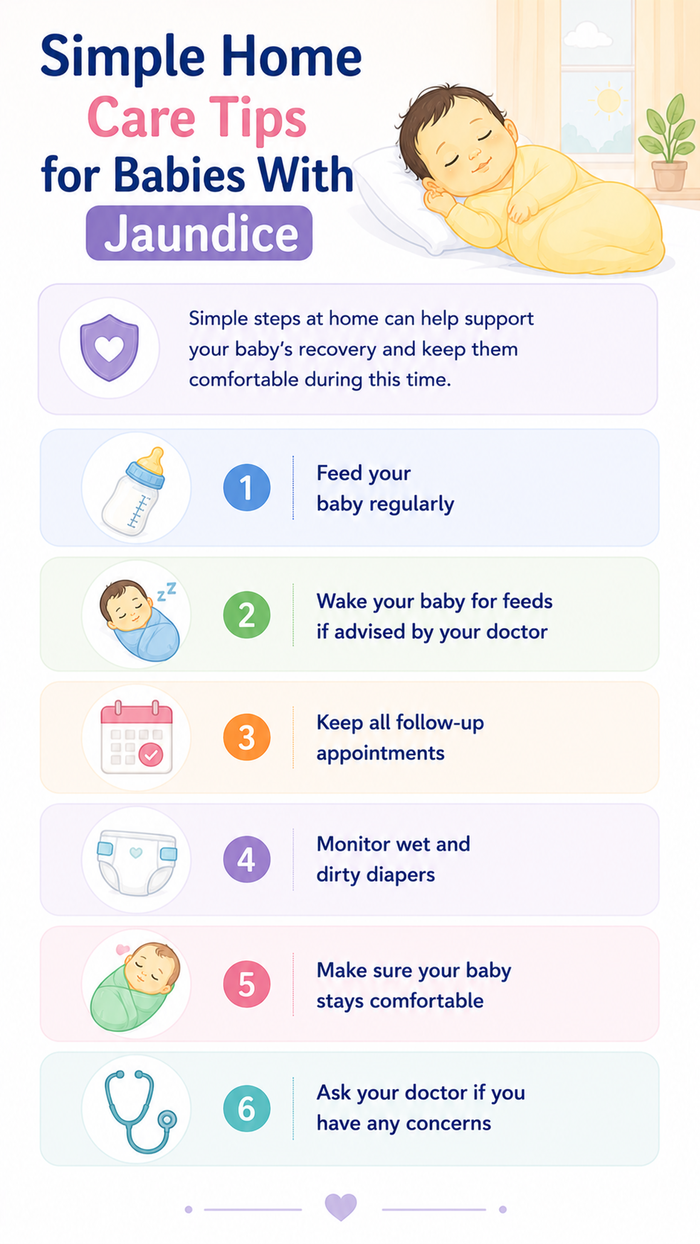
- Feed your baby regularly
- Wake your baby for feeds if advised by your doctor
- Keep all follow-up appointments
- Monitor wet and dirty diapers
- Make sure your baby stays comfortable
- Ask your doctor if you have any concerns
Mistakes to Avoid While Caring for Your Baby at Home
Avoiding the following mistakes can support your baby's recovery and well-being:- Skipping or delaying feeds because your baby is sleepy
- Missing scheduled follow-up visits or bilirubin checks
- Assuming the yellow colour will go away on its own
- Giving water, honey, or home remedies without medical advice
- Relying on sunlight as a replacement for medical treatment
- Ignoring signs such as poor feeding, fewer wet diapers, or unusual sleepiness
How Long Does Newborn Jaundice Usually Last?
Newborn jaundice usually improves within one to two weeks in most full-term babies. In premature babies, it may take a little longer to go away. You may notice the yellow colour slowly fading from your baby's skin and eyes as bilirubin levels decrease. Some breastfed babies can have mild jaundice for several weeks.When Should You Speak With Your Doctor?
Contact your doctor if you notice any of the following:- Yellow skin or eyes becoming darker
- Difficulty feeding or refusing feeds
- Very sleepy or difficult to wake
- Fewer wet diapers than expected
- Fever or unusual crying
- Poor weight gain or reduced activity
Whether you’re pregnant, a new mom, or navigating postpartum, you don’t have to do it alone. Join our support group to connect, share, and support one another.
FAQs on Newborn Jaundice Home Care: Tips for Parents After Hospital Discharge
- Can my baby sleep in the same room if they have jaundice?
Yes, your baby can sleep in the same room as you. Keeping your baby nearby makes it easier to notice feeding cues, monitor diaper changes, and observe any changes in their skin colour or behaviour during the night. - Can my baby receive routine vaccinations if they have jaundice?
Mild newborn jaundice usually does not affect your baby's vaccination schedule. However, if your baby is unwell or receiving treatment, your doctor can advise whether any changes are needed. - How long will follow-up visits be needed?
The number of follow-up visits depends on your baby's bilirubin levels, age, and overall health. Some babies may only need one visit, while others may require additional monitoring until their jaundice improves.