In this article:
Why Monsoon Illnesses During Pregnancy Need Extra Care
We spoke to a doctor to understand better.The rainy season is associated with an increased risk of infections such as viral fever, gastroenteritis, food poisoning, dengue,malaria, and urinary tract infections.
Pregnancy can make some infections more concerning because the body undergoes immune, hormonal and urinary changes. According to the CDC, pregnant women are more likely to become ill from certain foodborne germs, and risky foods include undercooked meat, unwashed produce and unpasteurised milk.
Common Monsoon Diseases During Pregnancy
Dr Bharadwaj says these illnesses can lead to “dehydration, high fever, reduced appetite, and, in some cases, complications if not treated promptly.”Common concerns include:
- Viral Fever: Persistent fever, body ache or weakness should be medically assessed.
- Gastroenteritis and Food Poisoning: Vomiting and diarrhoea can quickly cause dehydration.
- Dengue: As per the CDC, dengue during pregnancy can have harmful effects, including low birth weight, premature birth and foetal loss.
- Malaria: A systematic review in Malaria Journal notes that malaria in pregnancy can pose serious risks to the mother and foetus, including severe illness, anaemia, stillbirth and preterm birth.
- UTIs: According to ACOG, UTIs affect about 8% of pregnancies and are associated with increased rates of preterm delivery and low birth weight.
How Pregnant Women Can Reduce Risk
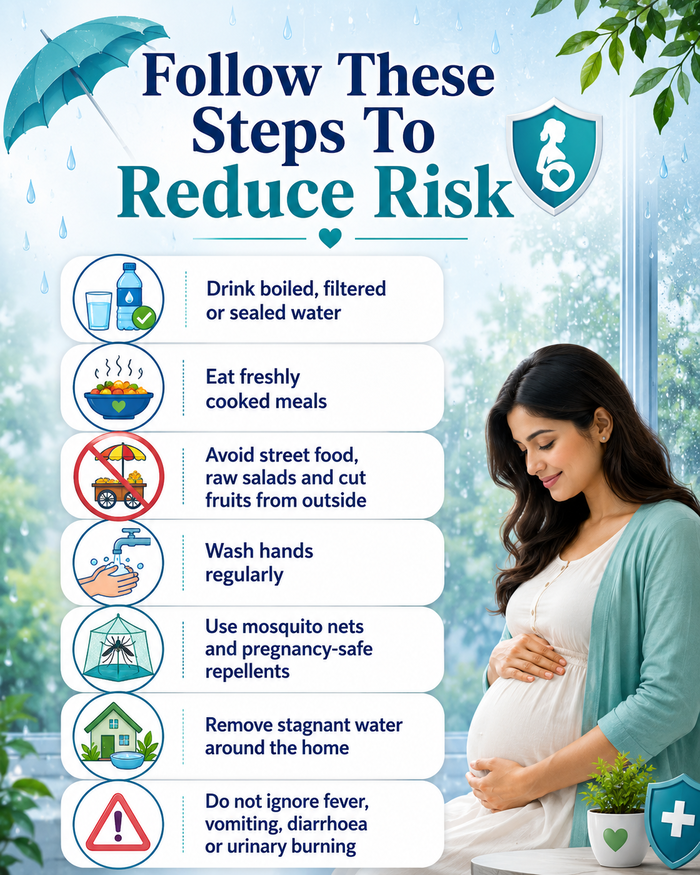
Dr Bharadwaj advises that women should be “particularly careful about food safety, mosquito protection, and hand hygiene.”Follow these steps:
- Drink boiled, filtered or sealed water
- Eat freshly cooked meals
- Avoid street food, raw salads and cut fruits from outside
- Wash hands regularly
- Use mosquito nets and pregnancy-safe repellents
- Remove stagnant water around the home
- Do not ignore fever, vomiting, diarrhoea or urinary burning
FAQs On Monsoon Diseases In Pregnancy
- When Should I Call A Doctor During Monsoon Pregnancy?
Call your doctor for persistent fever, vomiting, diarrhoea, dehydration, urinary burning, severe weakness, bleeding or reduced baby movements. - How Can I Prevent Monsoon Infections During Pregnancy?
Use safe water, eat freshly cooked food, avoid unhygienic street food, practice hand hygiene and protect yourself from mosquito bites.