In this article:
Why Do Newborns Sneeze So Much in the First Few Weeks?
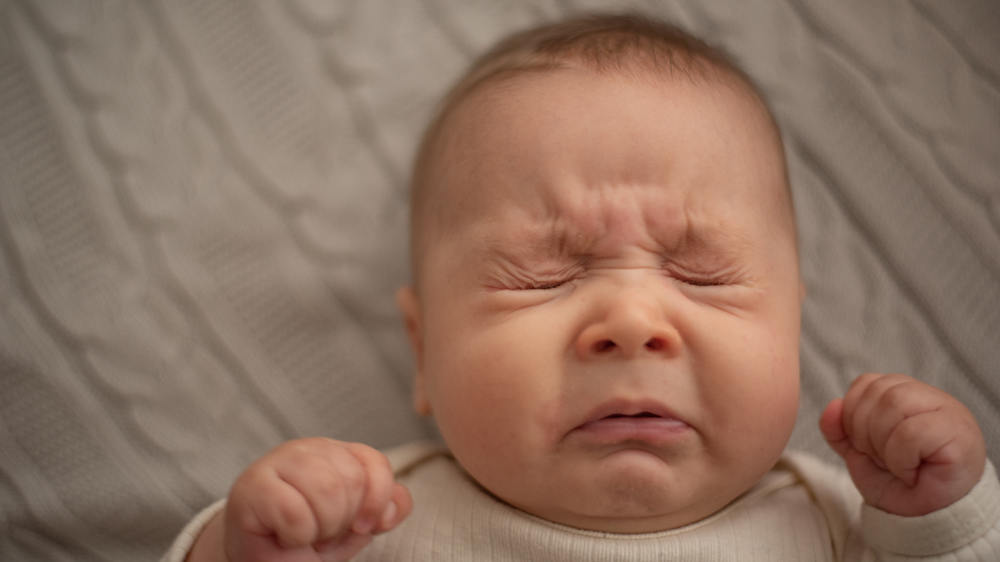
Newborns sneeze much more than older children and adults because their nasal passages are small and sensitive. Their airways are still adapting to life outside the womb, where they were protected from airborne particles and irritants.
Newborns are preferential nasal breathers for the first two months of life; they rely almost entirely on their nose to breathe. This means a clear nasal passage is not just comfortable for them; it is necessary for feeding and breathing at the same time.
Inside the womb, your baby breathed amniotic fluid, not air. After birth, their nose is suddenly exposed to an entirely new environment: dry air, fabric fibres, pollen, cooking smoke, perfume. Sneezing is the nose's way of clearing irritants before they reach the lungs.
Healthy newborns can sneeze dozens of times per day, especially during the first few weeks as they adjust to their new environment.
What Triggers Sneezing in a Newborn?
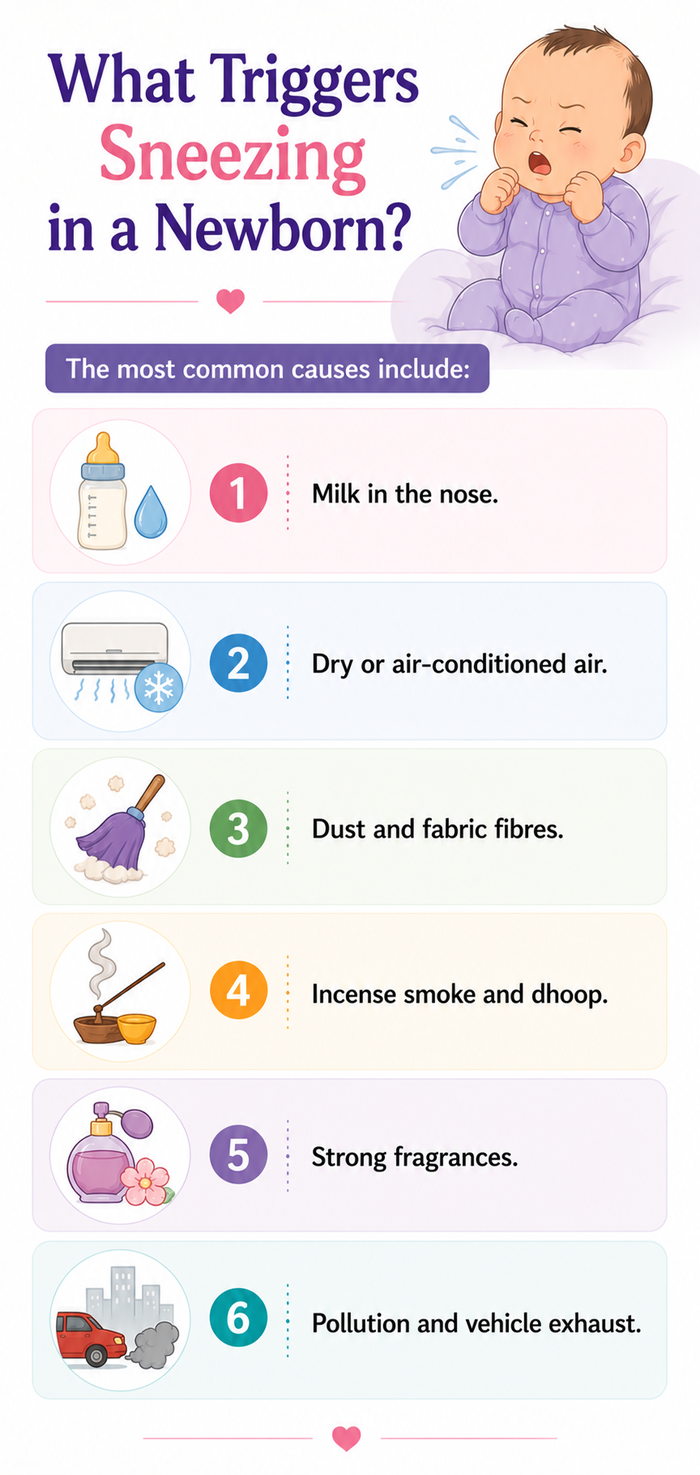
The most common causes include:
- Milk in the nose: During breastfeeding or bottle-feeding, a small amount of milk can travel into the nasal passage. A sneeze clears it within seconds. This is particularly common when milk flow is fast or when the baby feeds lying flat.
- Dry or air-conditioned air: Air conditioners or heaters can dry out nasal passageways, causing sneezing.
- Dust and fabric fibres: Babies are sensitive to small irritants, such as dust, fabric fibres, or perfumes. Freshly washed swaddling cloths, cotton nappies, and carpets can all carry fine fibres that trigger sneezing.
- Incense smoke and dhoop: Many families light agarbatti or dhoop daily for puja. Burning incense sticks indoors generates air pollutants, including carbon monoxide, and infants experience coughing and sneezing when they inhale the smoke.
- Strong fragrances: Ittar, room fresheners, hair oil applied to a visitor's hair, and camphor can all irritate a newborn's nasal lining.
- Pollution and vehicle exhaust: Outdoor air quality regularly drops to unhealthy levels. Even brief outdoor exposure near a busy road can trigger sneezing in a newborn.
Newborn Sneezing vs Cold: How to Tell the Difference
Sneezing alone is not enough to diagnose a cold. The key is whether sneezing comes with other symptoms.| Symptom | Normal Sneezing | Possible Cold |
| Fever | No | Yes, ≥38°C (100.4°F) |
| Nasal discharge | Clear or none | Yellow or green mucus |
| Feeding | Normal | Reduced, refusing feeds |
| Breathing | Easy, quiet | Fast, noisy, or laboured |
| Activity | Alert, responsive | Unusually drowsy or irritable |
| Cough | No | Yes |
When to See a Doctor
Do not wait for a scheduled appointment if your newborn shows any of the following alongside sneezing:
- Fever at or above 38°C (100.4°F)
- Fast or laboured breathing with the chest or belly pulling in
- Grunting, or nasal flaring
- Blue or grey lips
- Long pauses in breathing
- Unusual sleepiness
- Poor feeding
- Fewer wet nappies than usual
- Cough and congestion that worsen or persist for several days
Most newborns' sneezing settles naturally as the baby's nasal passages grow and they adjust to their environment, usually within the first two to three months. Trying home remedies such as ajwain potli (carom seeds in a muslin cloth), mustard oil massage, or steam near the baby is not harmful; however, none of these is a substitute for a paediatrician's assessment when the above warning signs are present.
Whether you’re pregnant, a new mom, or navigating postpartum, you don’t have to do it alone. Join our support group to connect, share, and support one another.
FAQs on Why Is My Newborn Sneezing So Much? Is It Normal?
- Is it normal for a newborn to sneeze 10–20 times a day?
Yes. Healthy newborns can sneeze multiple times per day, especially in the first few weeks, as they adjust to their new environment. Frequent sneezing without other symptoms is not a cause for concern. - Can a newborn catch a cold from sneezing family members?
Yes. Newborns have an immature immune system and are vulnerable to respiratory viruses. Ask anyone with a cold, cough, or sore throat to avoid close contact with the baby. Wash your hands before handling a newborn. - Should I use saline drops for a sneezing newborn?
Saline drops are useful only if sneezing is accompanied by noticeable nasal congestion. For sneezing without any blockage, no treatment is needed. Always consult your paediatrician before using any nasal product in a baby under one month old.