In this article:
What Is Crohn’s Disease?
Crohn's disease causes chronic inflammation of any part of the digestive tract, but it is most often found in the small intestine and the upper portion of the large intestine. The symptoms are abdominal pain, diarrhoea, weight loss, and fatigue. Physical changes during pregnancy affect nutrition, the immune system, and motility of the gastrointestinal tract.
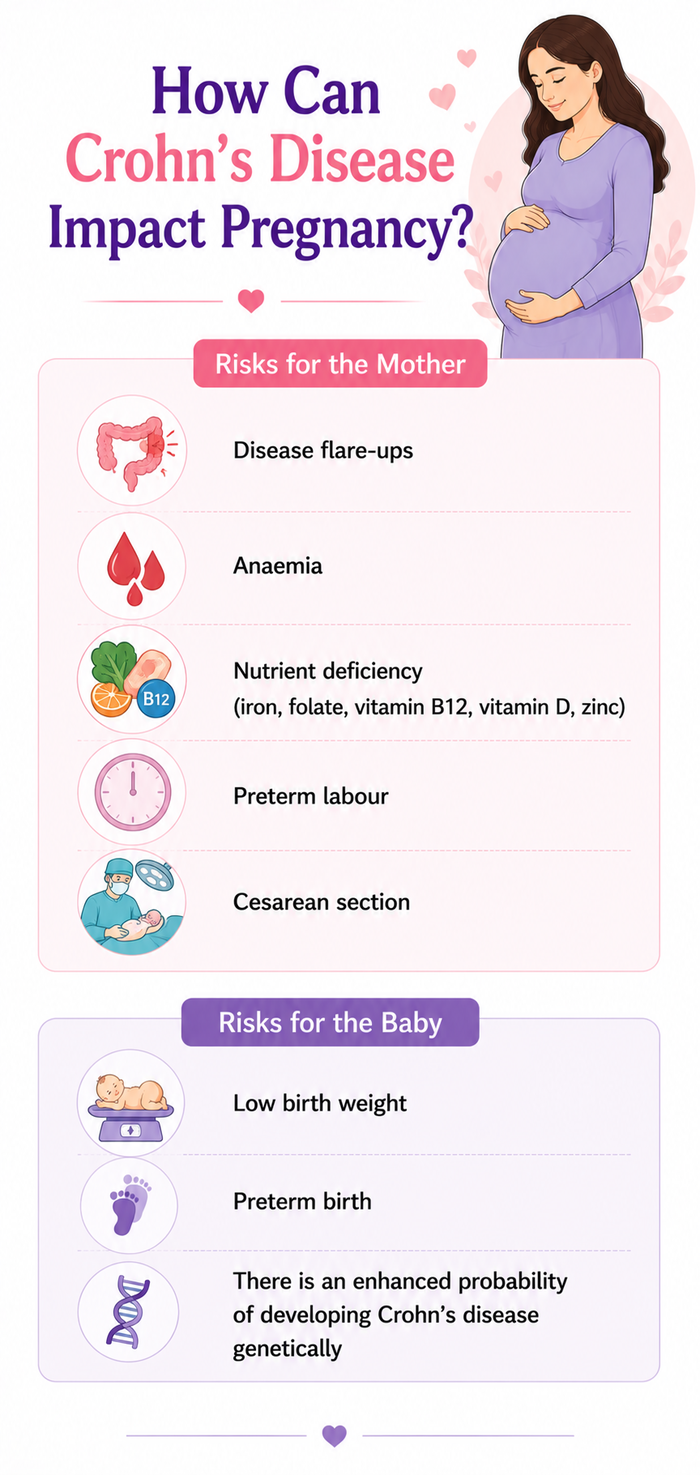
How Can Crohn’s Disease Impact Pregnancy?
Risks for the Mother
How it affects the mother:
- Disease flare-ups
- Anaemia
- Nutrient deficiency (iron, folate, vitamin B12, vitamin D, zinc)
- Preterm labour
- Caesarean section
Risks for the Baby
How it affects the baby:
- Low birth weight
- Preterm birth
- There is an enhanced probability of developing Crohn's disease genetically
Planning for Pregnancy With Crohn's Disease
It would be good to prepare before you conceive to have the best possible result from your pregnancy. Some things to discuss when planning your pregnancy are:
- Remission
- Medication
- Status of your nutrition
- Folic acid
- Any previous surgery
Pregnancy Nutrition With Crohn's Disease
Malnutrition is a substantial concern for people with Crohn's disease, even without pregnancy. For the mother carrying a child, the stakes rise. Important nutrients to monitor and supplement as needed:
- Iron
- Folate
- Vitamin B12
- Vitamin D
- Calcium
- Zinc
Consider consulting a dietitian who has expertise in both to help with personalised dietary guidance throughout this period.
Treating Crohn’s Disease During Pregnancy Through Each Trimester
The management of Crohn's disease during pregnancy may vary depending on disease activity and the stage of pregnancy.
First trimester:
Vomiting and nausea can be easily confused with a Crohn's flare-up; report any major digestive issues to your gastroenterologist. The risks associated with medication use in early pregnancy are the greatest. Ensure that a medication review has already taken place before conception. Fatigue resulting from both early pregnancy and the condition can be profound; allow for adequate rest.
Second trimester:
For many women, there is a relatively good period of stability during this phase of pregnancy. Continue your regular prenatal and gastroenterologist check-ups. Nutritional monitoring is essential to support the rapid growth of the fetus.
Third trimester:
As the uterus expands, it can put pressure on the bowel, leading to discomfort, constipation or bloating. Plan your labour and delivery. The mode of delivery may be influenced by the location and extent of Crohn's involvement. Develop your postpartum medication strategy with your gastroenterologist. Risk of flares will be higher post-birth.
Labour and Delivery With Crohn's Disease
Here are some factors that influence labour and delivery with Crohn’s disease.
- Your method of delivery will depend on obstetric concerns and on the status of your Crohn's disease.
- Vaginal delivery is generally considered safe if your rectum and perianal region are unaffected.
- A C-section is more likely if there is active perianal Crohn's disease, a rectovaginal fistula, or significant rectal involvement to protect tissue from trauma.
Postpartum Period
In your postpartum period, you need to be monitored, as fluctuations in hormone levels, sleeping habits, and nutrition can influence your health. During this time:
- You will experience an increase in the probability of a flare-up in the months following childbirth.
- Resume your maintenance medication or take it as prescribed by your gastroenterologist.
- Breastfeeding is generally recommended, but speak with your gastroenterologist to ascertain which medications are safe.
When Should You Contact Your Doctor?
You should contact your gastroenterologist or obstetrician if:
- You suspect you are having a flare-up of your Crohn's disease at any stage during your pregnancy.
- You develop a fever, any bleeding from the rectum, or any sharp pains in your abdomen.
- You are concerned about whether you are able to continue taking a specific medication or not.
- Your nutritional intake has become critically low because of your symptoms.
- It is close to delivery time, and you have not discussed a post-natal medication and care plan.
Care between your gastroenterologist and obstetrician during pregnancy is not just recommended; it is an absolute necessity when you have Crohn's disease.
It is possible to have a pregnancy with Crohn's disease, and for women who conceive while their Crohn's is in remission, there is generally a good outlook for a healthy pregnancy and baby. There is definitely a role for a team approach involving both specialists and you throughout pregnancy. Attend all your antenatal appointments and never make decisions regarding medication or changes in treatment without consulting a medical professional.
Whether you’re pregnant, a new mom, or navigating postpartum, you don’t have to do it alone. Join our support group to connect, share, and support one another.
FAQs on Crohn's Disease and Pregnancy: What Every Expecting Mother Should Know
- Does Crohn's disease worsen during pregnancy?
Whether your Crohn's gets worse during pregnancy depends to a great extent on the activity of your disease when you get pregnant. Those who conceive with a condition in remission are more likely to maintain stability throughout pregnancy. Those with an active condition when they become pregnant have a higher risk of disease flares and complications during the pregnancy itself. - Is it safe to take medication for my Crohn's during pregnancy?
For most of the maintenance medications commonly used to treat Crohn's disease, it is safer to continue taking medication during pregnancy. But you must always discuss your individual case with your gastroenterologist when deciding whether to take a particular medication during pregnancy. Do not stop any medication without medical advice. - Will I pass on my Crohn's disease to my baby?
Crohn's disease has a genetic component, which means your child has an increased risk of developing an inflammatory bowel disease compared to someone with no family history. However, the overall risk for most people whose parents have Crohn's disease is still relatively low, and there's also an environmental link to the disease as well. Discuss concerns about genetics with a genetic counsellor prior to or during your pregnancy for a clearer understanding of your child's risk.