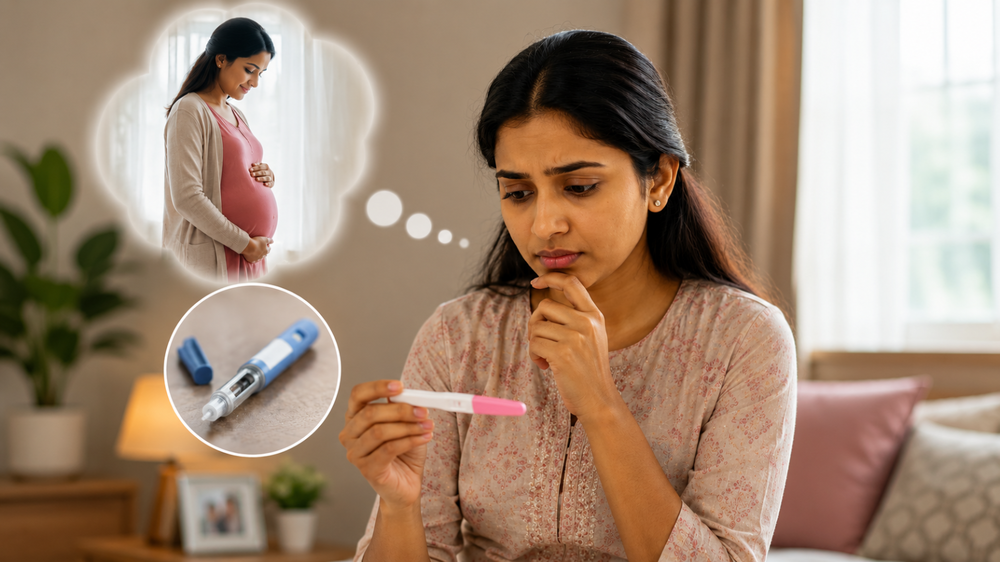
GLP-1 medications work so well for weight loss and metabolic health that some women, especially those with PCOS who hadn't had a regular cycle in years, are getting pregnant unexpectedly, precisely because the medication is working. It's an irony that doctors are now actively flagging: a drug that helps you get healthier can also quietly restore your fertility.
What Are GLP-1 Medications?
GLP-1 receptor agonists are a class of injectable medications that mimic a natural gut hormone called glucagon-like peptide-1. They work by stimulating insulin release, reducing appetite, slowing digestion, and helping you feel full sooner. Originally developed for type 2 diabetes, they are now widely prescribed for obesity and, increasingly, off-label for PCOS.
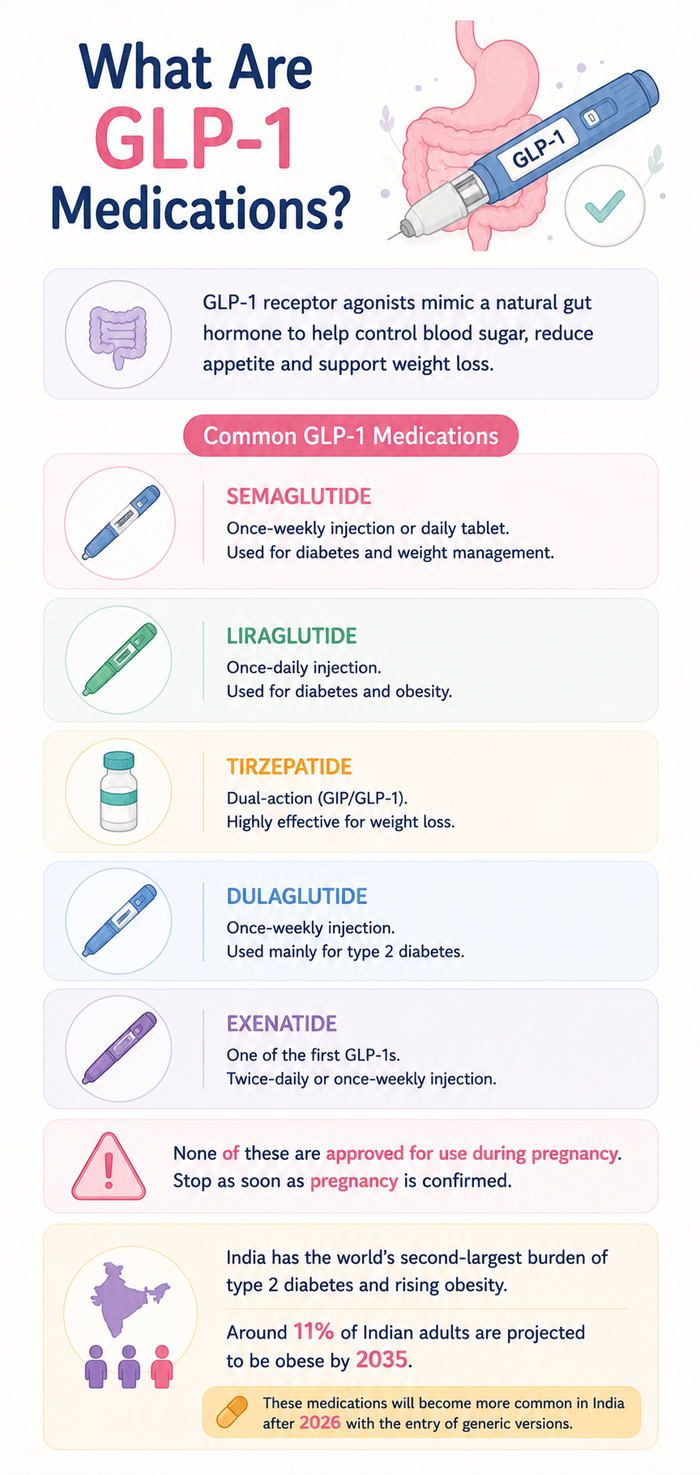
You may know them by their drug names:
- Semaglutide: The most widely used GLP-1, available as a once-weekly injectable and as a daily oral tablet. Prescribed for both type 2 diabetes and weight management.
- Liraglutide: A once-daily injectable, one of the earlier GLP-1 medications, used for diabetes and obesity.
- Tirzepatide: A newer dual-action medication (GIP/GLP-1 agonist) that works on two gut hormone receptors simultaneously, making it particularly effective for weight loss.
- Dulaglutide: A once-weekly injectable primarily used for type 2 diabetes.
- Exenatide: One of the first GLP-1 medications ever approved, available as a twice-daily or once-weekly injection.
With India carrying the world's second-largest burden of type 2 diabetes and a rapidly growing obesity problem, around 11% of Indian adults are projected to be obese by 2035. These medications are only going to become more common, especially as generic versions are expected to enter the Indian market after 2026.
What Should You Do If You Find Out You're Pregnant?
- Stop the medication immediately: Don't wait for your next appointment. Pause the injection or tablet right away.
- Call your doctor the same day: Your healthcare team needs to know. If you were taking it for diabetes, you'll need an alternative, likely insulin, which is well-studied and safe in pregnancy. If it were for weight loss or PCOS, you and your doctor would discuss what to monitor going forward.
- Don't panic: Millions of women have had healthy pregnancies after inadvertent early exposure. The current evidence does not suggest a high risk of harm from brief first-trimester exposure. Early discontinuation is the most protective step.
- Inform your obstetrician: Make sure your OB/GYN knows about the GLP-1 exposure. They may recommend additional monitoring, an early anomaly scan, simply as a precaution.
- If you were taking it for diabetes, stay vigilant about blood sugar: Pregnancy changes your insulin needs significantly. You'll need close monitoring regardless of which medication you transition to.
The Fertility Factor Most Women Are Never Warned About
GLP-1 medications are increasingly prescribed for type 2 diabetes and obesity, but also off-label for PCOS, a condition that affects a disproportionately high number of women. Many women taking these drugs may not realise their fertility could improve while on them, especially if they've had irregular periods for years.
Additionally, access to reproductive counselling before starting these medications is uneven. Many women in smaller cities and towns may be started on GLP-1 therapy without a clear conversation about contraception or what to do if they conceive. This is a gap that needs to be closed.
If you are a woman of reproductive age starting a GLP-1 medication, for any reason, have an open conversation with your doctor about pregnancy planning. If you're not ready to conceive, discuss contraception. If you are trying to conceive, discuss timing and safe alternatives during pregnancy.
You’re not alone in your journey when trying to conceive. Join our supportive community to connect with others, share experiences, and find encouragement every step of the way.
FAQ’s on GLP-1 Medications and Pregnancy: What Happens if You Conceive While Taking Them
- I was on a GLP-1 medication and didn't know I was pregnant. Will my baby be okay?
Studies so far have not shown a significantly increased risk of birth defects. However, you should stop the medication immediately and inform your obstetrician. They may recommend additional monitoring scans as a precaution. - Do GLP-1 medications affect fertility or make it harder to get pregnant?
Interestingly, the opposite may be true for some women. In women with PCOS or insulin resistance, GLP-1 medications can improve ovulation and menstrual regularity, potentially making it easier to conceive. This is one reason unexpected pregnancies have been reported on these drugs. If you're on a GLP-1 and are sexually active but not ready to conceive, make sure you're using contraception. - What are the alternatives to GLP-1 medications during pregnancy for managing diabetes or weight?
For type 2 diabetes in pregnancy, insulin is the gold standard and has a long, well-established safety record. Metformin is sometimes used as well, particularly in the first trimester, though it is not always preferred. For weight management during pregnancy, the focus shifts entirely to a balanced, nutrient-rich diet and safe physical activity. Weight loss drugs of any kind are not recommended during pregnancy.