Simple changes to your regular Indian meals can help meet the extra calorie needs of breastfeeding. Eating a balanced diet and staying well hydrated will support your baby's growth while helping your body recover after childbirth.
Breastfeeding and Its Demands
The biological process of producing breast milk is highly demanding, requiring an additional 500 kilocalories per day to sustain an adequate supply. If your postpartum diet lacks vital micronutrients, your body will deplete its own storage reserves to safeguard the quality of your milk. Hence, a balanced diet is essential to prevent micro- and macronutrient deficiencies.How Can a Postpartum Dietary Plan Benefit You?
A well-planned lactation diet should help you maintain stamina while enabling the transfer of vitamins, minerals and healthy fats to your infant through breast milk. Optimal nutrition during this phase is associated with health benefits, such as:- Enhanced milk production
- Tissue repair and recovery
- Infant cognitive growth
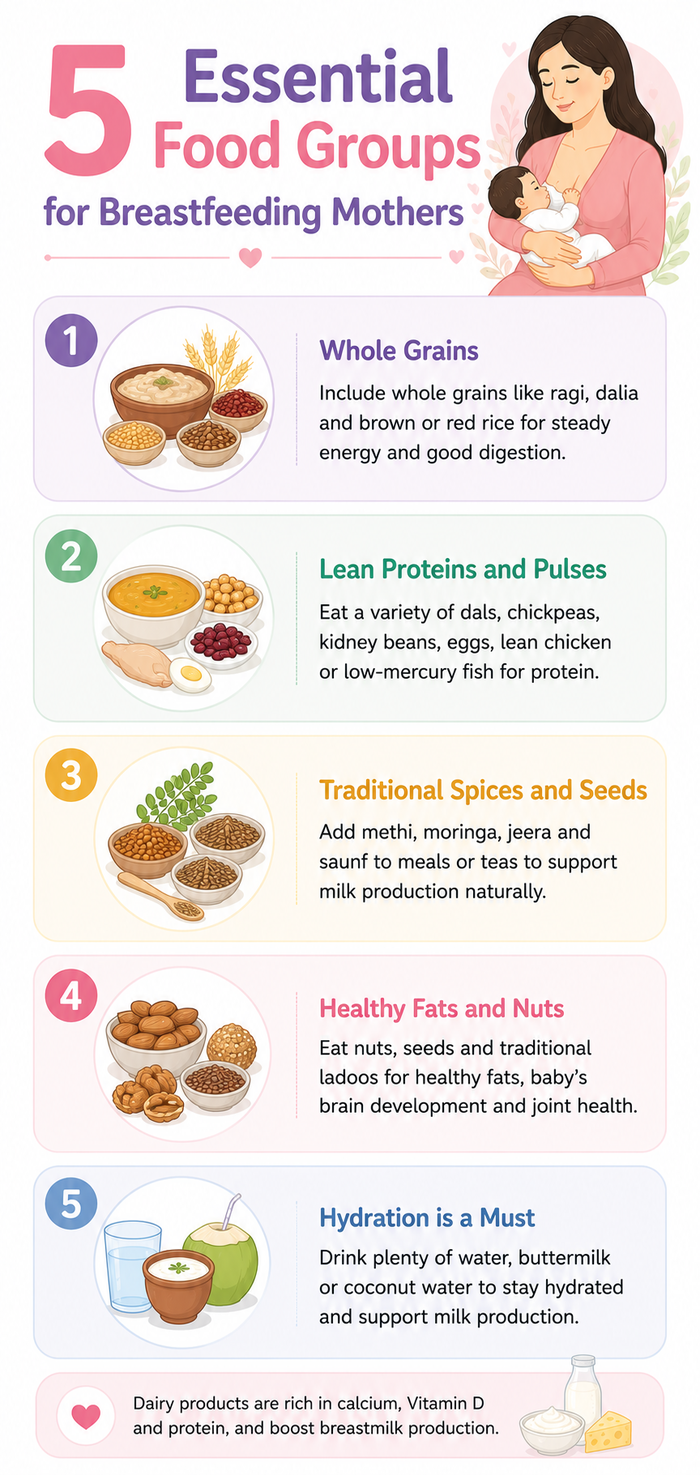
5 Essential Food Groups for Breastfeeding Mothers
Although it is advisable to follow your doctor’s or clinical nutritionist’s personalised postnatal advice, these five traditional Indian food groups can aid your breastfeeding journey and promote postpartum healing.1. Whole Grains
Incorporate traditional grains like finger millet (ragi), broken wheat (dalia), and brown or red rice into your diet. These complex carbohydrates release glucose slowly into your bloodstream, providing a steady supply of physical energy and supporting healthy digestion. Further, they also minimise the risk of gestational diabetes.
2. Lean Proteins and Pulses
Ensure your lunch and dinner feature a variety of lentils (dals), chickpeas, and kidney beans. For non-vegetarians, incorporating eggs, lean chicken, or low-mercury fish can provide high-quality protein options.
3. Traditional Spices and Seeds
Incorporate fenugreek seeds (methi), drumstick leaves (moringa), cumin seeds (jeera), and fennel seeds (saunf) into your vegetable preparations or teas. These ingredients contain plant compounds that gently stimulate prolactin, a key hormone responsible for milk synthesis. Indian kitchens have natural galactagogues (foods, herbs, or condiments used to induce, maintain or increase breastmilk production) that have supported mothers for generations.
4. Healthy Fats and Nuts
To support your baby's rapid brain development, focus on rich dietary fats. Consume moderate portions of walnuts, almonds and flaxseeds daily. Preparing traditional, lightly sweetened ladoos made from edible gum (gond) or sesame seeds provides calcium and healthy fats to support your joint health.
5. Hydration is a Must
The nursing phase can leave you feeling constantly thirsty because water is the primary component of breast milk. Keep a flask of warm water, plain buttermilk (chaas) or clear coconut water handy, and aim to drink a glass during or immediately after every feeding session. Dairy products are rich in calcium, Vitamin D and protein, and boost breastmilk production.
Prioritise Clinical Advice
While dietary adjustments support wellness, specific symptoms require medical evaluation. Please consult your doctor or a lactation specialist immediately if:- You have acidity, digestive issues, drastic weight loss or develop rashes after taking certain herbs.
- You experience sudden, severe dizziness, extreme lethargy or signs of severe anaemia.
- Your baby shows extreme fussiness, skin rashes or persistent colic after specific meals.
- You notice a significant, sudden drop in your milk volume.
Whether you’re pregnant, a new mom, or navigating postpartum, you don’t have to do it alone. Join our support group to connect, share, and support one another.
FAQs on Best Foods for Breastfeeding Mothers: Indian Foods That Can Support Your Healing
- Should I completely avoid spicy foods or gas-producing dals while breastfeeding?
No. Standard spices and lentils do not pass directly into breast milk to cause gas in your baby. Enjoy a varied diet, but monitor your baby's comfort patterns. - Is it necessary to drink large quantities of cow's milk to produce breast milk?
No. While milk is an excellent source of calcium, you can fulfil your calcium needs through ragi, green leafy vegetables and almonds if you prefer a dairy-free routine.