In this article:
Why Does Vaginal Discharge Increase During Pregnancy?
It is common to notice more vaginal discharge during pregnancy. As your body changes to support your growing baby, pregnancy hormones increase, and blood flow to the pelvic area increases. These changes encourage the cervix and vaginal tissues to produce more fluid.This extra discharge helps maintain a healthy vaginal environment and may reduce the risk of infections during pregnancy.
Understanding Different Discharge Colours During Pregnancy
The following discharge colours may occur during pregnancy. While some changes are usually normal, others may need medical attention depending on your symptoms.White Discharge
White or milky discharge is one of the most common types of discharge during pregnancy. It often becomes more noticeable as your pregnancy progresses and is usually considered normal. This type of discharge helps maintain a healthy vaginal environment and is generally not a cause for concern.You should speak with your doctor if the discharge:
- Becomes thick or cottage cheese-like
- Causes itching or burning
- Has an unusual smell
- Leads to irritation or discomfort
Clear or Watery Discharge
Clear or slightly watery discharge can occur at any stage of pregnancy. Many women notice that the amount increases over time. This type of discharge is often a normal part of pregnancy and may simply reflect the natural changes happening in your body.Contact your healthcare provider if:
- You experience a sudden gush of fluid
- The discharge continuously leaks
- The fluid is difficult to control
- You notice these changes in the later months of pregnancy
Yellow Discharge
A light yellow discharge may sometimes appear during pregnancy and may not always indicate a problem. However, darker yellow discharge can occasionally be linked to an infection, especially if it occurs with other symptoms.Speak with your doctor if you notice:
- A strong or unpleasant odor
- Itching or burning
- Pain while passing urine
- Pelvic discomfort
Green Discharge
Green discharge is not usually considered a normal change during pregnancy. It may sometimes occur because of certain vaginal infections.Medical advice is recommended if you have:
- Green discharge
- Vaginal irritation
- A foul odor
- Pain or discomfort
Brown Discharge
Brown discharge usually means that a small amount of old blood is leaving the body. Some women may notice it during early pregnancy, after intercourse, or after a pelvic examination.Small amounts may not always be concerning, but you should contact your doctor if:
- The discharge becomes heavier
- It continues for several days
- You have abdominal pain or cramping
- You experience bleeding
Pink Discharge
Pink discharge happens when a small amount of blood mixes with vaginal discharge. It may occur after intercourse or because of changes in the cervix during pregnancy.Although light pink discharge may sometimes be harmless, medical advice is recommended if it:
- Becomes heavier
- Occurs with pain or cramps
- Continues for a long period
Red Discharge
Red discharge means that fresh blood is present. While light spotting can occur in some pregnancies, heavier bleeding should not be ignored.Seek medical attention if you experience:
- Heavy bleeding
- Severe abdominal pain
- Strong cramps
- Dizziness or weakness
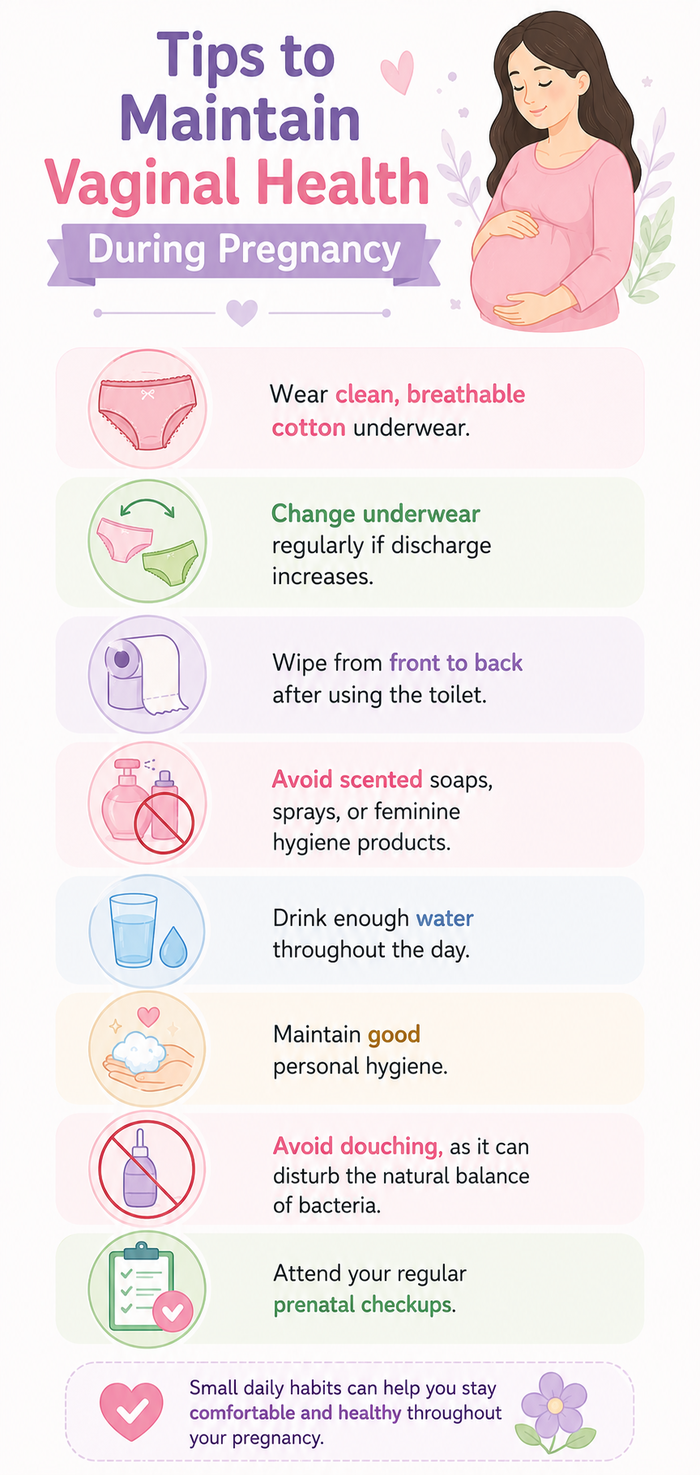
Tips to Maintain Vaginal Health During Pregnancy
Taking care of your vaginal health during pregnancy can help reduce discomfort and support your overall well-being. Some simple steps include:- Wear clean, breathable cotton underwear
- Change underwear regularly if discharge increases
- Wipe from front to back after using the toilet
- Avoid scented soaps, sprays, or feminine hygiene products
- Drink enough water throughout the day
- Maintain good personal hygiene
- Avoid douching, as it can disturb the natural balance of bacteria
- Attend your regular prenatal checkups
Whether you’re pregnant, a new mom, or navigating postpartum, you don’t have to do it alone. Join our support group to connect, share, and support one another.
FAQs on Pregnancy Vaginal Discharge Colours Explained: What's Normal and What's Not
- Does vaginal discharge look different in each trimester?
It can. Some women notice changes in the amount, texture, or colour of discharge at different stages of pregnancy because of normal pregnancy-related changes. - Can dehydration affect vaginal discharge during pregnancy?
Not drinking enough fluids may sometimes make discharge appear thicker or more concentrated. Staying hydrated can help support your overall health during pregnancy. - Is it normal for discharge to have a mild smell during pregnancy?
A mild odour can be normal during pregnancy. However, a strong, fishy, or unpleasant smell should be discussed with your doctor.